Lamprologus Daffodil Cichlid Care Guide
A Complete Care Guide for Neolamprologus pulcher "Daffodil"
Introduction
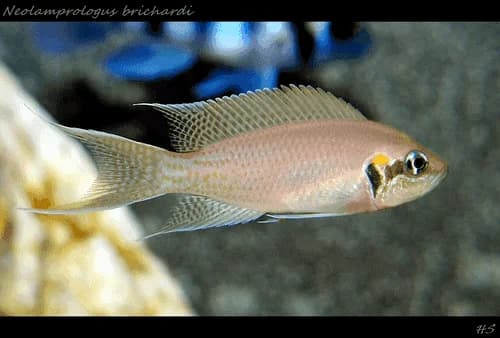
Neolamprologus pulcher, the daffodil cichlid (also known as the daffodil brichardi), is an elegant Lake Tanganyika cichlid closely related to N. brichardi (the fairy cichlid). The "Daffodil" form displays a warm yellow-orange tinted body with the characteristic flowing lyretail fin extensions, blue-edged fins, and distinctive facial markings of the brichardi group. Their graceful, streaming tail fins and soft coloration give them one of the most refined appearances of any cichlid.
Endemic to Lake Tanganyika in East Africa, N. pulcher inhabits the rocky littoral zone at intermediate depths, living in permanent colonies with complex social structure. They are cooperative breeders: older offspring assist their parents in raising subsequent broods.
Daffodil cichlid care is easy to moderate for keepers with experience in Tanganyikan conditions. Their hard alkaline water requirements, colonial social structure, and interesting cooperative breeding behavior make them rewarding Tanganyika cichlids.
Basic Overview
Common Misconceptions
"They can be kept as a pair only." Daffodil cichlids are colony-forming fish with cooperative breeding behavior. A group of 6-8 -- a breeding pair with their older offspring as helpers -- produces the most natural behavior and social dynamics.
"They are the same as brichardi." N. pulcher (daffodil) and N. brichardi (fairy cichlid) are closely related sister species. The daffodil form displays warmer yellow-orange body tones compared to the greyer brichardi. Their care is essentially identical.
"They are peaceful toward all fish." Daffodil cichlids are territorial within their colony and toward intruders that approach their breeding area. In a mixed Tanganyika community, they can become aggressive toward smaller fish when breeding.
Recommended Setup
- 40+ gallon tank for a colony of 6-8
- Rocky decor with multiple caves and crevices
- Hard alkaline water
- Crushed coral substrate
- Good filtration and oxygenation
- Compatible Tanganyika tank mates (if any)
Diet
Daffodil cichlids are omnivores with insectivore tendencies in the wild:
- High-quality cichlid pellets or flake
- Frozen brine shrimp
- Frozen mysis shrimp
- Frozen daphnia
- Blanched vegetables (occasional)
Feed twice daily. They are active, enthusiastic feeders. A varied diet with quality frozen protein foods maintains the best coloration and spawning condition.
Personality
Daffodil cichlids in a colony are one of the most socially complex and visually graceful of all Tanganyikan cichlids. Their streaming lyretail fins and warm yellow-orange coloration create an elegant display, especially when multiple fish fan their fins in the flowing water of a well-oxygenated rocky tank.
Their cooperative breeding behavior -- where juveniles from previous spawns assist their parents in guarding and raising the new brood -- is one of the most sophisticated social behaviors in cichlids. Observing the family dynamics of a settled daffodil colony is endlessly fascinating.
Their combination of elegant appearance, manageable size, colonial social life, and the accessible (for Tanganyika cichlids) care requirements makes them one of the most recommended Tanganyika species for keepers exploring the African Great Lakes.
Water Parameters
Daffodil cichlids require the hard, alkaline, oxygenated conditions of Lake Tanganyika:
- pH: 7.8-9.0
- Hardness (gH): 10-20 dGH
- Temperature: 75-82 degrees F
- Ammonia and Nitrite: 0 ppm
- Nitrate: below 20 ppm
Here are some top tips to deal with unwanted parameters:
- Hard, alkaline Lake Tanganyika water is essential.
- Crushed coral substrate provides passive pH and hardness maintenance.
- Good oxygenation is important for all Tanganyikan cichlids.
- Weekly 25-30% water changes.