L-240 Galaxias/Vampire Pleco Care Guide
A Complete Care Guide for Leporacanthicus galaxias
Introduction
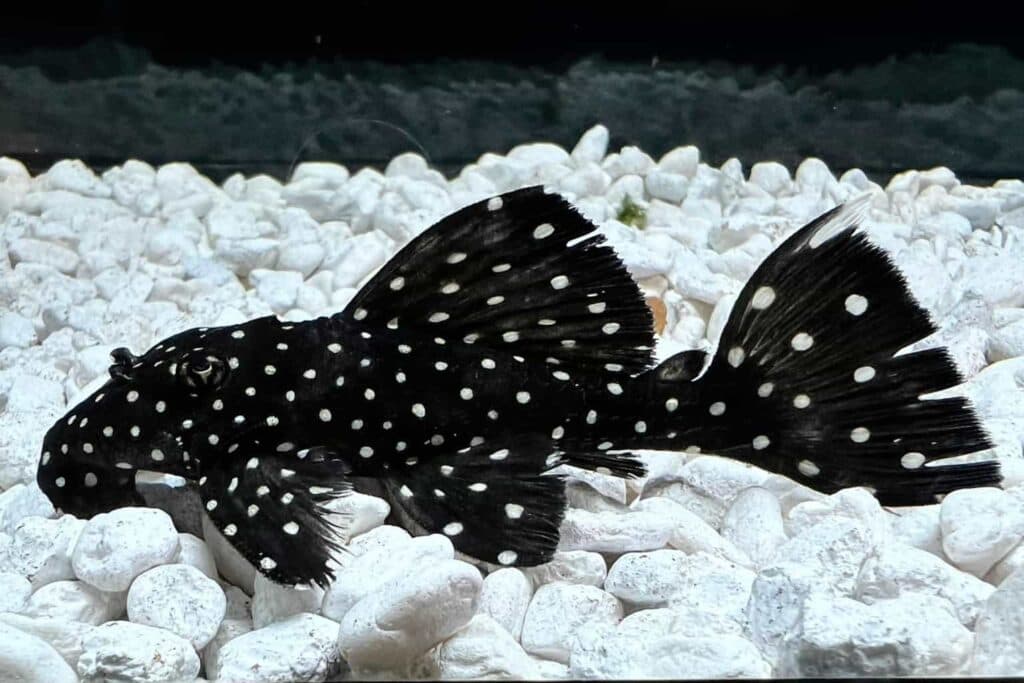
Leporacanthicus galaxias, the L-240 galaxias pleco (also called the vampire pleco or galaxy pleco), is a striking predatory pleco from the Amazon system. Their dark body is covered with small white to cream spots creating a starfield appearance, and their distinctive pointed teeth (giving the "vampire" name) indicate a more carnivorous diet than typical grazing plecos.
Native to the Rio Tocantins in Brazil, galaxias plecos inhabit rocky, fast-flowing sections of this river system. They are specialized snail eaters in the wild, using their pointed teeth to extract prey from shells.
Galaxias pleco care is intermediate. They require good flow, protein-rich food, and caves for territory. Their predatory teeth and snail-eating habit make them an unusual pleco species that differs meaningfully from standard algae-eating plecos in their diet requirements.
Basic Overview
Common Misconceptions
"They eat algae like most plecos." Galaxias plecos are primarily carnivorous snail-eaters. Algae wafers alone are inadequate. Protein-rich sinking foods are the dietary staple.
"The pointed teeth are unusual." The modified teeth of L. galaxias are an evolutionary adaptation for snail extraction, not a sign of disease or genetic defect. They are a normal characteristic of this predatory pleco species.
"They are safe with snails." Galaxias plecos will consume snails in the tank, including pest snails and any snails kept intentionally. If snails are desired in the tank, this is not the pleco to keep.
"Multiple galaxias plecos can share small tanks." Like most large plecos, they are territorial with conspecifics and should be kept one per tank unless the setup is very large.
Recommended Setup
- 75+ gallon tank
- Strong flow and good oxygenation
- Caves and smooth rocks
- Driftwood
- Good filtration
- Warm temperatures: 79-84 degrees F optimal
Diet
Galaxias plecos are primarily carnivorous and require protein-rich foods:
- Sinking carnivore pellets (primary staple)
- Frozen bloodworms
- Frozen mysis shrimp
- Live or frozen snails
- Blanched vegetables (supplemental)
Feed daily in the evening. Protein should make up the majority of their diet, unlike most grazing plecos. Occasional live snails make excellent enrichment that stimulates natural hunting behavior. Algae wafers can be offered as supplemental food but should not be the primary diet.
Personality
Galaxias plecos are bold, active plecos that spend more time in visible positions than many nocturnal species. Their distinctive appearance - the starfield spotting pattern and unusual pointed teeth - makes them fascinating to observe up close.
They are territorial about caves and prime resting spots, defending these positions from other plecos or large bottom-dwellers. This territorial behavior does not typically extend to fish occupying different tank zones.
Their snail-hunting behavior is interesting to observe when live snails are offered. They locate snails systematically and use their pointed teeth to extract them from their shells with efficient, precise movements.
Water Parameters
Galaxias plecos come from the warm, fast-flowing Rio Tocantins:
- pH: 6.0-7.0
- Hardness (gH): 2-12 dGH
- Temperature: 77-86 degrees F
- Ammonia and Nitrite: 0 ppm
- Nitrate: below 20 ppm
Here are some top tips to deal with unwanted parameters:
- Good flow and oxygenation are important for this fast-water species.
- Warm temperatures suit them well. They are comfortable at the warmer end of the tropical range.
- Soft, slightly acidic water is ideal.
- Avoid copper-based medications.