L-128 Blue Phantom Pleco Care Guide
A Complete Care Guide for Hemiancistrus sp. (L-128)
Introduction
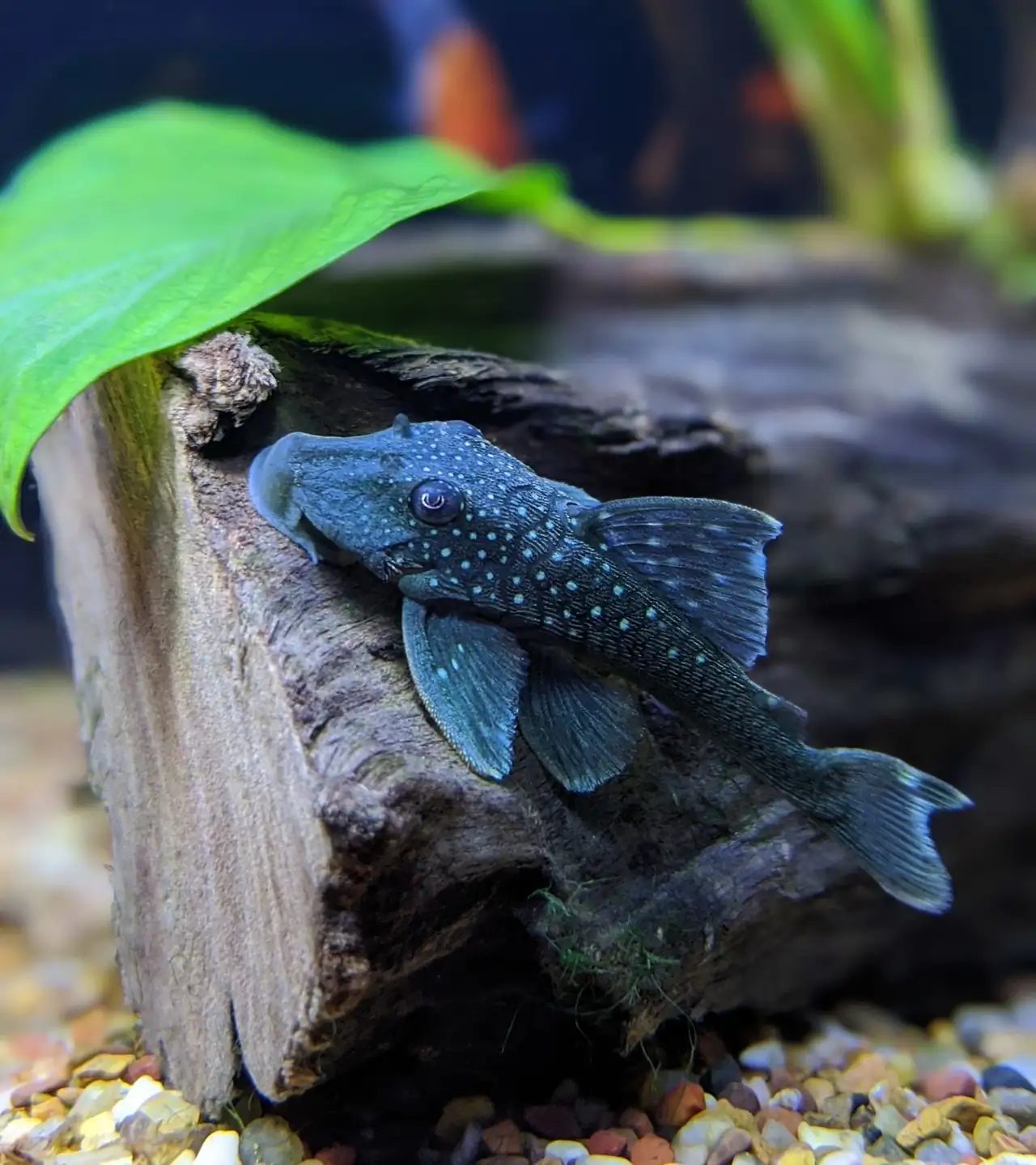
The L-128 blue phantom pleco (Hemiancistrus sp.) is one of the most visually striking plecos available, with a jet-black body covered in small, vivid blue-white spots that create a galaxy-like appearance. Their name perfectly describes their ethereal, phantom-like coloration.
Native to the Rio Orinoco system in Venezuela, blue phantom plecos inhabit fast-flowing, rocky river sections with highly oxygenated, relatively cool water. Their specific habitat requirements translate into equally specific captive care needs.
Blue phantom pleco care is intermediate to advanced. They require strong flow, high oxygenation, cooler temperatures than most tropical fish, and a cave for shelter. Their striking appearance and growing popularity in the pleco hobby has made them increasingly available from specialist breeders.
Basic Overview
Common Misconceptions
"They need warm water like other plecos." Blue phantom plecos prefer cooler temperatures (72-79 degrees F) than many pleco species. This reflects their Orinoco highland origin. Persistent temperatures above 80 degrees F cause stress.
"They primarily eat algae." Blue phantom plecos are primarily carnivorous and require significant protein in their diet. Algae wafers alone are insufficient. Meaty sinking foods are important.
"Standard flow is adequate." Their fast-water origin means strong current and high dissolved oxygen are essential, not optional. Inadequate oxygenation is a primary cause of health issues in this species.
"They can share territory with other large plecos." Like most large plecos, blue phantoms are territorial with conspecifics. One per tank unless the setup is very large with separate territory zones.
Recommended Setup
- 55+ gallon tank
- Strong flow and very high oxygenation
- Smooth rocks and caves (one per fish)
- Driftwood for grazing
- Cooler temperature: 72-78 degrees F
- Good filtration
Diet
Blue phantom plecos require a protein-forward varied diet:
- Sinking carnivore pellets (primary)
- Frozen bloodworms and brine shrimp
- Blanched vegetables: zucchini, cucumber
- Algae wafers (supplemental)
- Driftwood for biofilm grazing
Feed daily in the evening. More protein than typical plecos is needed. A varied diet with both meaty foods and vegetables maintains long-term health and the most intense blue-white spotting.
Personality
Blue phantom plecos are active grazers that spend time on rocks and in caves in visible positions. Unlike purely nocturnal plecos, they can often be seen during the day resting prominently on smooth rocks in the current.
Their defensive behavior when threatened is characteristic: they clamp themselves to a surface with remarkable force, making them very difficult to dislodge. This is a natural response to current in their fast-water habitat.
Their striking appearance in a well-maintained tank - vivid blue-white dots on jet black against smooth dark rocks with strong current - is extraordinary. The visual impact is matched by few freshwater fish.
Water Parameters
Blue phantom plecos come from the fast, cool, oxygenated Orinoco system:
- pH: 6.0-7.0
- Hardness (gH): 2-10 dGH
- Temperature: 72-79 degrees F
- Ammonia and Nitrite: 0 ppm
- Nitrate: below 20 ppm
Here are some top tips to deal with unwanted parameters:
- High dissolved oxygen from strong flow is the single most critical requirement. A powerhead creating significant current is essential.
- Cooler than standard tropical temperatures. Room-temperature tanks in cool homes may need no heater.
- Soft, slightly acidic water is optimal.
- Avoid copper-based medications.