Kribensis Care Guide
A Complete Care Guide for Pelvicachromis pulcher
Introduction
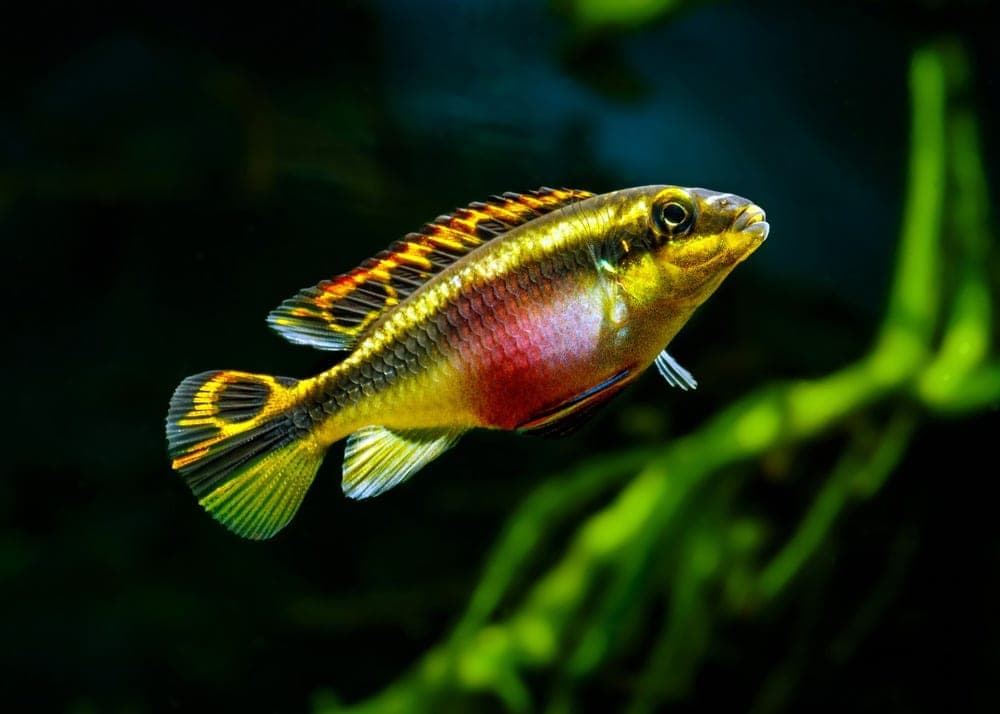
Pelvicachromis pulcher, the kribensis (also called the krib or rainbow cichlid), is one of the most beginner-friendly cichlid species available. Males are slender with iridescent purple, green, and yellow scales; females are smaller and rounder with a distinctive deep pink-to-violet belly that intensifies dramatically when they are breeding or gravid.
Native to the rivers of southern Nigeria and Cameroon, kribensis inhabit the lower reaches of rivers where freshwater meets slightly brackish zones. They are cave spawners with exceptional parental care, and their spawning behavior, including both parents fiercely and cooperatively defending their fry, is one of the highlights of keeping them.
Kribensis are small (3–4 inches), peaceful outside of breeding, and adaptable to a range of water conditions. They are one of the most recommended cichlids for community tanks and for hobbyists who want to experience cichlid breeding without the space requirements of larger species.
Basic Overview
Common Misconceptions
"Kribensis are aggressive cichlids." Outside of breeding, kribensis are among the most peaceful cichlids available. Even during spawning, their territory defense is rarely more than a brief chase, not a damaging attack.
"Males and females look alike." Sexual dimorphism is very clear in kribensis. Females have a rounded belly that turns vivid pink-purple when gravid or spawning; males are larger, slimmer, and more colorful overall. Distinguishing the sexes is easy even to a new keeper.
"They need acidic blackwater." Kribensis are more adaptable than most African cichlids. They thrive in neutral to slightly alkaline tap water without RO water or special softening, making them practical for most hobbyists.
"They will eat my shrimp." Adult shrimp are generally too large for kribensis to eat. However, shrimp fry may be consumed. Cherry shrimp adults are borderline; Amano shrimp adults are generally safe.
Recommended Setup
- 20+ gallon tank for a bonded pair
- Fine sand substrate; they dig and sift naturally
- Multiple caves: coconut shells, clay caves, PVC pipe; both fish will investigate before choosing a spawn site
- Dense planting along sides and back; crypts and Java fern work well
- Gentle to moderate filtration with low flow; sponge filter is ideal
- Slight dimming with floating plants
- Driftwood and leaf litter create a natural look and gently acidify water
Diet
Kribensis are omnivores that consume insects, small invertebrates, algae, and plant matter in the wild. They accept a wide range of aquarium foods:
- High-quality small cichlid pellets or tropical flakes as a staple
- Frozen bloodworms and brine shrimp (important for breeding conditioning)
- Frozen daphnia and cyclops
- Blanched vegetables: zucchini, peas, spinach
- Live foods for breeding conditioning: baby brine shrimp, micro worms
Feed once or twice daily. A varied diet with both protein and plant matter produces the best health and color. Feeding live or frozen foods regularly before a planned breeding attempt helps bring both fish into top breeding condition.
Personality
Kribensis are bold, curious, and personable cichlids that quickly learn to recognize their keeper. They explore every corner of the tank, investigate new additions, and develop clear individual personalities over time. Males display their colors to females constantly, and watching the courtship dance is one of the great pleasures of keeping them.
When breeding, both parents become fiercely protective of their eggs and fry. They will chase fish many times their own size away from the spawning cave. This temporary aggression resolves completely once the fry are no longer vulnerable.
The contrast between the male's colorful, active display behavior and the female's round, deeply colored belly during spawning is one of the most visually striking pairs in the freshwater hobby.
Breeding Kribensis
Breeding kribensis is straightforward and highly recommended for any hobbyist wanting to experience the full cichlid breeding cycle without the challenges of larger species. The female selects a cave and invites the male in; spawning typically occurs on the cave ceiling.
Both parents guard the eggs and later the wrigglers inside the cave, emerging periodically to chase away tank mates. Fry become free-swimming in 5–7 days and are herded in a tight group by both parents. First foods include baby brine shrimp and finely crushed flake.
In a community tank, separating the pair to a breeding tank before spawning gives the best fry survival rate. In a species-only tank or with very passive tank mates, the parents can successfully raise fry in the main tank.
Water Parameters
Kribensis are more adaptable than many cichlid species and do well across a range of conditions:
- pH: 6.5–7.5 (neutral is ideal)
- Hardness (gH): 5–20 dGH (adaptable to most tap water)
- Temperature: 75–81°F
- Ammonia and Nitrite: 0 ppm
- Nitrate: below 20 ppm
Here are some top tips to deal with unwanted parameters:
- Standard neutral tap water suits kribensis well in most areas. No RO water or special softening is typically needed.
- Weekly 25% water changes maintain good water quality. Clean water is the single most effective way to keep kribensis healthy and brightly colored.
- Driftwood and Indian almond leaves add tannins and slightly acidify and soften water, which is beneficial and creates a more natural environment.
- Temperature stability is more important than hitting a specific value. Consistent temperature in the 77–80°F range produces the best results.