Knight Goby Care Guide
A Complete Care Guide for Stigmatogobius sadanundio
Introduction
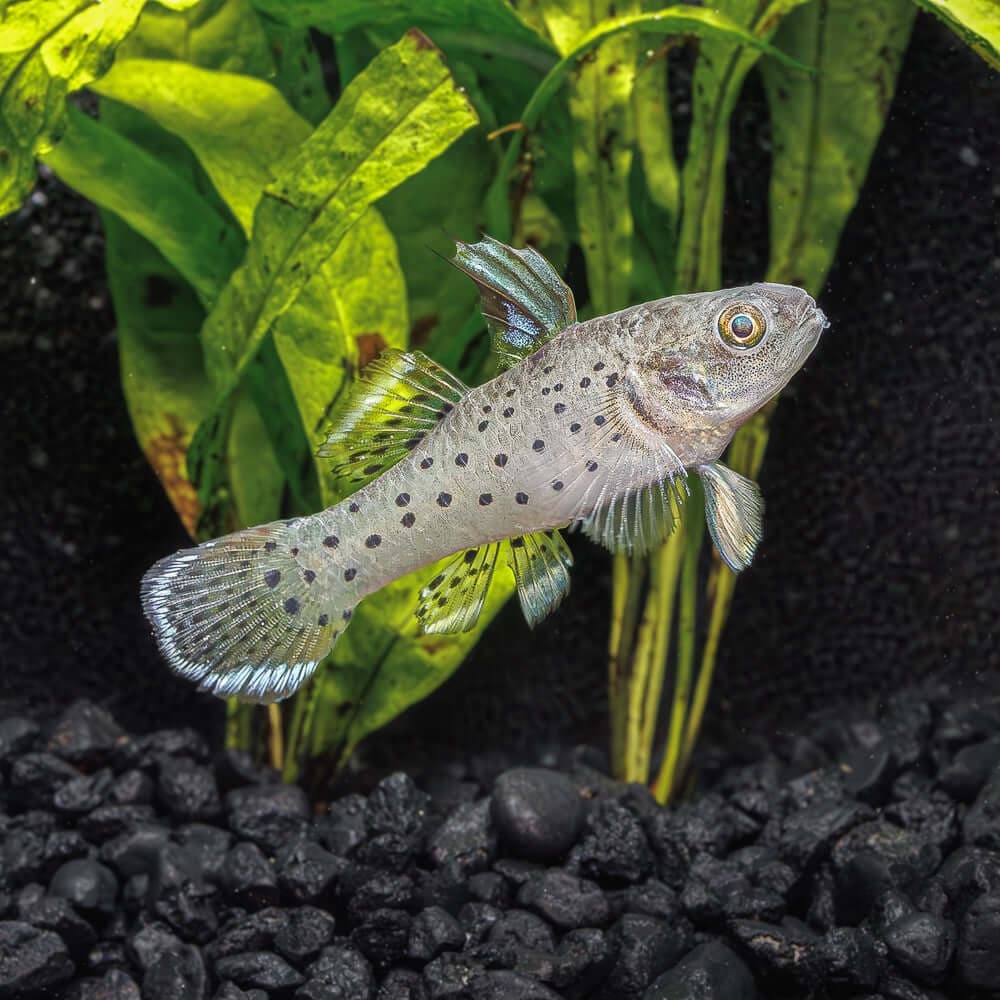
Stigmatogobius sadanundio, the knight goby (also called the fan dancer goby or saddled goby), is a small, attractively patterned brackish water goby from Southeast Asia. Their pale grey body with irregular dark spots and dashes, combined with their large, fan-like dorsal fins displayed in dominance or courtship, creates a striking display in a species-appropriate setup.
Native to coastal and estuarine habitats across Southeast Asia from India to Indonesia, knight gobies inhabit brackish water: the transition zone between freshwater and marine where rivers meet the sea. Their specific brackish water requirement distinguishes them from most freshwater gobies.
Knight goby care is intermediate. Their brackish water requirement limits compatible tank mates, and their predatory nature toward very small fish requires appropriate selection. In a brackish species setup, they are fascinating, personable fish.
Basic Overview
Common Misconceptions
"They are freshwater fish." Knight gobies are brackish water fish that require salt in their water for long-term health. Freshwater-only conditions cause chronic stress and reduced lifespan. 1-3 teaspoons of marine salt per gallon is recommended.
"They are safe with small fish." Knight gobies will eat any fish small enough to fit in their mouth, including small tetras and nano fish. Tank mates should be fish of similar size and compatible with brackish water.
"Males can always be kept together." Males are territorial with each other. In small tanks, two males will fight. Keep one male per tank or pairs in larger tanks with visual barriers.
"Freshwater salt is adequate." Marine salt (such as Instant Ocean) is preferred over freshwater aquarium salt as it provides a more complete mineral profile matching their estuarine habitat.
Recommended Setup
- 20-30+ gallon tank
- Brackish water with marine salt
- Caves and hiding spots
- Fine sand or gravel substrate
- Hardy brackish-tolerant plants or artificial plants
- Good filtration
Diet
Knight gobies are carnivores that require meaty foods:
- Frozen bloodworms (primary food)
- Frozen brine shrimp
- Frozen mysis shrimp
- Small sinking pellets (some specimens accept)
- Live ghost shrimp (enrichment)
Feed once or twice daily. Knight gobies are enthusiastic feeders that respond actively to food. Target feeding near their favorite territory spots ensures they receive adequate nutrition. They can be trained to accept frozen foods readily.
Personality
Knight gobies are bold, interactive fish that perch on surfaces and observe their environment with characteristic goby inquisitiveness. They track the keeper's movements, approach the glass, and respond to feeding with visible excitement.
Males perform elaborate fin-display behavior with their large dorsal fins fully erect, combined with coloration changes and body posturing. This display toward rival males or potential mates is impressive and dramatic for such a small fish.
Their brackish water requirement means they share tank space with a limited range of compatible species, but within a brackish species community they are engaging, active, and characterful inhabitants.
Water Parameters
Knight gobies require brackish water reflecting their estuarine native habitat:
- pH: 7.5-8.5
- Hardness (gH): 10-20 dGH
- Temperature: 72-82 degrees F
- Salinity: 1.002-1.010 specific gravity (1-3 tsp marine salt per gallon)
- Ammonia and Nitrite: 0 ppm
- Nitrate: below 20 ppm
Here are some top tips to deal with unwanted parameters:
- Brackish water (light to moderate salt content) is essential for long-term health. Freshwater knight gobies decline over months to years.
- Use marine salt, not freshwater aquarium salt, for a better mineral profile.
- When performing water changes, mix replacement water to the same salinity as the tank before adding.
- Hard, alkaline water is appropriate for their estuarine habitat.