Hujeta Rocket Gar Care Guide
A Complete Care Guide for Ctenolucius hujeta
Introduction
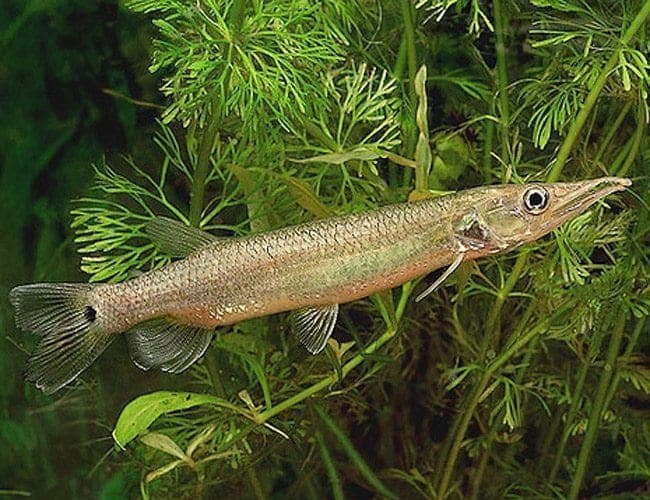
Ctenolucius hujeta, the hujeta rocket gar (also called the blunt-nosed gar or freshwater gar), is a slender, elongated surface predator from South America. Their torpedo body shape, silver flanks, and large, well-toothed mouth make them appear similar to North American gars, though they are not related. They are accomplished surface hunters that strike prey with explosive speed.
Native to river systems in Venezuela and Colombia, hujeta rocket gars inhabit slow-moving rivers, flooded fields, and lake margins. They are surface fish that hunt at the air-water interface, ambushing prey from below.
Hujeta rocket gar care is intermediate in difficulty. They require a diet of meaty foods, a secure lid to prevent jumping, and tank mates large enough not to be eaten. In a large, appropriately stocked aquarium, they are striking, active surface fish.
Basic Overview
Common Misconceptions
"They are true gars." Hujeta rocket gars are characins (family Ctenoluciidae), not true gars (family Lepisosteidae). Their gar-like appearance is convergent evolution. Their care and biology differ from North American gars.
"They can be kept with standard community fish." Any fish small enough to fit in their long-jawed mouth will be eaten. This includes fish up to 4-5 inches. Tank mates should be large, robust species that cannot be swallowed.
"They do not jump." Hujeta rocket gars are extreme jumpers that can leap several feet from the water. An unsecured lid guarantees a dead fish within days. A completely sealed lid is essential.
"They eat dry food." Hujeta rocket gars are surface predators that hunt by sight and primarily pursue moving, meaty food. Most specimens refuse dry pellets. A reliable supply of frozen or live meaty foods is required.
Recommended Setup
- 75+ gallon tank with long horizontal space
- Open surface swimming area
- Some surface cover (floating plants) for security
- Completely sealed, weighted lid
- Minimal decor: smooth driftwood, a few rocks
- Good filtration with gentle surface flow
Diet
Hujeta rocket gars are surface predators requiring meaty foods presented at or near the surface:
- Frozen lance fish or smelt (excellent match for natural prey)
- Frozen whole shrimp
- Live feeder guppies or endlers (for training and enrichment)
- Frozen bloodworms (juvenile fish)
- Floating carnivore sticks (some specimens can be trained)
Feed every other day. Food should be presented at the surface or allowed to sink slowly in their sight line. Hujeta gars hunt by sight and pursue moving food. Wiggling food on tongs or allowing slow-sinking food to pass their field of view is the best feeding approach. Training to accept frozen food instead of live requires patience but is worthwhile for disease risk management.
Personality
Hujeta rocket gars are impressive, dynamic surface fish that bring a predator's energy to the upper zone of any large aquarium. Their explosive strikes when feeding, graceful cruising at the surface between hunts, and torpedo-like body shape create a compelling display.
Groups of 3 or more are more settled and less skittish than solitary individuals. In groups they develop a loose schooling pattern at the surface, moving in coordinated arcs across the tank.
With appropriate tank mates and regular, consistent feeding, hujeta gars become familiar with their keeper and approach at feeding time. Their speed and precision when striking food is consistently startling and impressive.
Water Parameters
Hujeta rocket gars come from the warm, slightly soft rivers of northern South America:
- pH: 6.5-7.5
- Hardness (gH): 5-12 dGH
- Temperature: 72-79 degrees F
- Ammonia and Nitrite: 0 ppm
- Nitrate: below 20 ppm
Here are some top tips to deal with unwanted parameters:
- Standard community tank parameters are adequate. They are not demanding about water chemistry.
- Good surface agitation for oxygenation is important. They are active, oxygen-demanding fish.
- Weekly 25-30% water changes maintain the conditions their immune system requires.
- Slightly soft, neutral water is ideal, though they adapt to moderate hardness.