Green Neon Rasbora Care Guide
A Complete Care Guide for Microdevario kubotai
Introduction
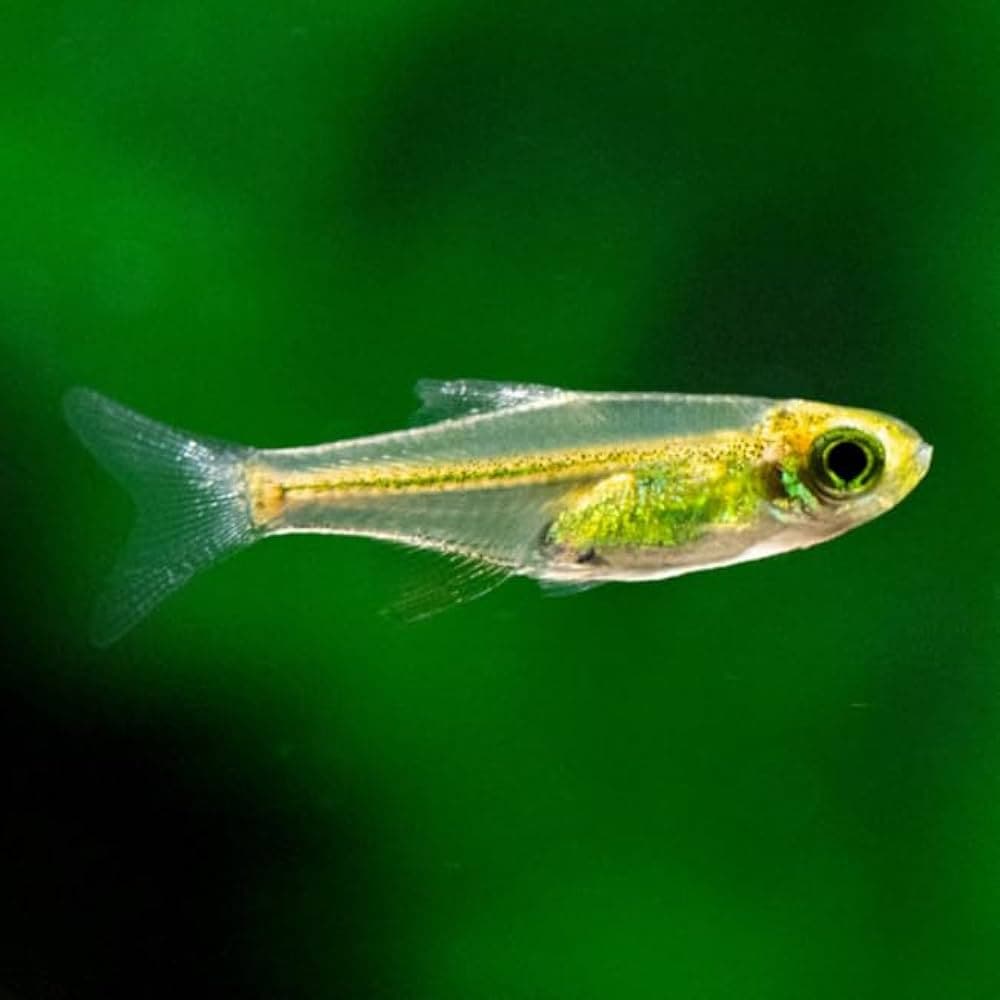
Microdevario kubotai, the green neon rasbora (also called Kubotai's microdevario or the neon green rasbora), is a tiny, vivid nano fish from Southeast Asia. Their iridescent neon-green body, achieved through a combination of structural iridophores and yellow-green pigment, makes them one of the most intensely colored small fish available. Under good lighting, they glow with an almost fluorescent intensity.
Native to the Ataran River drainage in Myanmar and Thailand, green neon rasboras inhabit slow-moving, clear forest streams with soft, slightly acidic water. They are micro-fish (under 1 inch) that live in large groups near the water surface in vegetated areas.
Green neon rasbora care is easy, making them ideal for nano planted tanks. Their extremely small size means they are suitable for aquariums of 5 gallons and above, and their vivid color in large schools creates a spectacular display in densely planted setups.
Basic Overview
Common Misconceptions
"A school of 6 is sufficient." Green neon rasboras show their full beauty in groups of 15 or more. In large schools in a nano planted tank, their combined neon-green creates an extraordinary living display. Small groups are much less visually impactful.
"They need tropical temperatures." Green neon rasboras prefer slightly cooler conditions (68-76 degrees F) than typical tropical fish. High temperatures reduce their lifespan.
"They can eat standard fish food." Their tiny mouths require micro-sized foods. Standard flake must be crushed thoroughly, or purpose-made nano/micro foods should be used.
"They are delicate fish." Despite their tiny size, green neon rasboras are hardy once established in appropriate conditions. They are more robust than their diminutive size suggests.
Recommended Setup
- 5-10+ gallon nano planted tank
- Dense planting with open swimming areas
- Floating plants to diffuse light
- Very gentle filtration (sponge filter ideal)
- Dark substrate to maximize color contrast
- Indian almond leaves optional but beneficial
Diet
Green neon rasboras are micro-predators requiring very small foods:
- Baby brine shrimp (live or frozen)
- Micro worms and grindal worms
- Crushed nano flake or micro pellets
- Daphnia
- Infusoria for fry
Feed twice daily in very small amounts. All food must be micro-sized. Baby brine shrimp are the ideal staple for color and condition.
Personality
Green neon rasboras in a large group create a mesmerizing, shimmering cloud of neon-green in a planted nano tank. Their loose schooling behavior, constant gentle movement, and collective color intensity make them one of the most visually impressive nano species.
They are completely peaceful with all tank mates including very small shrimp and snails. Their tiny size means they cannot harm anything in a typical nano tank.
Under warm-spectrum lighting, their iridescent green intensifies dramatically. The difference between a school of green neon rasboras under standard white lighting versus warm-spectrum LED is remarkable.
Water Parameters
Green neon rasboras come from the cool, soft, clear forest streams of Myanmar and Thailand:
- pH: 6.0-7.5
- Hardness (gH): 2-10 dGH
- Temperature: 68-79 degrees F
- Ammonia and Nitrite: 0 ppm
- Nitrate: below 15 ppm
Here are some top tips to deal with unwanted parameters:
- Slightly cooler temperatures (68-75 degrees F) are optimal for longevity and color intensity.
- Soft, slightly acidic water produces the most vivid iridescent green.
- Very gentle flow from a sponge filter is ideal.
- Small weekly water changes (15%) maintain stability.