Emerald Dwarf Rasbora Care Guide
A Complete Care Guide for Microdevario nanus
Introduction
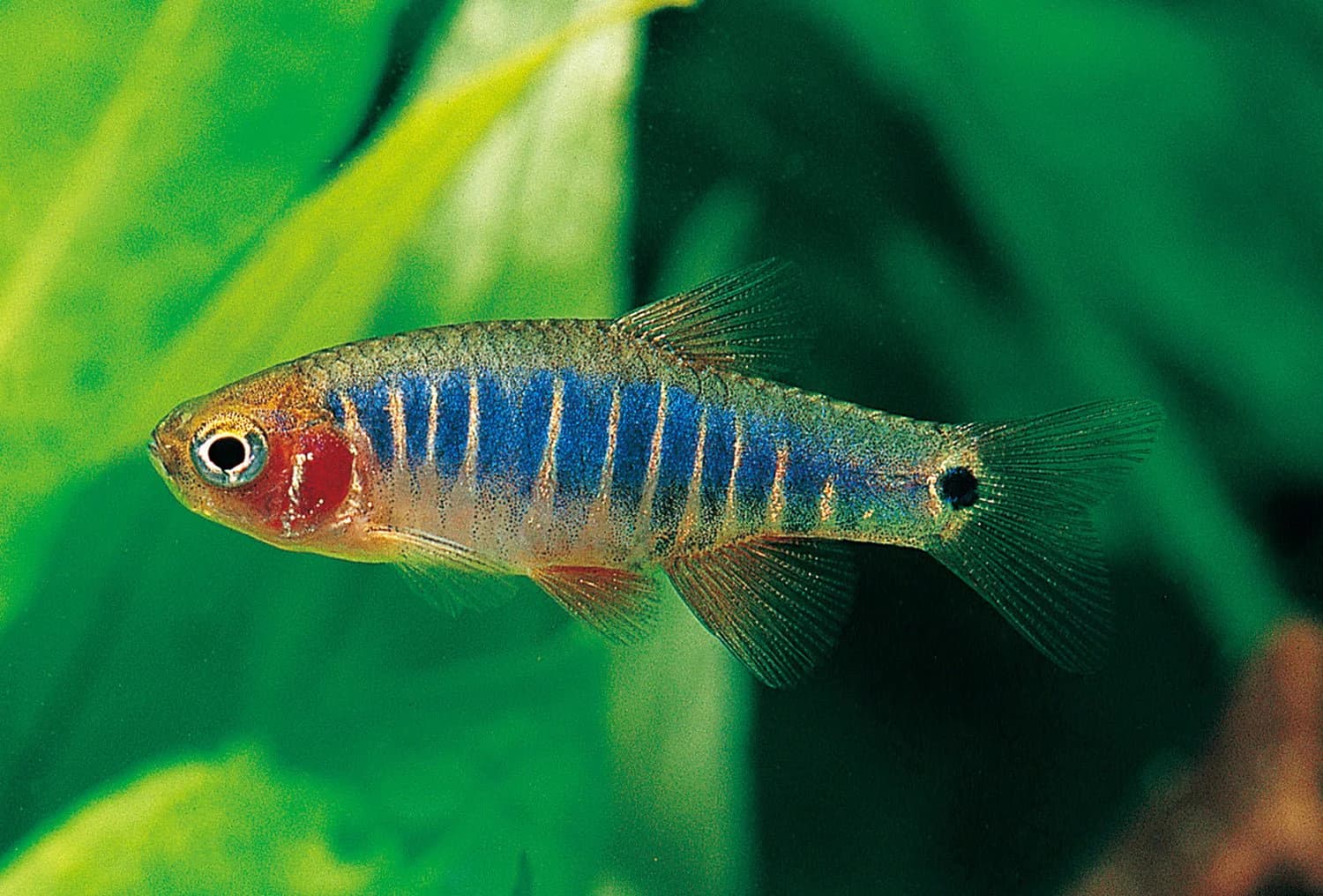
Microdevario nanus, the emerald dwarf rasbora, is a tiny, beautifully colored nano fish from Southeast Asia. Similar in care to M. kubotai (green neon rasbora), the emerald dwarf rasbora has a vivid emerald-green to yellow-green iridescent color that is most intense in males. They are among the smallest fish available for nano aquariums.
Native to forest streams in Thailand and Myanmar, emerald dwarf rasboras inhabit slow-moving, clear, soft water with dense vegetation. They are micro-schooling fish found in large groups near the surface.
Their care is easy and similar to other Microdevario species. They are ideal for nano planted tanks and can be kept in groups of 20 or more in aquariums as small as 5-10 gallons.
Basic Overview
Common Misconceptions
"They are identical to green neon rasboras." M. nanus and M. kubotai are closely related but distinct species. M. nanus tends to have a slightly more yellow-green coloration and marginally different body proportions. Their care requirements are essentially the same.
"Small groups are adequate." Large groups of 20 or more show the full beauty of this species. Their collective iridescent display is the primary visual appeal.
"They eat standard foods." Their tiny mouths require micro-sized foods exclusively. Standard flake must be crushed to powder.
Recommended Setup
- 5-10+ gallon nano planted tank
- Dense fine-leaved planting
- Floating plants
- Sponge filter only
- Dark substrate
- Very gentle water movement
Diet
Emerald dwarf rasboras require micro-sized foods:
- Baby brine shrimp
- Micro worms
- Crushed nano flake
- Daphnia
Feed twice daily in tiny amounts. All food must fit their tiny mouths. Baby brine shrimp are the ideal staple.
Personality
Emerald dwarf rasboras in large groups create a shimmering, constantly moving cloud of emerald-green in a nano planted tank. Their schooling behavior is fluid and elegant, with the group moving in continuous loose formations through plant stems and open water.
They are utterly harmless to all tank mates including the smallest shrimp and snails. In shrimp-focused nano tanks, they add color and movement without threatening the shrimp.
Like M. kubotai, their iridescent color responds dramatically to lighting quality. Warm-spectrum LEDs at moderate intensity bring out the maximum emerald-green intensity.
Water Parameters
Emerald dwarf rasboras come from cool, soft forest streams of Southeast Asia:
- pH: 6.0-7.5
- Hardness (gH): 2-10 dGH
- Temperature: 68-79 degrees F
- Ammonia and Nitrite: 0 ppm
- Nitrate: below 15 ppm
Here are some top tips to deal with unwanted parameters:
- Cool, soft water produces the best color and health outcomes.
- Gentle sponge filtration is ideal.
- Small weekly water changes of 15% maintain stable parameters.
- Indian almond leaves add tannins that replicate natural blackwater conditions.