Geophagus Care Guide
A Complete Care Guide for Geophagus species
Introduction
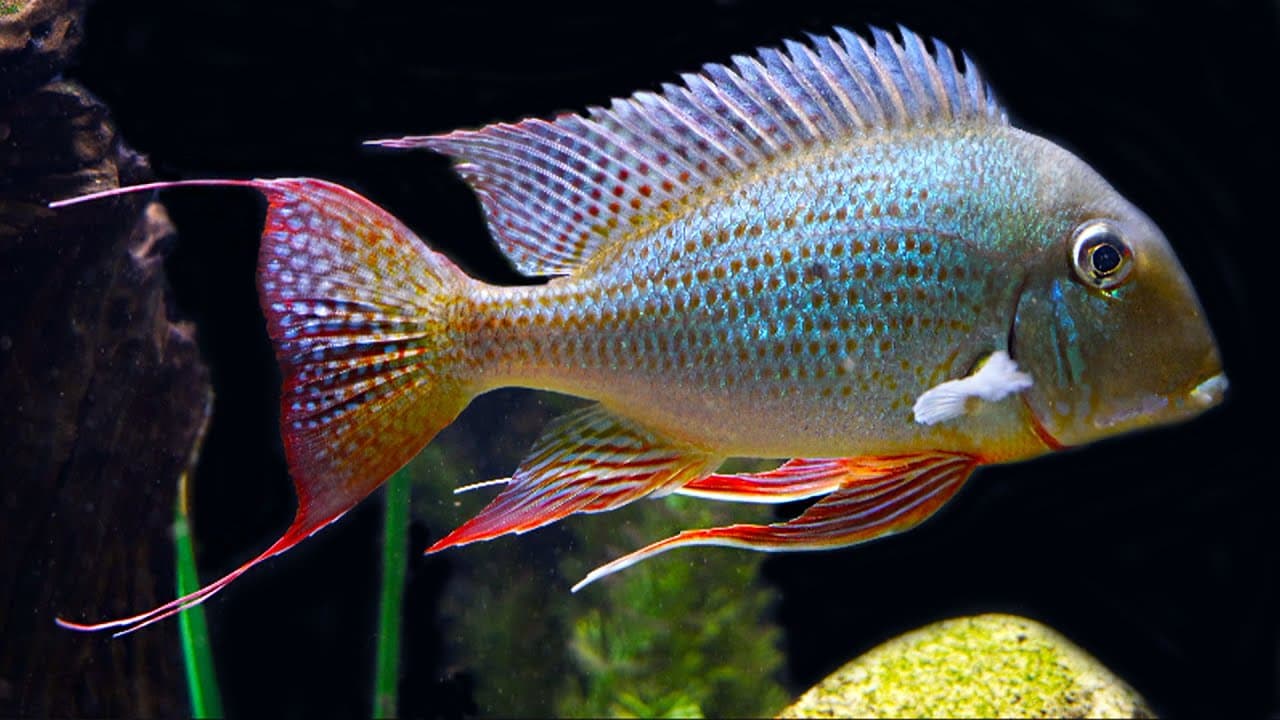
Geophagus (meaning "earth eater" in Greek) is a diverse genus of South American cichlids known for their characteristic behavior of continuously sifting sand and substrate through their gill rakers to extract small invertebrates and organic matter. Watching a group of geophagus working a sandy substrate is one of the most naturalistic behaviors visible in the aquarium hobby.
Geophagus brasiliensis (pearl cichlid) and Geophagus steindachneri (Redhump eartheater) are among the most commonly kept species. Many eartheater cichlids (including Satanoperca and Biotodoma species) are sold informally as geophagus. All share similar care requirements.
Geophagus are moderate-sized cichlids (typically 5–8 inches) that are among the more peaceful members of the cichlid family. Groups of 5–6 can coexist in a large tank, displaying fascinating social behaviors without the destructive aggression of many other cichlid species.
Basic Overview
Common Misconceptions
"They are aggressive cichlids." Most geophagus species are among the more peaceful cichlids available. Groups of 5–6 coexist in large tanks with relatively minor social friction. They are far less aggressive than many other cichlid genera.
"They can be kept on gravel." The earth-eating behavior requires fine sand. On gravel, geophagus cannot sift properly and cannot fulfill their natural feeding behavior, leading to chronic stress. Fine sand is mandatory.
"They are community fish for any tank." While peaceful for cichlids, they are large enough to eat fish under 2 inches and will disrupt heavily planted setups with constant sifting. They suit a large, sandy, sparsely planted cichlid community rather than a delicate planted community.
"One geophagus is fine." Geophagus are social fish that exhibit fascinating group dynamics. A single specimen in isolation is significantly more stressed and less behaviorally interesting than a group of 5–6.
Recommended Setup
- 75+ gallon tank with a deep fine sand substrate (3+ inches for full sifting behavior)
- Open sandy areas for sifting; minimal decor on the substrate floor
- Driftwood and rocks along the back and sides creating territories
- Hardy, potted or weighted plants: Amazon swords, anubias; fine-leaved plants will be uprooted
- Strong filtration capable of handling suspended sand and heavy fish loads
- Good oxygenation and surface agitation
- Soft, slightly acidic water preferred
Diet
Geophagus are omnivores that extract invertebrates, seeds, plant matter, and detritus from sand in the wild. In the aquarium:
- High-quality sinking cichlid pellets as a staple
- Frozen bloodworms, brine shrimp, and mysis shrimp
- Live blackworms and earthworms for enrichment
- Sinking wafers that fall to the substrate and can be sifted
- Blanched vegetables: zucchini, peas, spinach
Feed once or twice daily. Place sinking food directly on the substrate or sand where they naturally feed. Geophagus will also extract nutritious particles from the sand itself in a well-established, biologically active substrate, which is one of the reasons a deep sand bed is beneficial.
Personality
Geophagus are elegant, deliberate fish whose constant earth-eating behavior is mesmerizing to observe. A group working a sand substrate together creates an ever-shifting pattern of sifting, rising plumes of sand, and the gentle, rhythmic movement of fish following their instincts.
Most species are maternal or biparental mouthbrooders: after spawning, eggs and later fry are carried in the parent's mouth for protection, released periodically to feed and then recalled at any sign of danger. Watching a pair of geophagus and their cloud of fry, the parents scooping and releasing fry continuously, is extraordinary.
Social hierarchy within a geophagus group is visible in body language: dominant fish hold their body erect with fins extended; subordinate fish adopt a more sloped posture. This hierarchy changes over time and varies by species.
Mouthbrooding Behavior
Many geophagus species are either ovophile or larvophile mouthbrooders, meaning they pick up either eggs or newly hatched wrigglers into their mouths for protection. The brooding parent, typically the female but sometimes both parents, carries the young for 2–4 weeks, fasting throughout the brooding period.
Fry are typically released when large enough to accept baby brine shrimp. The parents continue to call the fry back into their mouths when danger threatens, gradually releasing them permanently as they grow.
Avoid separating brooding pairs unless absolutely necessary. The stress of being caught and moved often causes the brooding parent to swallow or spit the eggs. Removing threatening tank mates is preferable to disturbing the brooding pair directly.
Water Parameters
Geophagus come from the warm, soft, often slightly acidic rivers and lakes of South America:
- pH: 6.0–7.5 (slightly acidic to neutral)
- Hardness (gH): 3–12 dGH (soft to moderately soft)
- Temperature: 76–84°F
- Ammonia and Nitrite: 0 ppm
- Nitrate: below 20 ppm
Here are some top tips to deal with unwanted parameters:
- A deep sand bed (3+ inches) becomes biologically active over time, hosting micro-fauna that geophagus sift out as food. This is a natural nutritional supplement that cannot be replicated in a bare-bottom or gravel tank.
- Weekly 30% water changes manage nitrates in a tank stocked with medium-large cichlids. Strong filtration plus regular changes is the winning combination.
- Driftwood creates visual barriers for territory establishment and naturally softens water, benefiting all soft-water cichlid species.
- Soft, slightly acidic water mimicking their native habitat produces the best health and most vivid coloration. In harder tap water, blending with RO water significantly improves conditions.