Firemouth Cichlid Care Guide
A Complete Care Guide for Thorichthys meeki
Introduction
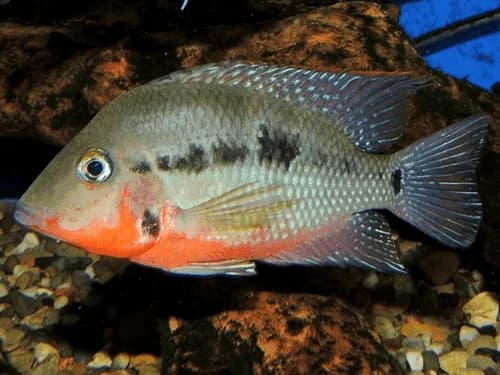
Thorichthys meeki, the firemouth cichlid, is a mid-sized Central American cichlid from the Yucatan Peninsula of Mexico and Guatemala. Their most distinctive feature is the vivid red-orange coloration on the lower jaw, throat, and chest that gives them their common name -- in threat display, they flare their gill covers to expose this "fire" pattern in an impressive warning to rivals and intruders.
Native to rivers, streams, and cenotes of the Yucatan Peninsula and Belize, firemouth cichlids inhabit slow to moderately flowing water over sandy and muddy substrates with vegetation and root structure. They are sifting feeders that take mouthfuls of substrate and sift out food items.
Firemouth cichlid care is easy to moderate. They are hardy, personable, and manageable in size (5-6 inches). Their spectacular threat display, interesting parental behavior, and tolerance of community setups with robust tank mates make them popular beginner Central American cichlids.
Basic Overview
Common Misconceptions
"The firemouth display means they are attacking." The gill-flaring, throat-expanded intimidation display of firemouth cichlids is primarily a bluff. It is a warning signal. While they back up this display with real aggression if the intruder does not retreat, the display itself is designed to avoid physical combat.
"They are compatible with all cichlids." Firemouth cichlids have moderate aggression that increases significantly during spawning. In community tanks with non-cichlid fish of similar size, they are manageable. With aggressive cichlids of similar or larger size, conflicts are common.
"They destroy all plants." Firemouth cichlids sift substrate and may dig near plants, but they are far less destructive to plants than many other cichlid species. Hardy, deep-rooted plants or plants tied to rocks (java fern, anubias) are generally undisturbed.
"They need very large tanks." At 5-6 inches, firemouth cichlids are manageable in 40-55 gallon tanks. A bonded pair in a 40-gallon with appropriate tank mates or in a species-only pair setup is perfectly adequate.
Recommended Setup
- 40+ gallon tank for a pair; 55+ for community
- Sandy substrate for sifting behavior
- Caves (flat rocks, coconut shells) for spawning
- Robust plants (java fern, anubias, vallisneria)
- Good filtration
- Moderate flow
- Peaceful but robust tank mates if in community
Diet
Firemouth cichlids are omnivores that accept most cichlid foods:
- High-quality cichlid pellets
- Frozen bloodworms
- Frozen brine shrimp
- Blanched peas and zucchini
- Sinking pellets for substrate sifting
Feed once or twice daily. Firemouth cichlids are enthusiastic feeders that respond actively to food. They sift mouthfuls of sand, so sinking pellets or spot-feeding near the substrate works well. A varied diet maintains best health and coloration.
Personality
Firemouth cichlids are confident, interactive fish with a genuine personality. They recognize their keeper, approach the glass at feeding time, and deliver their impressive threat display with theatrical commitment when they feel challenged. The sight of a firemouth at full gill-flare is genuinely dramatic for a 5-inch fish.
Bonded pairs are devoted and attentive parents. They clean spawning surfaces, guard eggs and fry with commitment, and escort free-swimming fry around the tank in a tight cloud. The parental behavior of a firemouth pair is one of the most rewarding cichlid experiences available in a mid-sized tank.
Their balance of personality, manageable aggression, attractive appearance, and interesting behavior makes them one of the most recommended starter Central American cichlids.
Water Parameters
Firemouth cichlids come from the rivers and cenotes of the Yucatan Peninsula:
- pH: 7.0-8.0
- Hardness (gH): 8-18 dGH
- Temperature: 72-82 degrees F
- Ammonia and Nitrite: 0 ppm
- Nitrate: below 20 ppm
Here are some top tips to deal with unwanted parameters:
- Moderately hard, slightly alkaline water reflects their Yucatan limestone-influenced habitat.
- Standard municipal tap water in many regions is appropriate without modification.
- Weekly 25-30% water changes maintain good conditions.
- Good filtration in cichlid tanks is important due to their higher waste output.