Filament Barb Care Guide
A Complete Care Guide for Dawkinsia assimilis
Introduction
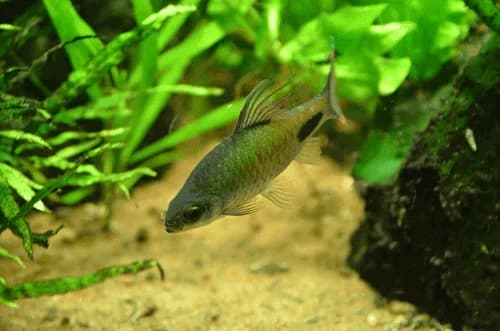
Dawkinsia assimilis, the filament barb (also called the Khavli barb), is a large, active barb from the rivers of the Western Ghats in southern India. Like other Dawkinsia species, mature males develop elongated filamentous extensions from the dorsal fin rays -- a distinctive secondary sexual characteristic that becomes more pronounced with age and good condition. Their silvery body with reddish-orange highlights and bold fin display makes them impressive schooling fish in large aquariums.
Native to the fast-flowing, rocky rivers and streams of Kerala and Karnataka in southwestern India, filament barbs inhabit cool, well-oxygenated water. Their cool-water origin distinguishes them from most tropical aquarium fish and is the most important care consideration.
Filament barb care is easy. Their primary requirement is cooler water (65-76 degrees F) and a school of 6 or more. In appropriate conditions they are active, hardy, long-lived, and visually rewarding schooling fish for larger aquariums.
Basic Overview
Common Misconceptions
"Standard tropical temperatures are fine." Filament barbs are from cool hill streams and are stressed by prolonged temperatures above 77 degrees F. Maintaining 65-76 degrees F is the most critical care requirement.
"The dorsal filaments are damaged fins." Elongated dorsal fin extensions in mature males are a healthy, natural secondary sexual characteristic. They develop gradually over months and years and become more impressive with excellent condition.
"They will nip the fins of other fish." Filament barbs are generally peaceful and not prone to fin-nipping in appropriate group sizes of 6 or more. They are suitable for community tanks with other cool-water, robust species.
Recommended Setup
- 55+ gallon tank for a school of 6
- Cooler water (65-76 degrees F)
- Strong flow and high oxygenation
- Open swimming space with planted margins
- Compatible cool-water tank mates
- Good filtration
Diet
Filament barbs are omnivores that accept most standard aquarium foods:
- High-quality flake or pellets
- Frozen bloodworms
- Frozen brine shrimp
- Blanched vegetables
- Frozen daphnia
Feed twice daily. They are enthusiastic, non-fussy feeders. A varied diet with frozen protein foods maintains the most vivid coloration and best fin development in males.
Personality
Filament barbs in a school are dynamic, active fish that fill a large aquarium with movement. The progressive development of male dorsal filaments over months and years is one of the most visually rewarding aspects of keeping this species.
Their cool-water preference makes them excellent companions for other cool-water species: other Dawkinsia barbs, hillstream loaches, white cloud mountain minnows, and Arulius barbs in a subtropical community setup.
A school of 10 filament barbs in a 75-gallon planted subtropical tank creates an impressive and active display that showcases their vivid fin displays and natural schooling behavior.
Water Parameters
Filament barbs come from the cool, fast-flowing rivers of southern India's Western Ghats:
- pH: 6.0-7.5
- Hardness (gH): 5-15 dGH
- Temperature: 65-76 degrees F
- Ammonia and Nitrite: 0 ppm
- Nitrate: below 20 ppm
Here are some top tips to deal with unwanted parameters:
- Cool water is the most critical parameter. Room-temperature tanks in many homes may not require a heater.
- Strong oxygenation through surface agitation reflects their hill-stream habitat.
- Standard tap water chemistry in most regions is adequate.
- Weekly 25% water changes are sufficient.