Black Spot Barb Care Guide
A Complete Care Guide for Dawkinsia filamentosa
Introduction
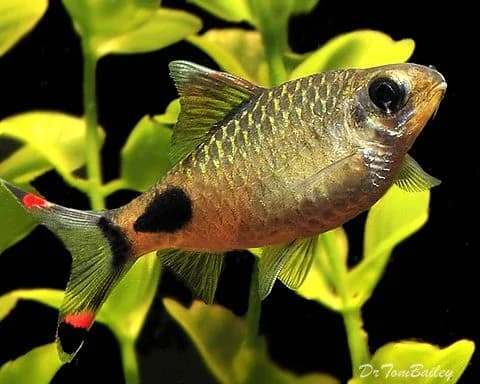
Dawkinsia filamentosa, the black spot barb (also called the filament barb), is an attractive Indian barb named for the prominent black spot at the base of the caudal peduncle and the elongated dorsal filament that develops in mature males. Their red-orange body with silvery iridescence and bold dark markings creates a striking display in a planted or open community aquarium.
Native to fast-flowing rivers and hill streams in the Western Ghats region of southern India, black spot barbs inhabit cool, clear, highly oxygenated water. Their preference for cooler water distinguishes them from most tropical barbs and requires attention in captive care.
Black spot barb care is easy. Their primary requirement is cooler water temperatures (68-76 degrees F) and a school of 6 or more. In appropriate conditions they are active, hardy, and visually rewarding schooling fish.
Basic Overview
Common Misconceptions
"They are comfortable at standard tropical temperatures." Black spot barbs are from cool hill streams and are stressed by prolonged temperatures above 78 degrees F. Cooler conditions (68-76 degrees F) are essential for long-term health.
"The dorsal filament is a fin defect." The elongated thread-like dorsal extension in mature males is a natural, healthy secondary sexual characteristic that becomes more pronounced with age and excellent condition.
"The black spot indicates disease." The black spot at the caudal peduncle is a permanent, normal feature of the species -- not a symptom of any illness.
"A school of 3-4 is sufficient." Groups of 6 or more display the most natural behavior and the most impressive inter-male dorsal fin displays. Smaller groups are shyer and less active.
Recommended Setup
- 40+ gallon tank for a school of 6
- Cooler water (68-76 degrees F)
- Good flow and oxygenation
- Open swimming areas with planted edges
- Smooth substrate
- Compatible cooler-water tank mates
Diet
Black spot barbs are omnivores that accept most standard foods:
- High-quality flake or pellets
- Frozen bloodworms
- Frozen daphnia
- Blanched vegetables
Feed twice daily. They are enthusiastic, non-fussy feeders. A varied diet with live or frozen proteins in addition to plant-based foods maintains the most vivid coloration.
Personality
Black spot barbs are energetic, sociable fish that school actively in the open water. Their red-orange color with silver iridescence under good lighting is attractive, and the visible development of male dorsal filaments over time adds a rewarding visual dimension to keeping them.
Their cooler water tolerance makes them excellent companions for Arulius barbs, white cloud mountain minnows, and hillstream loaches in a subtropical community tank setup.
In a school of 8 or more in a 55-gallon planted tank, they provide constant movement and social activity that makes a tank feel alive and dynamic.
Water Parameters
Black spot barbs come from the cool, oxygenated hill streams of the Western Ghats, India:
- pH: 6.0-7.5
- Hardness (gH): 5-15 dGH
- Temperature: 68-76 degrees F
- Ammonia and Nitrite: 0 ppm
- Nitrate: below 20 ppm
Here are some top tips to deal with unwanted parameters:
- Cool water is the defining parameter for this species. Regular temperature monitoring is important.
- Strong oxygenation through surface agitation reflects their hill-stream origin.
- Standard tap water chemistry is generally adequate.
- Weekly 25% water changes are sufficient.