Elephant Nose Fish Care Guide
A Complete Care Guide for Gnathonemus petersii
Introduction
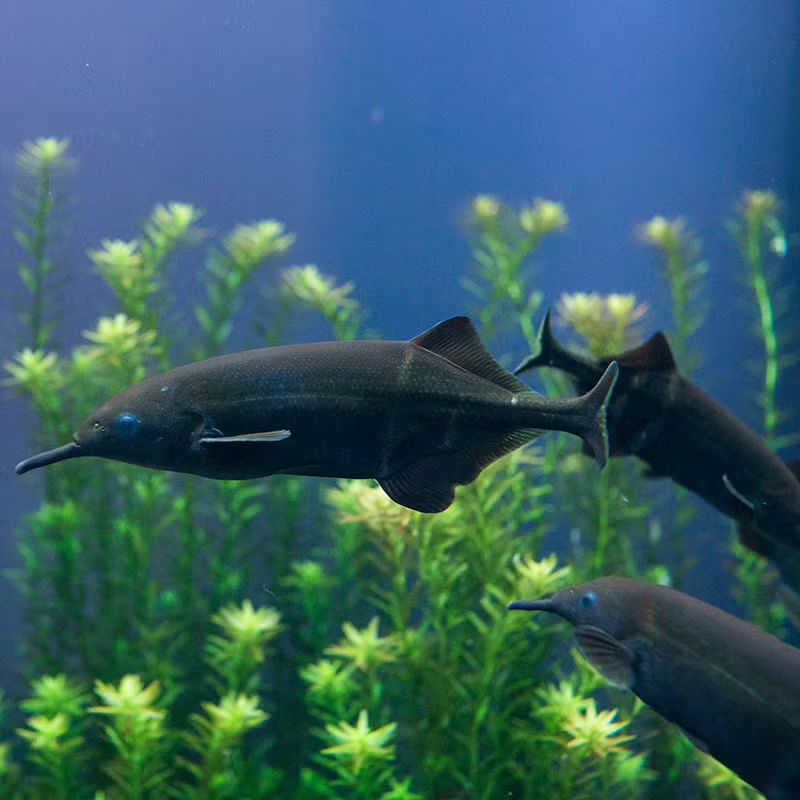
Gnathonemus petersii, the elephant nose fish, is one of the most intellectually fascinating freshwater fish available. Their distinctive elongated chin appendage (the Schnauzenorgan) is used as an electrosensory organ to detect prey in dark, murky water. Elephant nose fish generate and perceive weak electrical fields, and research has shown their brains to be among the largest relative to body size of any fish, rivaling some mammals.
Native to the Congo River basin and West African river systems, elephant nose fish inhabit sluggish, murky, heavily vegetated rivers and floodplains. They are nocturnal fish that spend daylight hours sheltering in dense vegetation or caves, emerging at night to hunt invertebrates in the substrate.
Their care is rated intermediate to advanced. They are sensitive to poor water quality and high nitrates, require a dark environment with numerous hiding places, and are easily stressed by bright light and open spaces. Keepers who provide appropriate conditions are rewarded with a remarkably interactive and intelligent fish.
Basic Overview
Common Misconceptions
"They can be kept with other elephant nose fish." Elephant nose fish are territorial and will fight with conspecifics in all but very large tanks. They produce electrical signals that interfere with each other's electrosensory systems, causing stress even without physical aggression. One per tank is the standard recommendation.
"Bright lights will not bother them." Elephant nose fish are highly light-sensitive and strongly prefer dim, shaded conditions. Under bright light they remain hidden and refuse to feed. Dim lighting or heavily planted tanks that create shaded areas are essential.
"They eat standard fish food." Elephant nose fish require meaty, live or frozen foods. They are reluctant to accept dry foods and often refuse flake or pellets entirely. Blackworms, bloodworms, and tubifex are the standard diet.
"They are inactive and boring." Elephant nose fish are most active after lights-out. Observing them at night with a dim red light reveals their true behavior: constant probing of the substrate, investigating every surface with their Schnauzenorgan, and rapid, agile swimming.
Recommended Setup
- 55+ gallon tank with long horizontal swimming space
- Multiple caves and dense hiding spots: PVC pipes, driftwood, clay pots
- Fine sand substrate for substrate-probing feeding behavior
- Dim lighting; floating plants or dense surface cover to reduce light
- Dense planting along sides and back for security
- Strong filtration with gentle flow (avoid strong direct current)
- Tightly fitting lid; elephant nose fish can jump
Diet
Elephant nose fish are carnivorous invertebrate feeders. Live and frozen meaty foods are the staple:
- Live or frozen blackworms (primary staple; highly preferred)
- Frozen bloodworms
- Frozen tubifex worms
- Live or frozen white worms and grindal worms
- Frozen brine shrimp (supplemental)
Feed after lights-out when the fish is most active. Drop food near the substrate where they naturally forage. Many specimens never accept dry foods; do not rely on pellets or flake as a primary diet. Blackworms buried slightly in sand are ideal as they mimic natural prey in substrate.
Personality
Elephant nose fish are among the most intelligent freshwater fish available. Research has demonstrated problem-solving ability, memory, and what appears to be play behavior. In appropriate conditions they become familiar with their keeper, recognizing individuals and emerging at feeding time with increasing confidence.
They are solitary and territorial with conspecifics, but generally peaceful with fish that do not compete for the same substrate zone or share similar electrical frequencies. Tankmates should be mid-water or surface dwellers that leave the bottom territory undisturbed.
Their nocturnal nature means the full extent of their activity is rarely observed without special effort. Red light (which fish do not perceive as threatening) reveals their nighttime behavior: systematic, methodical investigation of every centimeter of substrate and decor using their electrosensory appendage.
Electrosensory Biology
The elephant nose fish generates weak electrical pulses from a modified muscle organ in its tail (the electric organ). These pulses create an electrical field around the fish that is distorted by objects in the environment; the distortions are detected by electroreceptors concentrated in the Schnauzenorgan and skin.
This electrolocation system allows them to find prey buried in substrate, navigate in complete darkness, and communicate with conspecifics. The electrical signals of two elephant nose fish in close proximity interfere with each other, which is why they are territorial and stressed by tank mates of the same species.
The large brain required to process electrosensory information is one reason elephant nose fish are considered particularly intelligent. They are capable of operant conditioning tasks that other fish fail, and anecdotal reports of puzzle-solving and object recognition from experienced keepers are consistent with their cognitive biology.
Water Parameters
Elephant nose fish come from slow, warm, soft, acidic West African rivers:
- pH: 6.5-7.2
- Hardness (gH): 4-10 dGH (soft to moderately soft)
- Temperature: 73-82 degrees F
- Ammonia and Nitrite: 0 ppm
- Nitrate: below 10 ppm (very sensitive to nitrate)
Here are some top tips to deal with unwanted parameters:
- Elephant nose fish are exceptionally sensitive to elevated nitrates. Nitrate above 20 ppm causes chronic stress and increased disease susceptibility. Weekly 25-30% water changes and efficient filtration are non-negotiable.
- Soft, slightly acidic water replicates their natural habitat. In hard alkaline tap water, consider mixing with RO water to soften.
- Gentle, consistent water temperature without large fluctuations is important. Avoid placing the tank near air conditioning vents or windows with large temperature swings.
- Avoid copper-based medications and many salt-based treatments. Elephant nose fish are sensitive to many common aquarium chemicals.