Electric Blue Crayfish Care Guide
A Complete Care Guide for Procambarus alleni
Introduction
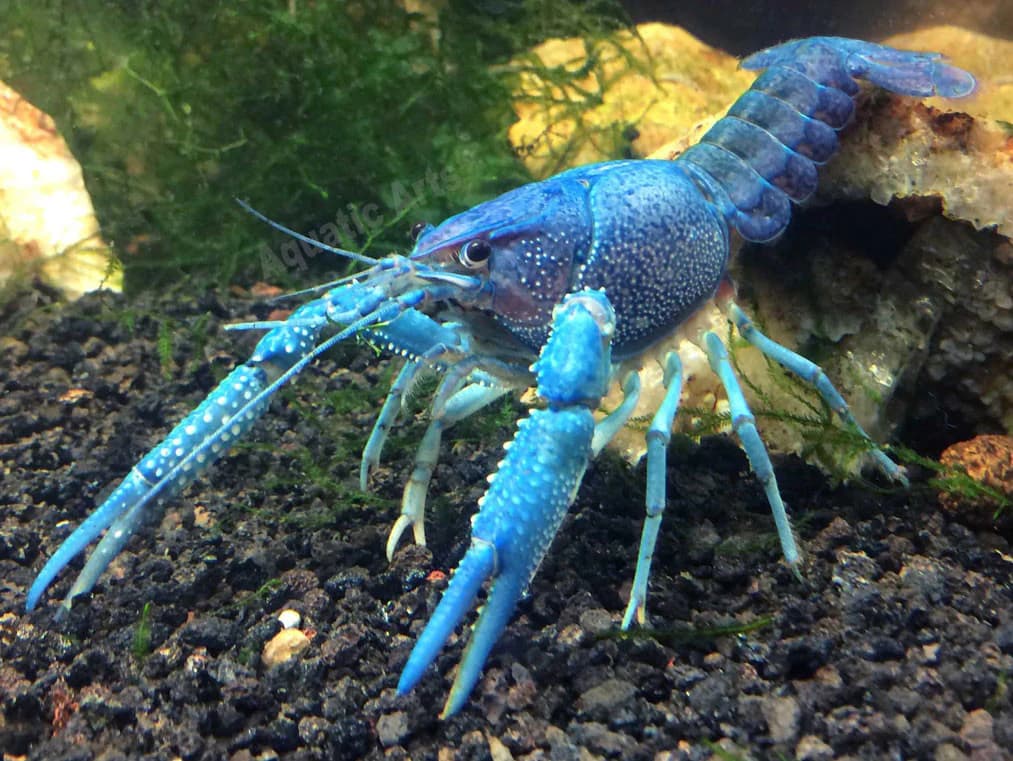
Procambarus alleni, the electric blue crayfish (also called the Florida blue crayfish or Everglades crayfish), is a North American crayfish species from Florida whose striking electric blue color form has made it popular in the aquarium hobby. The wild form is variable in color, but selective breeding has produced vivid blue specimens that are widely available.
Native to Florida's Everglades and surrounding waterways, electric blue crayfish inhabit slow-moving freshwater systems with soft substrate and abundant vegetation. They are adaptable, hardy, and significantly easier to keep than many exotic freshwater crustaceans.
Their care requires accepting two fundamental realities: they will destroy most aquarium plants given the opportunity, and they can and will harm or kill slow-moving or small fish. In species-only setups or with appropriate robust tank mates, they are entertaining, colorful, and interactive invertebrates.
Basic Overview
Common Misconceptions
"They can be kept in a planted community tank." Electric blue crayfish will uproot, shred, and eat most aquarium plants. Only indestructible plants attached to wood (Java fern, anubias) have any chance of survival. A heavily planted community tank is not compatible with this species.
"They are safe with all fish." Any fish slow enough to be caught will eventually be grabbed. Slow-moving or bottom-dwelling fish are at risk. Fast, active mid-water fish are generally safe but not guaranteed.
"They need tropical temperatures." Electric blue crayfish prefer 65-75 degrees F and are adapted to the cooler-than-tropical Floridian waterways. Persistent temperatures above 78 degrees F shorten their lifespan.
"A pair will breed readily without risk." Males will aggressively pursue females for mating. Females can be injured or killed by an overly persistent male in a small tank. Provide ample hiding space or keep them separate until breeding is intended.
Recommended Setup
- 30+ gallon tank for a single crayfish
- Fine sand or gravel substrate; they dig frequently
- Multiple caves: PVC pipes, clay pots, driftwood (more hiding spots than crayfish)
- No soft-leaved plants; only Java fern and anubias on wood if plants are desired
- Good filtration; crayfish produce significant waste
- Moderate flow
- A secure, weighted lid; crayfish are escape artists
Diet
Electric blue crayfish are opportunistic omnivores that eat almost anything:
- Sinking crayfish or cichlid pellets as a staple
- Blanched vegetables: zucchini, carrots, peas, spinach
- Frozen bloodworms and brine shrimp (occasional protein)
- Algae wafers
- Snails and small invertebrates (they will catch these in the tank)
Feed once daily in the evening. Provide a varied diet with a significant vegetable component. Remove uneaten food after 24 hours to maintain water quality. They are opportunistic feeders that will also eat dead fish, plant matter, and biofilm.
Personality
Electric blue crayfish are bold, active crustaceans that are in near-constant motion: digging, rearranging substrate and decor, investigating every part of their environment, and foraging continuously. Their activity level is considerably higher than most invertebrates.
They quickly recognize the approach of food and become agitated and active when their keeper approaches. Many individuals accept food from tongs or fingers and become remarkably tame over time.
Their vivid blue coloration is striking under both natural and artificial lighting. The color is most intense in mature, well-fed specimens in clean water. Stress or poor conditions cause the color to fade to a dull grayish-blue.
Molting and Vulnerability
Electric blue crayfish molt several times per year when young and less frequently as adults. Just before molting, they become inactive and may hide for 24-48 hours. After molting, the new shell takes 24-48 hours to harden, during which they are completely vulnerable.
During the soft-shell period, they should not be disturbed, handled, or exposed to aggressive tank mates. Even typically peaceful fish may attack a freshly molted crayfish. Multiple hiding spots ensure they can find safety during this vulnerable period.
The shed exoskeleton should be left in the tank or partially recovered by the crayfish itself; it contains calcium and other minerals that the crayfish reabsorbs. Adequate calcium in the diet (from vegetables, mineral-rich water) supports healthy shell development.
Water Parameters
Electric blue crayfish come from Florida's waterways and are adaptable to a range of conditions:
- pH: 7.0-8.0
- Hardness (gH): 8-15 dGH (moderately hard)
- Temperature: 65-75 degrees F
- Ammonia and Nitrite: 0 ppm
- Nitrate: below 20 ppm
Here are some top tips to deal with unwanted parameters:
- Cool water is important for longevity. At tropical temperatures (78 degrees F+) their metabolism is pushed too hard, accelerating aging and reducing lifespan. Maintain temperature below 76 degrees F.
- Moderately hard, alkaline water supports healthy shell development. Soft, acidic water can cause shell softening issues over time.
- Avoid copper-based medications. Copper is lethal to crayfish and all invertebrates.
- Weekly 25% water changes maintain good water quality. Crayfish are relatively robust but benefit from consistent maintenance.