Dwarf African Frog Care Guide
A Complete Care Guide for Hymenochirus boettgeri
Introduction
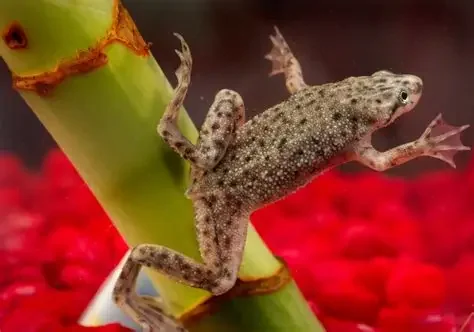
Hymenochirus boettgeri, the dwarf African frog (or dwarf African clawed frog), is a small, fully aquatic frog from Central Africa. Unlike the larger African clawed frog (Xenopus laevis), dwarf African frogs remain small (1.5 inches), are fully aquatic, and are genuinely peaceful community inhabitants that can live alongside small fish. Their flat, smooth body, webbed hands and feet, and distinctive "waving" swimming motion make them charming and unusual aquarium inhabitants.
Native to slow-moving rivers, pools, and swampy areas in Central Africa (Democratic Republic of Congo, Cameroon, Nigeria, Equatorial Guinea), dwarf African frogs inhabit warm, quiet, shallow water with abundant vegetation.
Dwarf African frog care is easy to moderate. Their most important requirements are warm water, minimal water current (they are weak swimmers), and a diet of meaty foods. They are compatible with small, gentle fish that will not harass them.
Basic Overview
Common Misconceptions
"They are the same as African clawed frogs." Dwarf African frogs (Hymenochirus) are a completely different genus from African clawed frogs (Xenopus). African clawed frogs grow to 5 inches, are aggressive predators, and are not suitable for community tanks. Dwarf African frogs are genuinely small, peaceful, and community-compatible.
"They do not need to breathe air." Despite being fully aquatic, dwarf African frogs are air-breathing amphibians that must have access to the water surface at all times. They cannot extract sufficient oxygen from water alone.
"They can be kept with active or nippy fish." Dwarf African frogs are slow, delicate animals that will be harassed by nippy or boisterous fish. Ideal tank mates are very small, gentle fish such as small tetras, dwarf rasboras, and similarly sized peaceful species.
"They eat flake food." Dwarf African frogs cannot eat dry flake foods reliably. They require meaty foods -- frozen or live invertebrates -- and feed primarily by smell in dim lighting.
Recommended Setup
- 10+ gallon tank
- Shallow to moderate depth (12 inches maximum -- they must reach the surface easily)
- Dense planting with open areas near the surface
- Very gentle flow (weak swimmers)
- Soft substrate
- Tight-fitting lid (frogs can escape)
- Small, gentle fish tank mates only
Diet
Dwarf African frogs are carnivores that require meaty foods:
- Frozen bloodworms (primary food)
- Frozen brine shrimp
- Frozen daphnia
- Small live blackworms
- Frog and tadpole pellets (some individuals accept)
Feed every other day, target-feeding near each frog with tweezers or a pipette in dim lighting. They locate food by smell and movement. In community tanks with fish, frogs often fail to receive adequate food without target feeding. They will not compete at the surface or in open water with fish.
Personality
Dwarf African frogs are endearing, quirky inhabitants of any small planted tank. Their distinctive "Zen pose" -- floating motionless with legs splayed out -- is characteristic and looks like a frog in meditation. Punctuated by bursts of frantic swimming to the surface for air, then back to the bottom, their movement pattern is unmistakable.
They have a subtle "singing" behavior: males produce a faint buzzing sound underwater during courtship. Breeding involves an amplexus (embrace) above the water surface followed by eggs being deposited on plants or the water surface.
In a species-appropriate setup -- a heavily planted 10-gallon tank with gentle flow, small peaceful fish, and target-fed meaty foods -- dwarf African frogs are rewarding, long-lived, and charming specialty animals.
Water Parameters
Dwarf African frogs come from the warm, quiet rivers and pools of Central Africa:
- pH: 6.5-7.5
- Hardness (gH): 5-15 dGH
- Temperature: 74-82 degrees F
- Ammonia and Nitrite: 0 ppm
- Nitrate: below 20 ppm
Here are some top tips to deal with unwanted parameters:
- Warm, stable temperature is important. Temperature drops below 68 degrees F cause immune suppression.
- Very gentle flow is essential. Strong current exhausts these weak swimmers.
- Clean water with low nitrate is more important for frogs than for most fish.
- Weekly 20-25% water changes maintain good conditions.