Moonlight Gourami Care Guide
A Complete Care Guide for Trichopodus microlepis
Introduction
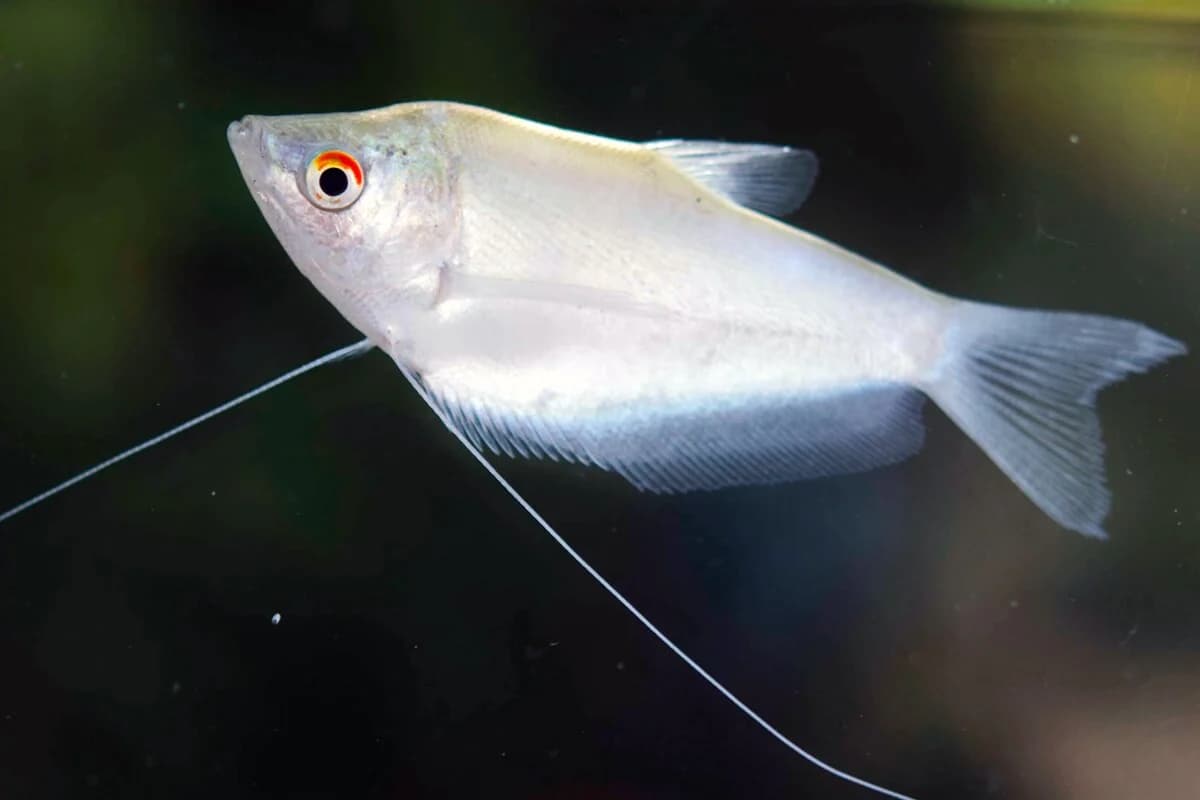
Trichopodus microlepis, the moonlight gourami, is one of the most elegant gourami species available. Their ethereal, silver body with a faint green sheen, long trailing ventral fins that function as sensory organs, and calm, dignified movement through the upper water column make them a beautiful centerpiece for a large planted community tank.
Native to Thailand, Cambodia, and Vietnam, moonlight gouramis inhabit slow-moving, heavily vegetated lowland rivers, lakes, and floodplains. They are labyrinth fish, meaning they breathe atmospheric air from the surface and need access to warm, humid air above the waterline.
Moonlight gouramis are larger than dwarf gouramis (reaching 5-6 inches) and significantly calmer than three spot gouramis, occupying an appealing middle ground as a peaceful, large, striking gourami species suitable for community tanks with appropriately sized companions.
Basic Overview
Common Misconceptions
"They are the same as silver or pearl gouramis." Moonlight gouramis are a distinct species. Pearl gouramis have a spotted pattern; moonlight gouramis are a uniform silver-green. They are also larger than pearl gouramis and have different temperature preferences.
"Any community tank is suitable." At 5-6 inches, moonlight gouramis will eat small fish that fit in their mouth. Tank mates should be at least 1.5-2 inches to be safe. Small tetras and nano fish are not appropriate companions.
"Strong surface flow is fine." As labyrinth fish, moonlight gouramis need calm, humid air above the surface for breathing. Strong surface agitation from filters stresses them. Direct filter output downward.
"Their pale color means they are unhealthy." Moonlight gouramis are naturally silver-green; this is their healthy coloration, not a sign of illness. A stressed or sick specimen will show clamped fins and dulled scales, not a change in base color.
Recommended Setup
- 40+ gallon tank for a pair
- Dense planting reaching near the surface: Amazon swords, large crypts, tall stem plants
- Floating plants across part of the surface; critical for labyrinth fish comfort
- Calm water surface: direct filter output downward, not at the surface
- Tight-fitting lid with minimal gaps; warm humid air above the waterline is essential
- Driftwood and caves for territory separation
- Moderate lighting; floating plants create natural shade
Diet
Moonlight gouramis are omnivores in the wild, consuming insects, invertebrates, algae, and plant matter. They are unfussy eaters:
- High-quality tropical flakes or medium pellets as a staple
- Frozen bloodworms and brine shrimp
- Blanched vegetables: spinach, zucchini, cucumber, peas
- Freeze-dried tubifex or krill
- Live foods for breeding conditioning: mosquito larvae, earthworms
Feed once or twice daily. Moonlight gouramis are calm, deliberate feeders that take food from the surface or midwater. They do not compete aggressively for food but benefit from a varied diet that includes both protein and plant matter.
Personality
Moonlight gouramis move through the tank with an unhurried, stately grace that matches their ethereal appearance. They are peaceful and generally tolerant of other species, spending much of their time in the upper half of the tank near the surface and floating plants.
Males will occasionally display to each other with spread fins, but this rarely escalates to genuine fighting in a large enough tank with visual barriers. Their displays are beautiful to observe: both fish circle each other with fins fully extended, the long trailing ventrals quivering.
They are curious about their keeper and often approach the front glass calmly. Their large size, peaceful temperament, and silver-green shimmer make them one of the most impressive gourami species for a large planted community.
Labyrinth Organ Care
All gourami species including the moonlight gourami possess a labyrinth organ that allows them to breathe atmospheric air directly from the surface. This organ is essential to their survival; a gourami prevented from reaching the surface will drown even in well-oxygenated water.
The air above the water surface must be warm and humid. In cold climates, the gap between the water surface and the lid can become significantly cooler than the water, especially in winter. Cold air damages the labyrinth organ and causes respiratory illness. Keep the gap small and use a close-fitting lid.
Floating plants are not just aesthetic for labyrinth fish; they create a warmer, more humid microclimate just above the surface and provide the sense of shelter that encourages moonlight gouramis to build bubble nests and display their full natural behavior.
Water Parameters
Moonlight gouramis come from the warm, slow-moving lowland waters of mainland Southeast Asia:
- pH: 6.0-7.5
- Hardness (gH): 2-18 dGH (adaptable)
- Temperature: 77-86 degrees F (warmer than most gouramis)
- Ammonia and Nitrite: 0 ppm
- Nitrate: below 20 ppm
Here are some top tips to deal with unwanted parameters:
- Moonlight gouramis prefer warmer water than many community fish. Ensure tank mates also tolerate 79-84 degrees F before combining species.
- Weekly 25% water changes in a well-filtered tank maintain excellent conditions. They are not particularly sensitive to water chemistry as long as it is stable.
- Driftwood and Indian almond leaves create a more natural environment and soften and slightly acidify the water. Both are beneficial and require no active chemistry management.
- Never obstruct surface access. Dense floating plant cover is fine and beneficial; completely covering the surface with solid objects or equipment that prevents air breathing is dangerous.