African Mudskipper Care Guide
A Complete Care Guide for Periophthalmus barbarus
Introduction
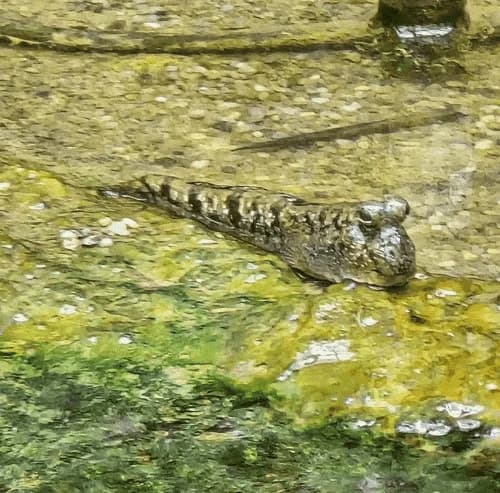
Periophthalmus barbarus, the African mudskipper, is one of the most extraordinary fish available in the hobby. Mudskippers are amphibious: they can breathe through their moist skin and mouth lining when out of water, enabling them to spend extended periods on land. They use their strong pectoral fins to crutch-walk across mud and even climb roots and branches, making them genuinely unlike any other fish kept in aquariums.
Native to the coastal mudflats, mangrove swamps, and estuaries of West Africa, African mudskippers inhabit the inter-tidal zone where they spend much of their active time out of water on exposed mud and vegetation. Their habitat is brackish to lightly saline, reflecting the mixing of river and sea water.
African mudskipper care is intermediate to advanced. They require a paludarium setup with both a shallow water area and a significant terrestrial land section, brackish water conditions, and a diet of live invertebrates. Their unique biology and genuinely entertaining, personable behavior make them one of the most engaging specialty fish for keepers willing to provide appropriate housing.
Basic Overview
Common Misconceptions
"They can be kept in a standard aquarium." African mudskippers require a paludarium with at least 40-50% accessible land area. A full water aquarium is wholly inappropriate -- mudskippers spend most of their active time on land and will become stressed and decline in a fully aquatic setup.
"They are fully aquatic." Mudskippers breathe air through their skin and mouth lining when on land and must be able to exit the water voluntarily. They can drown if forced to remain submerged for extended periods without a resting perch above water.
"Freshwater is fine." African mudskippers require brackish water (1.003-1.010 specific gravity) reflecting their estuarine habitat. Freshwater-only conditions cause chronic osmotic stress and reduce lifespan significantly.
"They are easy to keep in groups." Males are highly territorial on land, performing dramatic fin displays and fighting for prime basking spots. Groups require a spacious paludarium with clearly separated territories. Pairs or small trios in large setups work better than crowded groups.
Recommended Setup
- 40+ gallon paludarium with 40-50% land area
- Shallow brackish water section (2-4 inches deep)
- Land section: sandy mud, cork bark, or slate for climbing and burrowing
- Tight-fitting lid with no gaps (mudskippers escape readily)
- High humidity maintained above the land area (above 70%)
- Moderate lighting for thermoregulation behavior
- Gentle filtration in the water section only
Diet
African mudskippers are carnivores that hunt live prey on land in the wild:
- Live crickets (vitamin-dusted)
- Live mealworms and waxworms
- Live black soldier fly larvae
- Frozen bloodworms placed on land surface
- Live ghost shrimp in the water section
Feed every other day, placing food directly on the land section. Mudskippers hunt by sight on land and are stimulated by moving prey. Live gut-loaded and vitamin-dusted insects are the ideal primary food. They will not reliably compete for food in open water against other fish.
Personality
African mudskippers are among the most animated and personable fish available. They track movement outside the tank with their large, independently mobile eyes, approach the glass at feeding time, and interact with their terrestrial environment with visible curiosity and intelligence.
Males establish territories on the land section, performing striking dorsal fin displays and chasing rivals. Their social interactions, burrowing, mud-skimming movement, and regular surface breathing add constant interest to a well-designed paludarium.
With regular handling and feeding from tongs, mudskippers become tame enough to take food by hand. Their combination of fish and terrestrial animal behavior makes them genuinely fascinating long-term pets for dedicated keepers.
Water Parameters
African mudskippers require brackish water and high ambient humidity:
- pH: 7.5-8.5
- Hardness (gH): 10-20 dGH
- Temperature: 75-86 degrees F
- Salinity: 1.003-1.010 specific gravity (brackish)
- Ammonia and Nitrite: 0 ppm
- Nitrate: below 20 ppm
Here are some top tips to deal with unwanted parameters:
- Use marine salt (not freshwater aquarium salt) for a more accurate mineral profile matching estuarine conditions.
- Top off evaporation with fresh water to maintain consistent salinity. Add salt only during actual water changes.
- Air humidity above 70% is important to prevent desiccation of their skin while on land. A tight-fitting lid retains humidity well.
- The water section may be small in a paludarium but must still be properly cycled and maintained with regular partial changes.