Clown Loach Care Guide
A Complete Care Guide for Chromobotia macracanthus
Introduction
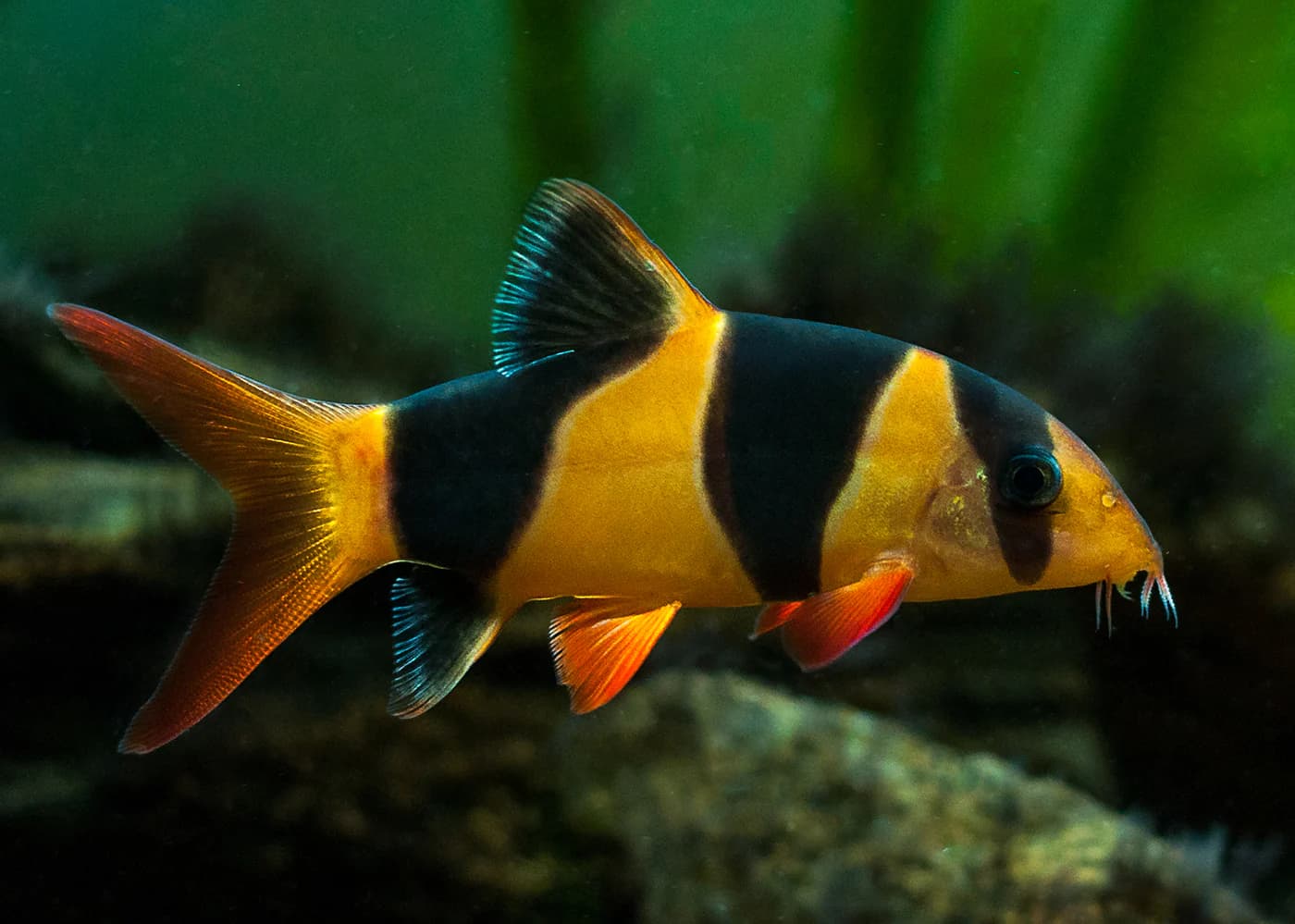
Chromobotia macracanthus, the clown loach, is one of the most recognizable freshwater fish in the hobby. Their bold orange and black banding, active personalities, and entertaining group behavior have made them perennially popular since their introduction to the trade in the 1970s.
What most beginners do not realize is just how large clown loaches grow. Juveniles sold at 2–3 inches in pet stores will eventually reach 10–12 inches, and in exceptional circumstances up to 16 inches in large aquariums. They also live for 20+ years, making them a serious long-term commitment.
Clown loaches are schooling fish and must be kept in groups of at least 5–6 to feel secure. A lone clown loach is a stressed, often sick clown loach. Given proper space, companions, and care, they become the undisputed centerpieces of large community tanks.
Basic Overview
Common Misconceptions
"Clown loaches stay small." They absolutely do not. The 2-inch juveniles in pet stores are babies. Adult clown loaches routinely exceed 10 inches and need very large tanks. Plan for their adult size before purchasing.
"One or two clown loaches are fine." Clown loaches are highly social and become stressed, prone to disease, and withdrawn when kept in insufficient numbers. A group of 5–6 minimum is essential for their wellbeing.
"Clown loaches are good ich treatment." The opposite is true. Clown loaches are exceptionally susceptible to ich and are often the first fish in a tank to show symptoms. They also cannot tolerate standard ich treatments containing copper or formalin at full doses. Use ich-x or half-dose treatments carefully.
"They are easy to breed in captivity." Commercial breeding requires hormone injection and specialist facilities. Clown loaches have not been reliably bred in home aquariums. All clown loaches in the trade are wild-caught, which is worth considering when purchasing.
Recommended Setup
- 75+ gallon tank for juveniles; 180+ gallons for a long-term adult group
- Soft substrate (sand or fine gravel); clown loaches love to dig and sift
- Plenty of hiding spots: caves, driftwood, PVC pipe sections, dense planting
- Gentle to moderate filtration; they prefer moderate flow
- Dimmer lighting or floating plants to reduce glare; they are more active in subdued light
- Secure lid; clown loaches are escape artists and can jump
Diet
Clown loaches are opportunistic omnivores in the wild, feeding on worms, small crustaceans, snails, and plant matter. In the aquarium they accept a wide range of foods:
- High-quality sinking pellets and wafers as a staple
- Frozen bloodworms, tubifex, and brine shrimp
- Blanched vegetables: cucumber, zucchini, spinach
- Snails (live pond snails or bladder snails; clown loaches will hunt them enthusiastically)
- Live or frozen daphnia and earthworms
Feed once or twice daily. Because they are bottom feeders, ensure food reaches the substrate before faster surface-feeding fish consume it all. Feeding just before lights out, when they are naturally more active, helps ensure they get adequate nutrition.
Personality
Clown loaches are among the most entertaining fish you can keep. They are boisterous, playful, and endlessly active. They chase each other through caves and driftwood, pile on top of each other to sleep (sometimes lying on their sides, which alarms new keepers), and make audible clicking sounds when excited, particularly at feeding time.
They are completely peaceful with other fish and will not bother anything they cannot eat. Their energy and curiosity make them a joy to watch and they consistently rank among the most charismatic fish in community setups.
Clown loaches are also known to lie motionless on their sides, which is normal resting behavior and not a sign of illness. New keepers who have not been warned about this often panic unnecessarily.
Health Considerations
Clown loaches are ich magnets. They lack the mucus coating that helps other fish resist ich infestations, making them highly susceptible. Quarantine all new tank additions before introducing them to a tank with clown loaches.
Standard copper-based ich treatments are toxic to clown loaches. If treating for ich, use half-dose ich-x or herbal-based treatments. Raising the temperature to 86°F combined with treatment accelerates the life cycle of the parasite and improves treatment effectiveness.
Clown loaches are also prone to a specific skinny disease, suspected to be caused by intestinal parasites. A fish that eats well but loses weight progressively may need treatment with Levamisole or Fenbendazole dewormers.
Water Parameters
Clown loaches come from the warm, moderately soft rivers of Borneo and Sumatra. They are adaptable but thrive in:
- pH: 6.0–7.5
- Hardness (gH): 5–12 dGH
- Temperature: 77–86°F
- Ammonia and Nitrite: 0 ppm
- Nitrate: below 20 ppm
Here are some top tips to deal with unwanted parameters:
- Add driftwood to naturally soften water and lower pH slightly. Clown loaches appreciate the tannins in blackwater-style setups.
- Keep temperature consistently at the higher end of the range (82–86°F) for a school that is active, colorful, and disease-resistant.
- Do 25–30% water changes weekly. Clown loaches are sensitive to nitrate buildup and will show stress coloration (fading, darkening) when water quality declines.
- Use a dechlorinator that also neutralizes chloramine and heavy metals, as clown loaches are more sensitive to these than many other species.