Kuhli Loach Care Guide
The Ultimate Care Guide for Kuhli Loaches
Introduction
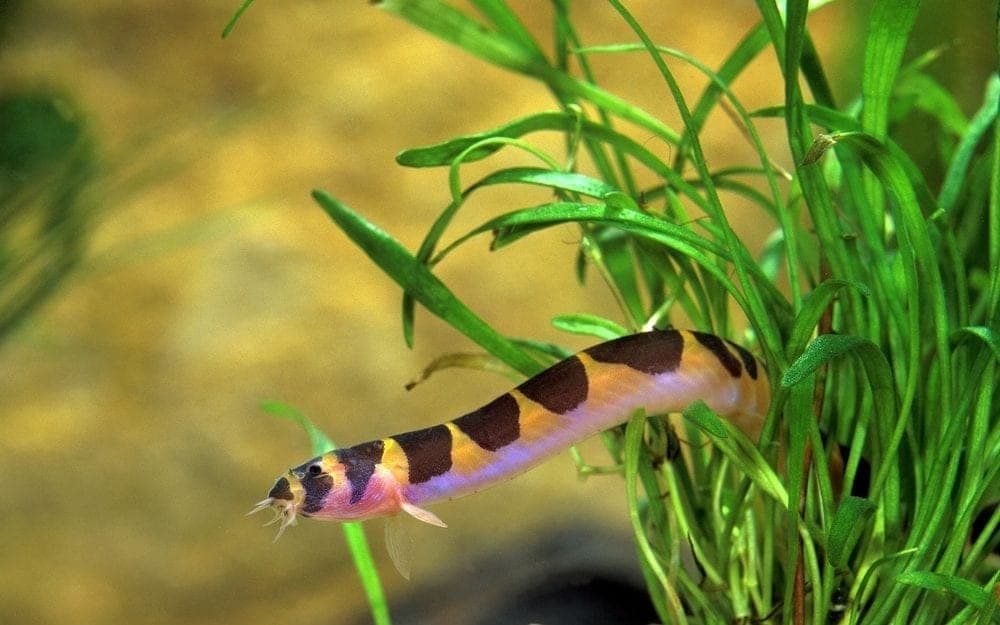
Pangio kuhlii, commonly known as the kuhli loach, is a slender, eel-like freshwater fish native to the slow-moving, leaf-littered rivers and streams of Southeast Asia. They live remarkably long lives, commonly 10-14 years with proper care, and prefer temperatures of 73-86 degrees Fahrenheit. They commonly reach 3-4 inches in size, with their distinctive banded orange and dark brown pattern making them unlike anything else in the hobby.
Kuhli loaches are bottom dwellers that spend much of their time burrowing, hiding, and foraging along the substrate. They are naturally nocturnal and often stay hidden during the day, becoming more active when the lights go down. Despite their shy reputation, a group of kuhli loaches in a well-set-up tank with plenty of cover can be surprisingly active and endearing.
They are social fish that should always be kept in groups. A lone kuhli loach will be virtually invisible, hiding indefinitely out of stress. A group, however, will pile into caves together, explore in little trains along the substrate, and generally be much more visible and entertaining.
Basic Overview
Common Misconceptions
"Kuhli loaches are solitary fish!" They are actually social and dramatically more active and visible when kept in groups of at least 3-6. A lone kuhli will hide almost permanently. A group will be out exploring and interacting far more often.
"Any substrate works fine for kuhli loaches!" Kuhli loaches need soft, fine substrate. Sharp gravel or coarse substrate can injure their delicate bellies and damage their barbels as they burrow and forage. Fine sand is the gold standard.
"They'll clean up leftover food so I don't need to feed them separately!" Like corydoras, kuhli loaches are scavengers but not tank cleaners. Faster fish often consume everything before it reaches the bottom. Kuhli loaches need their own dedicated sinking foods to stay healthy.
"Kuhli loaches are nocturnal so you'll basically never see them!" In a tank with dim lighting, plenty of hides, and fine substrate, kuhli loaches become much more active during the day. Create the right environment and they reward you with much more visible behavior than their reputation suggests.
Recommended Setup
- 20+ gallon tank, cycled, with a tight-fitting lid, heater, and gentle filter
- Fine sand substrate (non-negotiable for their health and burrowing behavior)
- Lots of hiding spots: PVC pipes, caves, driftwood, dense planting
- Indian almond leaves and leaf litter (they love burrowing under leaves)
- Gentle to moderate flow
- Aquarium siphon
Diet
Kuhli loaches are omnivores that forage primarily at the bottom. Since they are shy and slow to find food, dedicated evening feedings are important. They enjoy:
- Sinking wafers or pellets as a staple
- Frozen or live bloodworms (a particular favorite)
- Frozen or live tubifex worms
- Frozen or live daphnia and brine shrimp
- Blanched vegetables like zucchini or cucumber (occasionally)
Feed in the evening after lights out when they are most active, and when faster fish are less likely to intercept everything before it reaches the bottom. Remove uneaten food the next morning.
Personality
Kuhli loaches are quirky, endearing little fish with more personality than their reputation gives them credit for. In groups with appropriate hides, they often pile into the same cave together, form little loach trains as they explore the substrate in sequence, and engage in playful-looking chasing behavior that is genuinely fun to watch.
Their eel-like movement and curious, whiskered face give them a character entirely their own. When comfortable in their environment, they become far more visible and active than most people expect, especially in the hours around feeding time.
One important practical note: kuhli loaches are extraordinarily skilled at escaping tanks. They can squeeze through gaps that seem impossibly small. Before adding kuhli loaches, check every opening in the lid, around filter tubes, and near any equipment. They will find any gap you missed.
Compatible Tankmates
Kuhli loaches are peaceful and get along with virtually all non-aggressive tank inhabitants. They are bottom dwellers that ignore most other fish entirely. Good options include rasboras, small tetras, danios, peaceful gouramis, corydoras, and other peaceful species.
They are compatible with snails and most shrimp. Very small shrimp may occasionally be at risk from a foraging kuhli, but this is rarely a significant problem in a well-fed tank.
Avoid large, aggressive fish or cichlids that might harass or injure them. Kuhli loaches are not equipped to defend themselves against determined aggression.
Water Parameters
Kuhli loaches prefer soft, slightly acidic water that mirrors their Southeast Asian blackwater habitat. They are sensitive to poor water quality and sudden parameter changes. Target:
- pH: 6.0-7.0
- gH: 50-100 PPM (soft water)
- Temperature: 73-86 degrees Fahrenheit
Here are some top tips to deal with unwanted parameters:
- Kuhli loaches are sensitive to medications containing copper, including many common treatments for ich and parasites. Always use a copper-free treatment option in a tank with kuhli loaches.
- Indian almond leaves, driftwood, and tannins make them feel more at home and encourage more active, visible behavior.
- Fine sand substrate and clean water are the two most important factors for long-term kuhli loach health. Vacuum the substrate regularly.
- Remember, using random chemicals is not recommended, since they can cause more problems through sudden, drastic changes.