Bala Shark Care Guide
A Complete Care Guide for Balantiocheilos melanopterus
Introduction
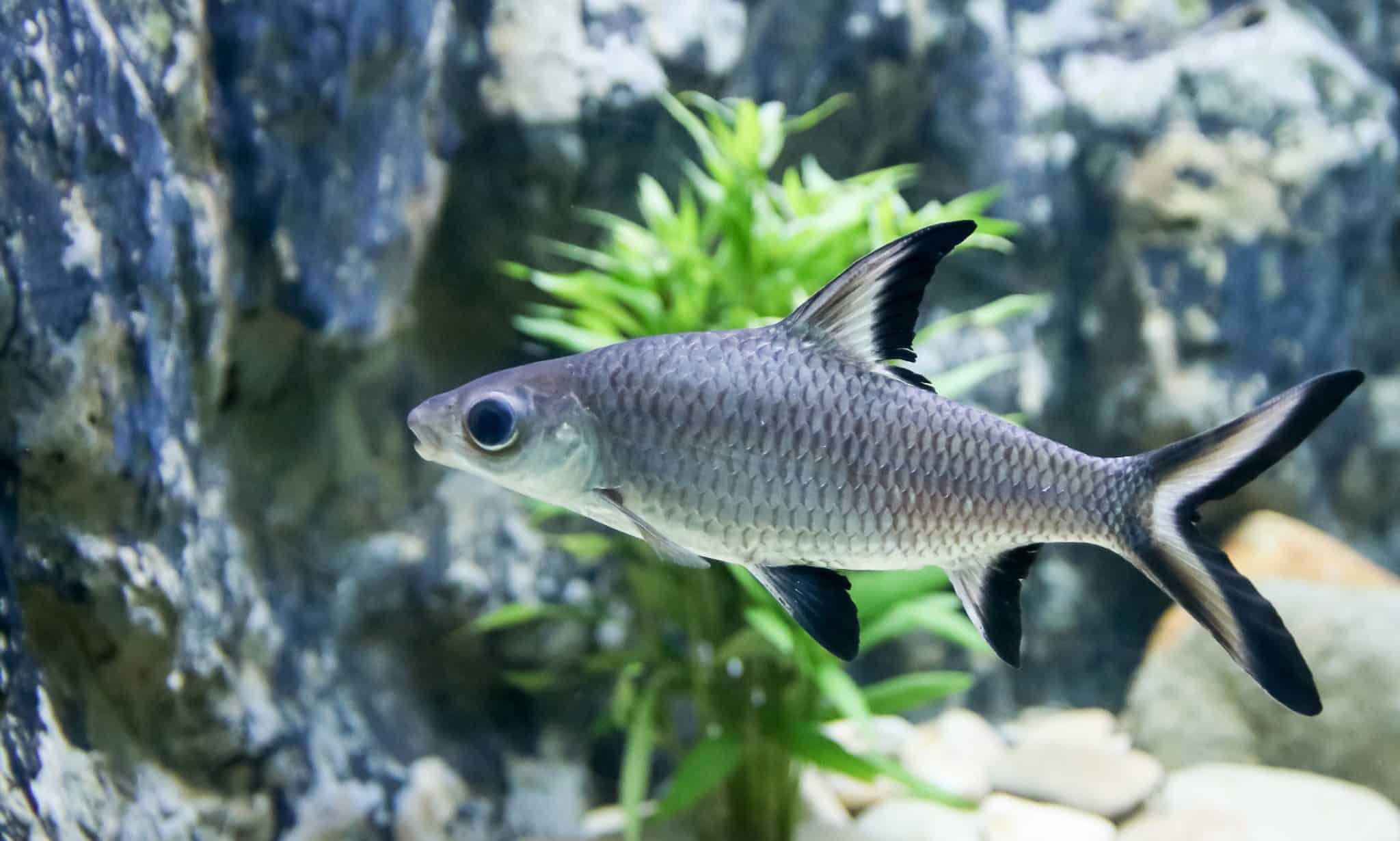
Balantiocheilos melanopterus, the bala shark (also called the tricolor shark or silver shark), is one of the most recognizable fish in the hobby. With their streamlined silver bodies, black-edged fins, and shark-like silhouette, they are eye-catching fish that are unfortunately one of the most commonly mishoused species in the trade.
Bala sharks are native to large rivers and lakes in Southeast Asia, including the Chao Phraya and Mekong river systems. They are schooling fish that grow to 10–14 inches and require very large tanks to thrive. The 2-inch juveniles sold in most pet stores will not stay small.
Their conservation status is concerning: wild bala shark populations have declined significantly due to habitat loss and collection for the aquarium trade. Responsible ownership includes providing appropriate housing for the full adult size of the fish.
Basic Overview
Common Misconceptions
"Bala sharks stay small in small tanks." This is false and harmful. Stunted bala sharks suffer from organ compression and shortened lifespan. Juveniles grow rapidly; a properly kept bala shark will reach 10+ inches within a few years.
"One or two bala sharks are fine." Bala sharks are highly social schooling fish that become extremely stressed when kept alone or in pairs. They are skittish even in groups, and solitary individuals often refuse to eat and develop stress-related diseases.
"They are aggressive sharks." Bala sharks are completely peaceful and will not harm any fish they cannot fit in their mouth. Their "shark" name refers only to their body shape. They are gentle, timid fish that startle easily.
"They are suitable for a 55-gallon." A 55-gallon is far too small for adult bala sharks. The minimum realistic tank for a school of 4–5 adults is 120–180 gallons, and larger is better given their active swimming nature.
Recommended Setup
- 120+ gallon tank for a school of 4–5 adults
- Long tank footprint to accommodate their active swimming; 6-foot length minimum
- Smooth gravel or sand substrate
- Driftwood and plants for cover, though they primarily occupy open water
- Strong, high-capacity filtration
- Very secure lid; bala sharks are notorious jumpers and will leap when startled
- Moderate to strong current; they come from fast-moving rivers
Diet
Bala sharks are omnivores that eat a wide variety of foods in the wild. In the aquarium they readily accept:
- High-quality tropical flakes or pellets as a staple
- Frozen bloodworms, brine shrimp, and mysis shrimp
- Blanched vegetables: zucchini, peas, spinach
- Live foods for enrichment and conditioning
- Small feeder shrimp and insect larvae
Feed once or twice daily. Bala sharks are active fish with good appetites. Ensure all members of the school are getting adequate food, as faster individuals may outcompete slower ones. Sinking and floating foods help ensure access throughout the water column.
Personality
Bala sharks are extremely skittish fish despite their size. They startle at sudden movements, loud noises, or changes in lighting and will bolt frantically around the tank when frightened, often injuring themselves on the glass. This is a key reason why a long tank with minimal obstructions is important.
In a stable, undisturbed environment with an adequate school, bala sharks settle into confident, graceful swimmers that occupy the open water column. They are peaceful with virtually every fish that is too large to eat.
Over time and with consistent care, bala sharks become less skittish and more settled. They do recognize their keeper and will approach calmly at feeding time once comfortable. Their schooling behavior in a large tank is genuinely beautiful to observe.
Long-Term Planning
Purchasing bala sharks requires honest planning for their adult size. If you cannot commit to a 120+ gallon tank within 2–3 years of purchase, bala sharks are not the right fish for your situation. Impulse-purchasing cute 2-inch juveniles without a plan for their adult size is the most common cause of rehoming or premature death.
Some public aquariums and fish stores will accept large bala sharks as donations when they outgrow their home tank. Establish this arrangement before the fish reaches problem size if you are uncertain about your long-term tank situation.
Bala sharks that are well-cared for and given appropriate space are genuinely impressive display fish. A school of adult bala sharks in a 180-gallon planted tank is a rare and stunning sight that rewards the substantial investment required.
Water Parameters
Bala sharks come from the large, warm, relatively clean rivers of Southeast Asia:
- pH: 6.5–8.0 (adaptable)
- Hardness (gH): 5–15 dGH
- Temperature: 72–82°F
- Ammonia and Nitrite: 0 ppm
- Nitrate: below 20 ppm
Here are some top tips to deal with unwanted parameters:
- Weekly 25–30% water changes are important. In a large tank this is a significant volume; consider a Python or similar water change system to make the process manageable.
- Good surface agitation and oxygenation are important for active, large fish. Ensure your filter provides adequate surface movement.
- Maintain stable temperature and avoid sudden parameter shifts. Bala sharks are already prone to stress; water quality changes make them more susceptible to disease.
- Invest in a quality thermometer and test kit. With large fish, water quality problems can escalate quickly and the fish is difficult and stressful to treat when sick.