White Cloud Mountain Minnow Care Guide
The hardy, beautiful fish perfect for cool-water tanks
Introduction
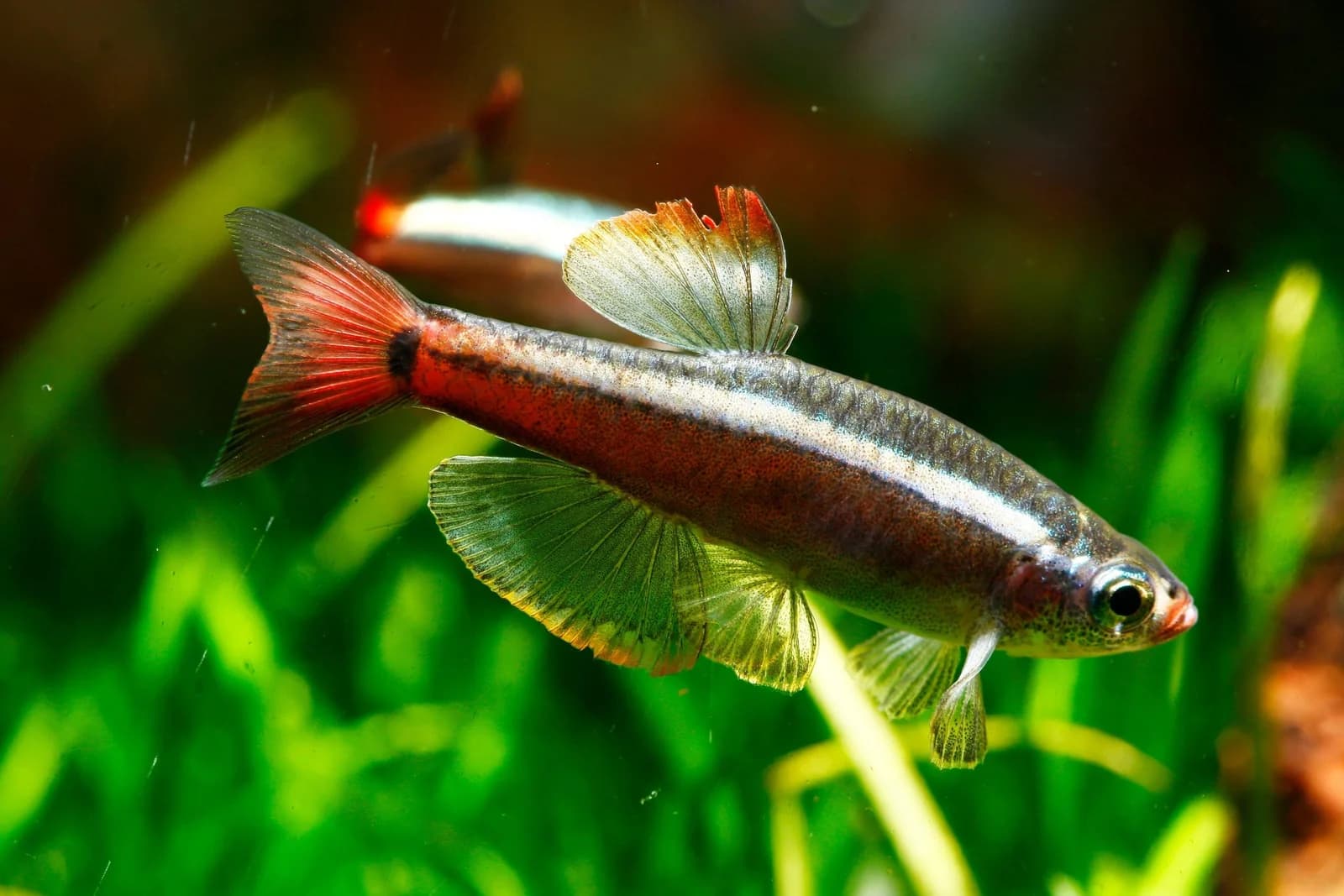
Tanichthys albonubes, the white cloud mountain minnow, is one of the most underrated fish in the freshwater hobby. Often overlooked in favor of more colorful tropicals, these small schooling fish from the mountain streams of Guangdong Province in China are hardy, beautiful, peaceful, and uniquely suited to cool-water environments that many popular tropicals cannot tolerate.
White clouds were once believed extinct in the wild, but a wild population was rediscovered in 2001. All fish in the trade are captive-bred, and there are several striking varieties available including the long-finned form and the golden variety.
Their cold tolerance (they thrive at 60–72°F and can survive down to 41°F briefly) makes them ideal for unheated tanks in temperate climates, alongside goldfish, hillstream loaches, and dojo loaches.
Basic Overview
Common Misconceptions
"White clouds need a heater." They actively prefer cool water and do better without a heater in most homes. Keeping them at tropical temperatures (76–82°F) actually shortens their lifespan. They are one of the few aquarium fish genuinely suited to unheated tanks.
"They are boring compared to tropical fish." Under the right light, white cloud mountain minnows display a vivid red and white stripe, red-tipped fins, and iridescent scales. In a large school they are genuinely striking, especially the long-finned variety.
"They can live in a bowl without filtration." While they are hardy, white clouds still produce waste and need a cycled, filtered tank to thrive long-term. They are tolerant of imperfect conditions but will live far longer in a properly maintained aquarium.
"Small groups of 2 or 3 are fine." Like all schooling fish, white clouds are stressed in small numbers. A school of 8–12 produces natural schooling behavior and far healthier, more active fish.
Recommended Setup
- 10+ gallon tank for a school of 6–10
- No heater required in most homes; cool room temperature is ideal
- Fine gravel or sand substrate
- Hardy plants that tolerate cool water: Java fern, anubias, hornwort, Vallisneria
- Moderate flow; white clouds come from flowing mountain streams
- Good surface agitation for oxygenation; cold water holds more oxygen but it must be replenished
- Dense planting along the back and sides with open swimming space in front
Diet
White cloud mountain minnows are micro-predators and omnivores in the wild, feeding on small insects, zooplankton, and plant matter. They accept a wide variety of aquarium foods:
- Small tropical flakes or micro pellets as a staple
- Frozen daphnia, cyclops, and baby brine shrimp (they love these)
- Freeze-dried tubifex or bloodworms as occasional treats
- Live foods greatly enhance color and conditioning for breeding
Feed small amounts once or twice daily. Their small mouths require appropriately sized food; standard-sized flakes may need to be crushed. White clouds are enthusiastic feeders and will eagerly accept most foods offered.
Personality
White cloud mountain minnows are lively, active fish that school loosely in the middle and upper water column. They are bold enough to be visible at all times and peaceful enough to coexist with virtually any small, non-aggressive tank mate.
In a large school, they display natural flocking behavior, moving in synchronized bursts and reforming quickly. Males display to females with intensified fin coloring during breeding behavior, which occurs readily in well-maintained tanks.
They are genuinely easy fish that forgive beginner mistakes better than most species. Their hardiness, beauty, and peaceful temperament make them an excellent choice for any cool-water setup.
Breeding White Clouds
White cloud mountain minnows breed readily in well-maintained tanks with the right conditions. They are egg scatterers that deposit eggs among fine-leaved plants or spawning mops. Adults will eat eggs if given the opportunity, so a separate breeding tank or dense plant cover is recommended.
To trigger spawning, do a large water change with slightly cooler water and increase live food feeding. Males will display intensely and chase females through the plants.
Eggs hatch in 24–48 hours at room temperature. Fry are tiny and need infusoria or powdered fry food for the first week, transitioning to baby brine shrimp as they grow. The fry are robust compared to many tropical species and relatively easy to raise.
Water Parameters
White cloud mountain minnows come from cool, clean mountain streams and prefer conditions very different from most tropical fish:
- pH: 6.0–8.0 (very adaptable)
- Hardness (gH): 5–19 dGH (tolerates a wide range)
- Temperature: 60–72°F
- Ammonia and Nitrite: 0 ppm
- Nitrate: below 20 ppm
Here are some top tips to deal with unwanted parameters:
- If your home is consistently above 75°F in summer, consider a small fan blowing across the water surface to bring temperatures down through evaporative cooling.
- White clouds are among the most pH- and hardness-tolerant fish in the hobby. Standard tap water in most areas is perfectly suitable without any modification.
- Good surface agitation is more important for white clouds than for warm-water fish. Cold water holds more dissolved oxygen, but surface movement replenishes it as fish consume it.
- Weekly 20–25% water changes keep nitrates in check and maintain the clean water conditions that keep them at their best.