Chinese Algae Eater Care Guide
A Complete Care Guide for Gyrinocheilus aymonieri
Introduction
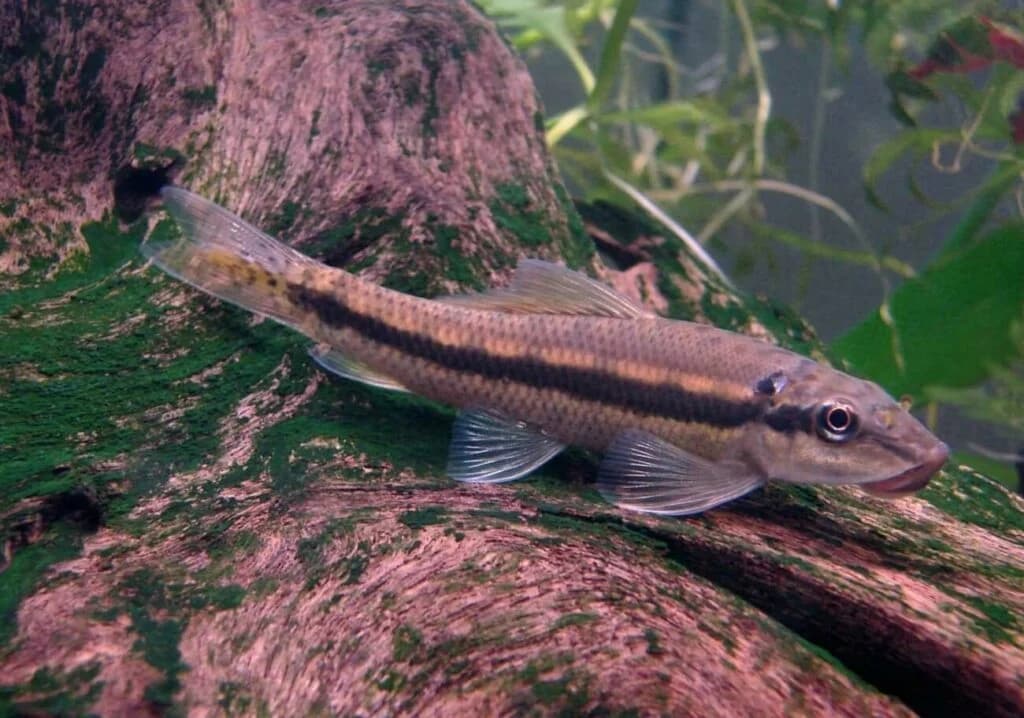
Gyrinocheilus aymonieri, the Chinese algae eater (also called the sucking loach), is a popular but frequently misrepresented fish. Sold extensively as an algae control solution, Chinese algae eaters are effective grazers when young, but as they mature to their full size of 10-12 inches they become increasingly territorial, less interested in algae, and may begin to harass and damage slow-moving tank mates.
Native to Thailand, Laos, Vietnam, and southern China, Chinese algae eaters inhabit fast-flowing, rocky rivers and streams with significant algae growth. The golden (xanthic) variety is the most common form in the trade.
Understanding the adult behavior of this species before purchasing is essential. A juvenile Chinese algae eater in a community tank is very different from an adult. Many keepers are surprised by the behavioral change and the eventual size. Those who plan for the adult animal have a hardy, distinctive, and long-lived fish.
Basic Overview
Common Misconceptions
"They will control algae permanently." Juvenile Chinese algae eaters are effective algae grazers, but adults consume significantly less algae and shift toward other foods. Relying on them for long-term algae control leads to disappointment.
"They stay small." In good conditions, Chinese algae eaters grow to 10-12 inches. They are often sold as small juveniles with no indication of adult size. A 10-inch fish requires a significantly larger tank than the typical "algae eater" buyer plans for.
"They are safe with all fish." Adult Chinese algae eaters frequently attach to the sides of large, flat-bodied, slow-moving fish (discus, angelfish, large cichlids) and feed on their slime coat. This causes injury and stress. They should not be kept with such species.
"Golden and regular Chinese algae eaters are different species." The golden variety is a xanthic (color mutation) form of the same species. Their care requirements and adult behavior are identical.
Recommended Setup
- 55+ gallon for an adult
- Rocky decor with numerous caves and crevices for territory establishment
- Sand or fine gravel substrate
- Moderate to strong flow: they come from fast-flowing rivers and appreciate current
- Hardy plants if desired: Java fern, anubias (they may graze soft-leaved plants)
- Good surface agitation and oxygenation
- Robust filtration for a large, active fish
Diet
Chinese algae eaters shift diet from algae-heavy to omnivore as they grow:
- Algae wafers and spirulina wafers as a staple
- Blanched vegetables: zucchini, cucumber, spinach
- Sinking omnivore pellets
- Frozen bloodworms and brine shrimp (adults particularly)
- Biofilm and algae grazed from tank surfaces
Supplement with sinking foods from early on to ensure balanced nutrition. Adults that receive only algae wafers may develop nutritional deficiencies and increase harassing behavior toward tank mates as they seek protein.
Personality
Juvenile Chinese algae eaters are busy, industrious grazers that cover every surface of the tank methodically. They are initially shy but become bolder with time and tank familiarity.
Adults develop distinct territorial zones, particularly around caves, and will defend these aggressively against intruders, including other Chinese algae eaters and similar-bodied fish. Two adults in the same tank will fight persistently; one per tank is the standard recommendation.
Despite the reputation, adults in species-appropriate setups with robust tank mates and adequate territory can be interesting, long-lived fish. Their powerful suckermouth and the speed with which they can cross the tank to defend territory is impressive for a seemingly sedentary fish.
Managing Adult Aggression
The behavioral change from juvenile to adult Chinese algae eater is significant enough that many keepers rehome them at 3-4 inches when the aggression begins to emerge. Planning for the adult animal from the start avoids this.
Appropriate adult tank mates include: robust, active mid-water fish that are too fast to be successfully harassed (giant danios, large barbs, active cichlids), large catfish, and similarly sized robust bottom fish. Avoid discus, angelfish, slow-moving goldfish, and any fish with long trailing fins.
Providing significant visual complexity with rocks, caves, and driftwood gives each fish defined territories and reduces conflict. A well-decorated 75-gallon tank is significantly more peaceful than a sparsely decorated 55-gallon.
Water Parameters
Chinese algae eaters come from the fast-flowing rivers of Southeast Asia and are highly adaptable:
- pH: 6.0-8.0 (very adaptable)
- Hardness (gH): 5-19 dGH (very adaptable)
- Temperature: 74-82 degrees F
- Ammonia and Nitrite: 0 ppm
- Nitrate: below 20 ppm
Here are some top tips to deal with unwanted parameters:
- Chinese algae eaters adapt to a very wide range of water conditions and are hardy in standard tap water throughout most areas.
- Good flow and oxygenation suit their fast-water background. A powerhead or spray bar maintaining moderate current benefits their health and activity.
- Weekly 25% water changes are sufficient for a well-filtered tank. Their hardy constitution tolerates minor inconsistencies in water maintenance.
- Temperature in the 76-79 degree F range is optimal. They are hardier than most tropical fish and can tolerate temporary fluctuations that would affect more sensitive species.