Blue Tetra Care Guide
A Complete Care Guide for Boehlkea fredcochui
Introduction
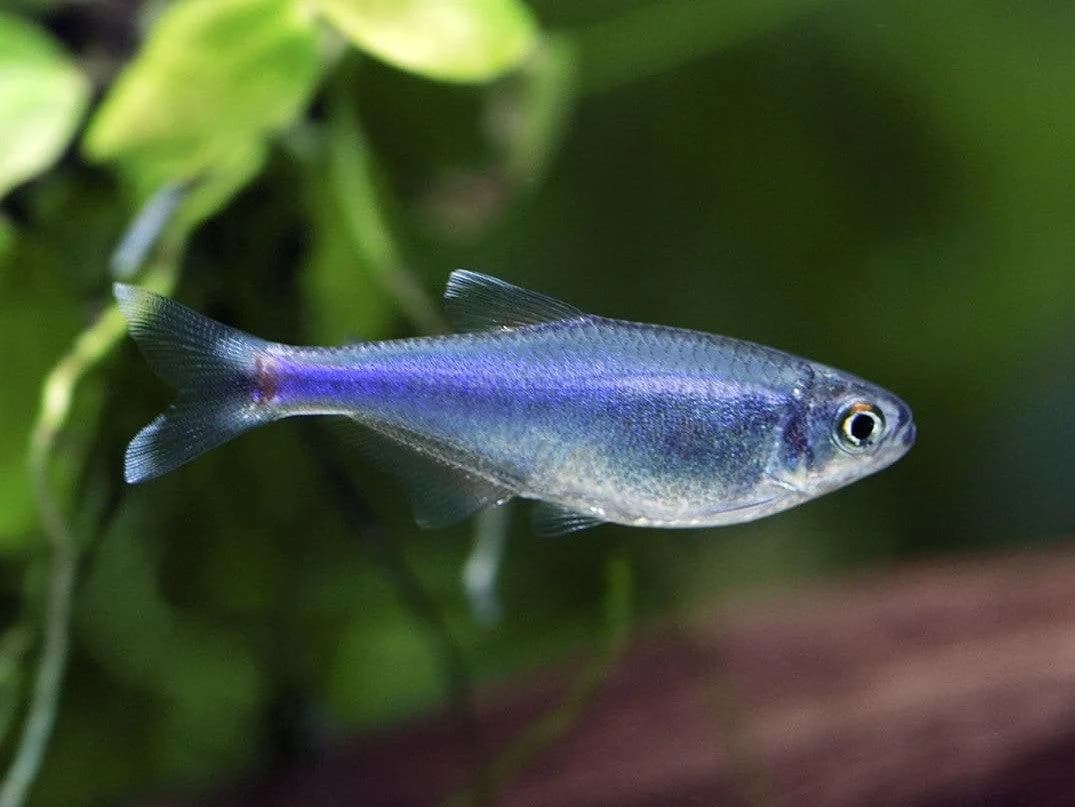
Boehlkea fredcochui, the blue tetra (also called the Cochu's blue tetra), is a small, vivid tetra from Peru. Their slender, elongated body displays an electric blue lateral stripe on a silver body, with blue-tinted fins in males. Under good lighting, the iridescent blue stripe has an intensity that rivals much larger fish.
Native to the Peruvian Amazon, particularly the Ucayali and Maranon river systems, blue tetras inhabit soft, slightly acidic, tannin-influenced rivers with abundant vegetation.
Blue tetra care is easy to moderate. They are slightly nippy in large schools -- primarily toward long-finned, slow-moving fish -- so tank mate selection requires care. With appropriate companions, they are attractive, active schooling fish.
Basic Overview
Common Misconceptions
"They are safe with bettas and angelfish." Blue tetras are moderately nippy toward slow-moving, long-finned fish. They should not be kept with bettas, long-finned angelfish, or other vulnerable species. Robust, active tank mates of similar size are appropriate.
"A school of 4 is adequate." Smaller groups are bolder and more likely to nip. Groups of 8 or more distribute fin-nipping behavior within the school and produce calmer, more natural schooling.
"Hard water is fine." Blue tetras display the most vivid iridescent stripe in soft, slightly acidic conditions. Hard water reduces color intensity.
Recommended Setup
- 20+ gallon tank for a school of 8
- Soft, slightly acidic water
- Planted setup with open swimming space
- Dark substrate to enhance blue stripe visibility
- Moderate flow
- Tank mates: robust active fish, not slow-finned species
Diet
Blue tetras are omnivores that accept most standard small aquarium foods:
- High-quality small flake or micro pellets
- Frozen baby brine shrimp
- Frozen daphnia
- Frozen bloodworms
Feed twice daily in small amounts. A varied diet with frozen protein foods maintains the most vivid blue stripe intensity.
Personality
Blue tetras are lively, assertive schooling fish with a confident energy that exceeds many other small tetras. Their electric blue lateral stripe under good lighting is genuinely striking -- a school of 12 or more moving through a planted tank creates a vivid, shimmering display.
Their moderate nipping tendency is manageable with appropriate tank mates. With active, robust companions (large rasboras, similarly sized danios, medium barbs), they channel their energy into schooling behavior rather than harassment.
A densely planted 30-gallon tank with a school of 15 blue tetras and compatible dither fish, with warm-spectrum lighting, showcases their iridescent blue to excellent effect.
Water Parameters
Blue tetras come from the soft, acidic rivers of the Peruvian Amazon:
- pH: 5.5-7.0
- Hardness (gH): 2-10 dGH
- Temperature: 72-79 degrees F
- Ammonia and Nitrite: 0 ppm
- Nitrate: below 20 ppm
Here are some top tips to deal with unwanted parameters:
- Soft, slightly acidic water produces the most vivid blue lateral stripe.
- Tannins from driftwood or Indian almond leaves replicate their natural blackwater habitat.
- Gentle to moderate flow.
- Weekly 25% water changes maintain good conditions.