Blue Kerri / Emperor Tetra Care Guide
A Complete Care Guide for Inpaichthys kerri
Introduction
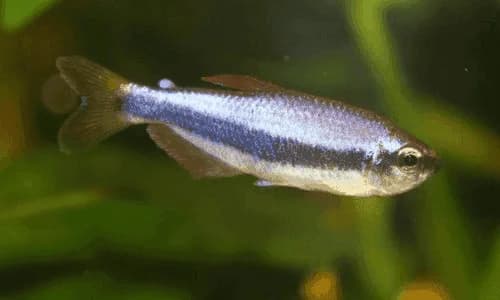
Inpaichthys kerri, the blue emperor tetra (also called the royal tetra or blue kerri tetra), is a small, spectacularly colored tetra from Brazil. Males display a vivid blue-purple body with an electric blue lateral stripe and intense orange to yellow fins, making them one of the most colorful small tetras available. Females are brown with a golden stripe, and sexual dimorphism is pronounced.
Native to the upper Madeira River basin in Mato Grosso, Brazil, blue emperor tetras inhabit soft, slightly acidic, tannin-stained blackwater streams and rivers with dense vegetation.
Blue emperor tetra care is easy. They are peaceful, adaptable, and suitable for planted community tanks with other gentle species. Their striking male coloration, particularly in soft acidic water with warm-spectrum lighting, is among the most vivid of any small tetra.
Basic Overview
Common Misconceptions
"They are the same as the standard emperor tetra." Inpaichthys kerri (blue emperor tetra) and Nematobrycon palmeri (standard emperor tetra) are different genera. The blue emperor tetra is smaller, the male coloration is distinctly more blue-purple, and the species is unrelated beyond both being tetras.
"Male color develops immediately." Young males appear similar to females. Full male coloration develops as the fish matures at 4-6 months. Purchasing a group of 8-10 unsexed juveniles typically yields a mix of colorful males and less vivid females once mature.
"Hard water is adequate." Blue emperor tetras display the most intense male coloration in soft, slightly acidic water. Hard or alkaline water significantly suppresses the vivid blue-purple coloration of males.
Recommended Setup
- 20+ gallon planted tank
- Dark substrate to maximize color contrast
- Soft, slightly acidic water
- Indian almond leaves or driftwood for tannins
- Gentle flow
- Warm-spectrum LED lighting
Diet
Blue emperor tetras are omnivores that accept most small community foods:
- High-quality small flake or micro pellets
- Frozen baby brine shrimp
- Frozen daphnia
- Frozen micro worms
Feed twice daily in small amounts. A varied diet with live or frozen protein foods produces the most vivid male coloration. Their small mouths require appropriately sized food.
Personality
A group of mature male blue emperor tetras in a well-planted, dark-substrate, soft-water tank is one of the most visually stunning small-fish displays available. The electric blue-purple males with vivid orange fins, moving through green plants against a dark background, have a jewel-like intensity.
They are calm, gentle fish that school loosely and do not nip. Their compatibility with dwarf shrimp, small rasboras, and other gentle nano fish makes them ideal for planted community setups.
The contrast between the vivid males and the subtler gold-striped females adds visual variety to the school.
Water Parameters
Blue emperor tetras come from the soft, acidic blackwater streams of Mato Grosso, Brazil:
- pH: 5.5-7.0
- Hardness (gH): 2-10 dGH (soft water important for best color)
- Temperature: 73-82 degrees F
- Ammonia and Nitrite: 0 ppm
- Nitrate: below 15 ppm
Here are some top tips to deal with unwanted parameters:
- Soft, acidic water is the most important parameter for maintaining vivid male coloration.
- Indian almond leaves and driftwood add natural tannins that replicate blackwater conditions.
- Gentle filtration with minimal current.
- Weekly 15-20% water changes maintain stability in smaller planted tanks.