Bamboo Shrimp Care Guide
A Complete Care Guide for Atyopsis moluccensis
Introduction
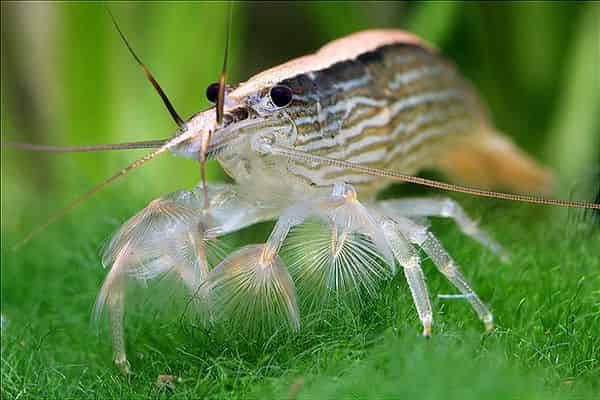
Atyopsis moluccensis, the bamboo shrimp (also called the wood shrimp or fan shrimp), is one of the most unusual freshwater invertebrates in the hobby. Unlike most aquarium shrimp that graze algae and biofilm from surfaces, bamboo shrimp are filter feeders that sit in current and use their fan-like front legs to capture suspended particles from the water flow.
Native to Southeast Asia across Sri Lanka, India, Thailand, and Indonesia, bamboo shrimp inhabit flowing streams and rivers where they position themselves in areas of moderate to strong current with their fans extended. Their brown, tan, and sometimes red-striped coloration blends remarkably well with wood and leaf litter in their native habitat.
They are peaceful, non-aggressive invertebrates that pose no threat to fish or other tank inhabitants. Their care is intermediate because their filter-feeding requirement means they need a specific type of environment: established tanks with significant particle matter in the water column and adequate flow.
Basic Overview
Common Misconceptions
"They eat algae like other shrimp." Bamboo shrimp are filter feeders, not grazers. They do not eat algae off surfaces. They capture suspended particles from the water flow. Keeping them in a tank without adequate suspended food will cause them to slowly starve.
"They will starve in a clean tank." In a mature, well-established tank with organic particles in the water column, bamboo shrimp feed adequately without supplementation. In very clean, new tanks, supplemental feeding with liquid invertebrate food or powdered spirulina blown into the current is necessary.
"They should be kept with small fish for a community tank." Bamboo shrimp are peaceful but can be outcompeted for food. In tanks with aggressive feeders, they may not get enough suspended particles. Quiet tanks with small, peaceful tank mates are best.
"A single shrimp is fine." Bamboo shrimp do not require groups, but they are more interesting to observe when multiple individuals compete and jostle for the best current positions. 2-4 in a suitable tank is ideal.
Recommended Setup
- 20+ gallon established tank (mature tank with established biological system)
- Areas of moderate to strong current: position filter outflow where shrimp can sit in the stream
- Driftwood and rocks for them to perch on in the current
- Fine substrate; they do not dig but may occasionally search the bottom
- Established biofilm and organic particle content; bare, sterile tanks are unsuitable
- Gentle to moderate overall filtration; sponge filter outflow creates ideal feeding current
- No aggressive fish that will attack the shrimp during molting
Diet
Bamboo shrimp are filter feeders requiring suspended food particles:
- Suspended organic particles from a mature, established tank (primary)
- Liquid invertebrate foods blown into the current near the shrimp
- Powdered spirulina or dried algae powder suspended in the water
- Infusoria from a mature planted tank
- Powdered fry foods
If a bamboo shrimp is seen walking along the substrate and grazing like a regular shrimp, this is a sign it is not getting enough suspended food and is desperately searching. Address by adding liquid food directly into the current near their feeding position. A well-fed bamboo shrimp sits motionless in the current with fans extended for hours.
Personality
Bamboo shrimp are among the most peaceful and undemanding of all aquarium invertebrates in terms of aggression. They show no interest in harming fish, other shrimp, or snails and are completely safe in any community with non-aggressive inhabitants.
Their filter-feeding behavior is fascinating and meditative to observe: they position themselves in flowing water, extend their three pairs of feathery front fans, and stand motionless while capturing particles. Their coloration shifts over time between brown, red-brown, and sometimes vivid orange, often related to diet and molting cycle.
They molt periodically and are vulnerable during and immediately after molting. The empty exoskeleton should be left in the tank as the shrimp will partially reconsume it to recover minerals. Other tank inhabitants may also consume the molt, which is normal and harmless.
Molting and Health
Bamboo shrimp molt every 45-75 days on average. Before molting, they may go into hiding for 24-48 hours. After molting, the exoskeleton is shed and the shrimp is soft and vulnerable for 12-24 hours while the new shell hardens. During this period they should not be handled and aggressive fish should not have access to them.
A failed molt (where the shrimp cannot extract itself from the old shell) is the most common cause of death in captive bamboo shrimp. The primary cause of failed molts is iodine deficiency. Use a mineral supplement or add a small amount of marine iodine to the tank water periodically.
Bamboo shrimp do not breed easily in freshwater aquariums. Their larvae require brackish or marine conditions to develop. Eggs are sometimes observed on females but do not hatch successfully in freshwater. This limits their population growth and means most specimens are wild-caught.
Water Parameters
Bamboo shrimp come from the flowing streams of Southeast Asia and prefer clean, well-oxygenated water:
- pH: 6.5-7.5
- Hardness (gH): 4-10 dGH
- Temperature: 68-82 degrees F
- Ammonia and Nitrite: 0 ppm
- Nitrate: below 20 ppm
Here are some top tips to deal with unwanted parameters:
- Water quality is important. Bamboo shrimp are sensitive to ammonia, nitrite, and high copper levels. Ensure the tank is fully cycled before adding them.
- Iodine supplementation supports healthy molting. Use a freshwater invertebrate mineral supplement or a tiny amount of reef iodine supplement added to the water monthly.
- Avoid copper-based medications entirely. Copper at any concentration is lethal to all invertebrates including bamboo shrimp.
- Moderate flow with good oxygenation suits their stream-dwelling background. The current also suspends food particles that they feed on.