Axolotl Care Guide
A Complete Care Guide for Ambystoma mexicanum
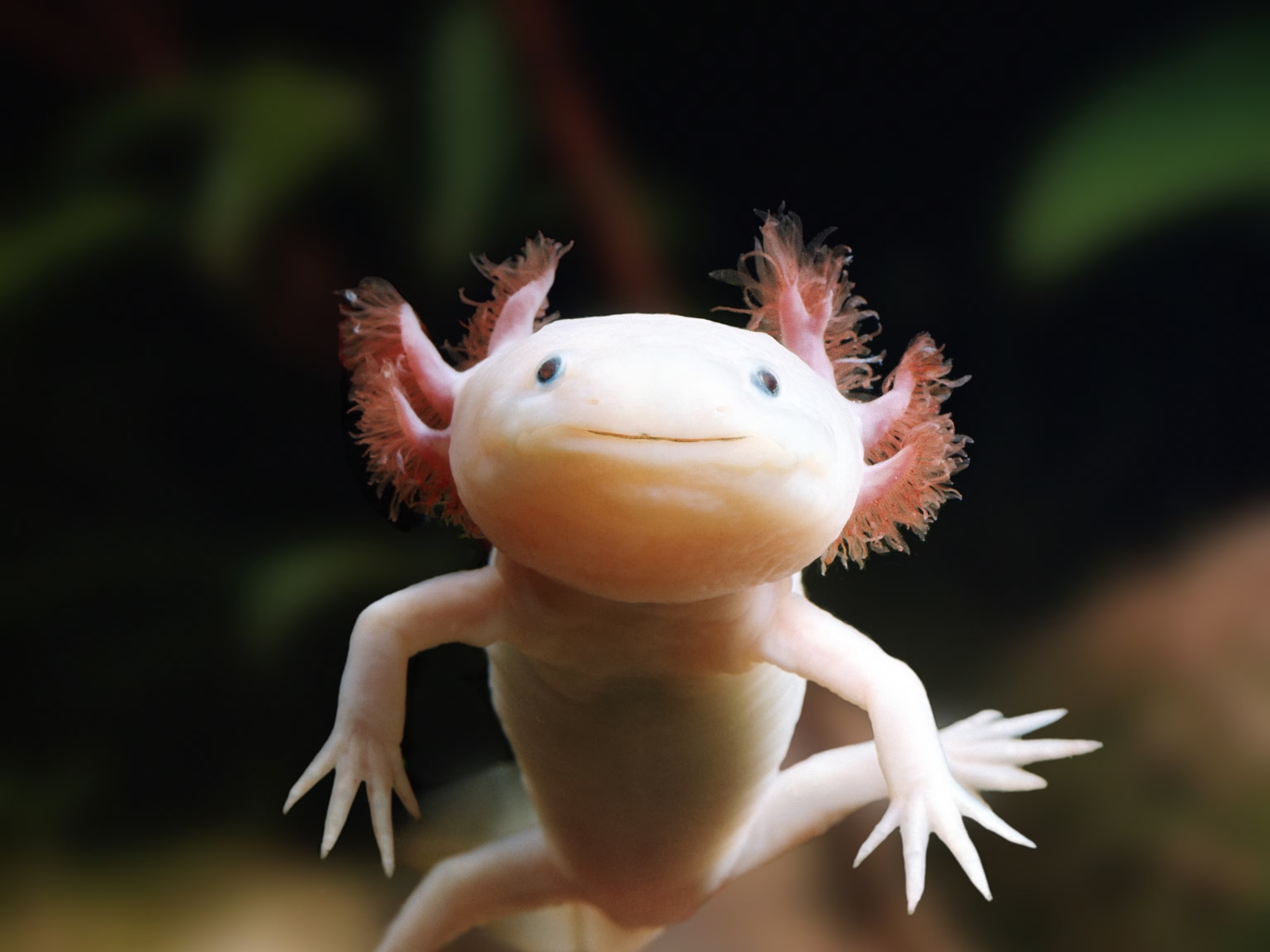
Introduction
Ambystoma mexicanum, the axolotl, is one of the most extraordinary animals kept in captivity. A permanently larval (neotenic) salamander from the ancient lake complex of Xochimilco near Mexico City, the axolotl retains its juvenile feathery external gills and aquatic lifestyle throughout its entire adult life rather than undergoing metamorphosis like other salamanders.
Axolotls are critically endangered in the wild, with only a tiny remnant population surviving in heavily polluted canals. In captivity they are thriving, with millions of captive-bred individuals kept as pets worldwide. Captive axolotls should never be released into the wild.
They are large (8–12 inches), long-lived (10–15+ years), and entirely aquatic. They require cool water, meaty food, and soft substrate, but they are otherwise surprisingly straightforward to keep.
Basic Overview
Common Misconceptions
"Axolotls can handle room temperature water." This is one of the most dangerous misconceptions in axolotl care. Axolotls need water between 60–68°F. Above 72°F they become severely stressed and prone to deadly fungal infections. In warm climates or during summer, active cooling (a fan, chiller, or cool basement location) is essential.
"Axolotls can regenerate indefinitely and are indestructible." While axolotls do have impressive regenerative abilities, they are not indestructible. Poor water quality, warm temperatures, and inappropriate substrate cause serious health problems. Their regenerative capacity declines with age and repeated injury.
"Gravel substrate is fine for axolotls." Axolotls regularly ingest substrate when hunting food. Pebbles or gravel smaller than their head can cause fatal impaction. Use fine sand (grain size smaller than their head) or a bare-bottom tank.
"They can share a tank with fish." Fish will nip at axolotl gills, causing injury and stress. Fish small enough not to nip will be eaten by the axolotl. Axolotls are best kept in species-only tanks.
Recommended Setup
- 20 gallon long tank for one adult; add 10 gallons per additional axolotl
- Fine sand substrate or bare-bottom tank (no gravel that could cause impaction)
- Cool, clean water: 60–68°F (a cooling fan, basement location, or aquarium chiller may be needed)
- Hiding spots: caves, PVC pipe, overturned flower pots, driftwood
- Gentle filtration with very low flow; axolotls dislike strong current and can be stressed by filter suction
- No heater; a thermometer to monitor temperature is essential
- Dim lighting; axolotls have no eyelids and prefer subdued light
Diet
Axolotls are carnivores that hunt by suction feeding, lunging and inhaling prey whole. Their diet should be primarily protein-rich sinking foods:
- Nightcrawlers (earthworms); the best staple food and highly nutritious
- Hikari Carnivore pellets or sinking cichlid sticks (a convenient staple)
- Frozen bloodworms (supplemental; not nutritionally complete as a sole food)
- Frozen brine shrimp (treat)
- Small pieces of raw fish or shrimp (not seasoned; avoid fatty fish like salmon regularly)
Feed adults every 2–3 days; juveniles daily. Axolotls have slow metabolisms in cool water. Overfeeding fouls the tank rapidly. Remove any uneaten food within an hour of feeding. Use feeding tongs or a turkey baster to place food directly in front of the axolotl.
Personality
Axolotls are curious, engaging animals that quickly learn to associate their keeper with food. They will swim to the front of the tank and pace eagerly when they see you, especially around feeding time. Some individuals become remarkably interactive and will allow gentle hand feeding.
They are primarily nocturnal but become increasingly active during the day once comfortable in their environment. Their external gills billow and pulse with each breath, and watching them explore their tank with their wide, flat-footed gait and perpetual smile-like expression is endlessly charming.
Multiple axolotls can be kept together if they are similar in size, but nipping of gills and limbs does occur. While regeneration means minor injuries heal, repeated nipping is stressful and should be addressed by separating individuals if it becomes a persistent problem.
Morphs and Colors
Wild-type axolotls are dark olive-green with golden speckles and pink gills. Captive breeding has produced a remarkable array of color morphs: leucistic (pink body, black eyes), albino (white/yellow body, pink or red eyes), golden albino, melanoid (all black), and the striking copper morph, among others.
Morph does not affect care requirements. All morphs have identical husbandry needs. The leucistic ("pink") morph is by far the most common in the hobby and is the classic axolotl appearance most people recognize.
Axolotls can occasionally undergo natural or hormone-induced metamorphosis into a terrestrial form, but this is generally harmful to their health and lifespan. Captive axolotls are not intended to metamorphose, and triggering it deliberately is considered poor practice.
Water Parameters
Temperature is the single most critical water parameter for axolotls. Everything else is secondary:
- Temperature: 60–68°F (never above 72°F)
- pH: 7.0–8.0
- Hardness (gH): 7–14 dGH (moderately hard)
- Ammonia and Nitrite: 0 ppm
- Nitrate: below 40 ppm (below 20 ppm preferred)
Here are some top tips to deal with unwanted parameters:
- In summer or warm climates, point a fan across the water surface for evaporative cooling. A dedicated aquarium chiller is the most reliable solution for keeping temperature consistently in range.
- Weekly 20–25% water changes are important. Axolotls are messy eaters and produce significant waste. In a 20-gallon tank, some keepers change 30–50% weekly.
- Never use aquarium salt with axolotls. They are freshwater animals and salt stresses them.
- A cycled tank is non-negotiable. Axolotls are extremely sensitive to ammonia. Cycle the tank fully before adding any axolotl.