African Butterfly Fish Care Guide
A Complete Care Guide for Pantodon buchholzi
Introduction
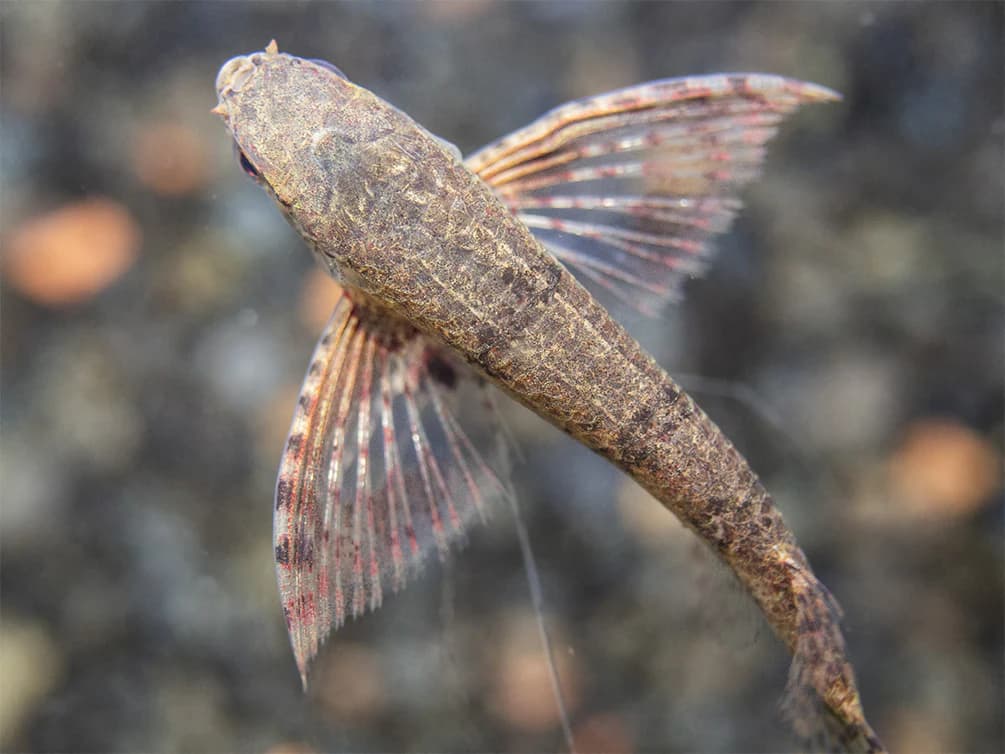
Pantodon buchholzi, the African butterfly fish, is one of the most ancient and unique fish available in the freshwater hobby. The sole living member of the family Pantodontidae, it is a primitive surface-dwelling predator from West and Central Africa that has barely changed in millions of years. Its broad, wing-like pectoral fins and elaborate camouflage pattern make it look like a fallen leaf floating at the surface.
African butterfly fish are ambush predators that float motionless at the water surface, waiting for insects, small fish, and invertebrates to come within striking range. Their upturned, angled mouth is perfectly designed for surface feeding. They can leap surprising distances out of the water to catch prey.
They are not community fish in the traditional sense. Their specific needs, surface-predator behavior, and sensitivity to tank mates require careful planning. But for the keeper who provides the right environment, they are extraordinary, prehistoric-looking animals.
Basic Overview
Common Misconceptions
"They are community fish." African butterfly fish will eat any fish or invertebrate that fits in their mouths, which includes fish considerably smaller than themselves. They only coexist with large, robust mid-and-bottom fish that they cannot eat.
"They need a tall, deep tank." The opposite is true. A long, shallow tank maximizes surface area and suits their surface-dwelling lifestyle far better than a tall tank. A 36" x 18" footprint with 10–12 inches of water is ideal.
"They easily accept dry food." African butterfly fish are instinct-driven surface predators that primarily respond to live prey movement. Most refuse to accept non-moving food initially. Training them onto frozen food is possible with patience, but live food is the easiest route to feeding.
"A tight lid is optional." A tight, secure lid is absolutely mandatory. African butterfly fish are exceptional jumpers and will escape through any gap larger than their body size. They have been found across rooms from their tank.
Recommended Setup
- 30+ gallon long, shallow tank (surface area more important than depth)
- Floating plants covering much of the surface: Amazon frogbit, water lettuce, Salvinia
- Some gaps in floating plants left open for feeding and air access
- Driftwood and tall plants providing structure beneath the surface
- Very gentle filtration with absolutely no surface agitation or current
- A very tight-fitting lid with minimal gaps (mandatory)
- Warm temperatures maintained consistently; they are sensitive to cold
Diet
African butterfly fish are obligate surface predators that hunt by sight and movement. Feeding can be challenging but is manageable:
- Live crickets, flies, and mealworms (dropped on the surface; the movement triggers the strike)
- Frozen or live brine shrimp (if the movement is sufficient to trigger a response)
- Live feeder guppies or small fish (ethical concerns apply; use sparingly)
- Floating sticks or pellets that can be moved to simulate prey (with patience, some fish learn to accept these)
- Dried insects from reptile stores (mealworms, waxworms) are often accepted
Feed every 1–2 days. African butterfly fish have slow metabolisms. Overfeeding leads to obesity and water quality problems. Use feeding tweezers or tongs to present live or frozen food at the surface with movement that triggers their strike response.
Personality
African butterfly fish are patient, deliberate ambush predators. They float motionless among floating plants for long periods, their coloration making them nearly invisible among dead leaves and debris. Their entire behavioral repertoire is organized around the wait, then the strike.
The strike is remarkably fast for such a seemingly slow fish: they lunge upward to take prey from the surface or even leap out of the water to catch insects. This predatory explosive movement from total stillness is startling and impressive.
They are not social and do not school. Multiple individuals in the same tank are possible in a large enough space with sufficient floating plants, but they will occasionally chase each other. Generally one per tank is the simplest approach.
Compatible Tank Mates
Tank mate selection for African butterfly fish requires choosing fish too large to eat and that live in the middle and lower water column, far from the butterfly fish's surface zone. Large, robust mid-water fish like Congo tetras, larger rainbowfish, and bichirs are popular companions.
Avoid any fish small enough to be eaten (generally anything under 2 inches for an adult butterfly fish). Also avoid surface-dwelling fish that will compete for the butterfly fish's territory: hatchet fish, for example, are a poor choice.
Large, peaceful bottom fish like synodontis catfish, large plecos, and ctenopoma species from the same West and Central African origin make natural, compatible companions.
Water Parameters
African butterfly fish come from the still, warm, heavily vegetated backwaters of West and Central Africa:
- pH: 6.0–7.5
- Hardness (gH): 1–10 dGH (soft water preferred)
- Temperature: 75–86°F
- Ammonia and Nitrite: 0 ppm
- Nitrate: below 20 ppm
Here are some top tips to deal with unwanted parameters:
- Absolutely no surface agitation. African butterfly fish hunt at the perfectly still water surface; any current or ripple disrupts their hunting behavior and stresses them. Use a canister filter with an output pointed down, or a sponge filter.
- Floating plants covering 50–70% of the surface create the shaded, still environment they come from. Indian almond leaves add beneficial tannins and create the dark coloring of their native blackwater habitat.
- Weekly 20–25% water changes keep nitrates low without disturbing the surface much. Pour replacement water gently along the glass, not from height.
- Maintain warm, stable temperatures. They are sensitive to temperature drops below 75°F and may become lethargic and susceptible to fungal infections in cool conditions.