Tiger Shrimp Care Guide
A Complete Care Guide for Caridina mariae
Introduction
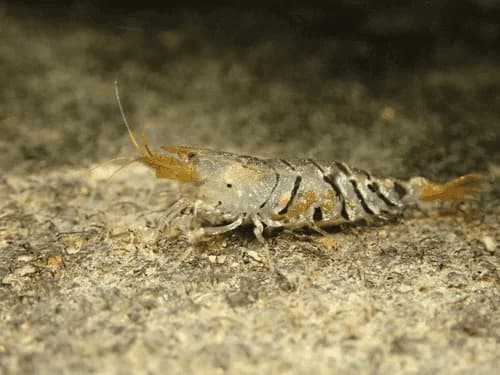
Caridina mariae, the tiger shrimp (or Indian tiger shrimp), is a small, attractively patterned shrimp from Asia with alternating dark and light transverse banding across the body -- the tiger-stripe pattern that gives them their common name. Various forms exist in the hobby ranging from the wild-type striped pattern to more intensely colored "super tiger" selectively bred forms with deeper black and white banding.
Found across parts of Southeast Asia (precise distribution varies by traded form), tiger shrimp inhabit streams and rivers with soft to moderately hard water and abundant plant growth and leaf litter.
Tiger shrimp care is easy to intermediate. They are generally hardier than Crystal Red and Crystal Black shrimp (Caridina cf. cantonensis) while still requiring soft, slightly acidic water. Their active grazing behavior, colony formation, and attractive banding make them rewarding inhabitants of planted nano tanks.
Basic Overview
Common Misconceptions
"They need the same care as cherry shrimp." Tiger shrimp are Caridina, not Neocaridina like cherry shrimp. They prefer softer, more acidic water than cherry shrimp and slightly cooler temperatures. Keeping them in hard, neutral water produces poor breeding results.
"All tiger shrimp are the same." The "tiger shrimp" trade name encompasses multiple species and selectively bred forms with varying stripe intensity. Wild-type C. mariae, "super tiger," and other variants have slightly different care nuances, with more selectively bred forms generally being more sensitive.
"Warm tropical temperatures are optimal." Tiger shrimp prefer slightly cooler water (68-76 degrees F) than most tropical fish. High temperatures reduce breeding success and lifespan.
"They can be combined with crystal shrimp colonies freely." Tiger shrimp and Crystal Red/Black shrimp can interbreed, producing hybrid offspring. If pure lines of either species are desired, keeping them in separate tanks is important.
Recommended Setup
- 10+ gallon dedicated shrimp tank
- Soft, slightly acidic water (RO water recommended)
- Active buffering substrate or regular pH management
- Sponge filter only
- Dense mosses: Java moss, subwassertang, Christmas moss
- Indian almond leaves for tannins and biofilm
- Temperature kept at 68-76 degrees F
- No fish (or only very small, gentle species)
Diet
Tiger shrimp are omnivores that graze continuously on biofilm and accept supplemental foods:
- Biofilm on surfaces and substrate (primary nutrition)
- High-quality shrimp granules or powder foods
- Blanched spinach or zucchini (occasional)
- Dried Indian almond leaves (biofilm source and enrichment)
- Mineral-rich foods to support molting
Feed small amounts every 1-2 days. Biofilm grazing provides much of their nutrition. Supplemental feeding should be modest. Remove uneaten food within 24 hours to maintain water quality. Overfeeding causes water quality problems that are a primary cause of colony losses.
Personality
Tiger shrimp in a colony are constantly active, industrious grazers. They pick at every surface -- glass, substrate, plants, wood, and leaves -- in perpetual search of food particles and biofilm. A colony of 30-50 tiger shrimp in a well-planted nano tank creates an endlessly busy, living display.
Their tiger-stripe banding is attractive and clearly visible against light substrate or plant stems. The "super tiger" form with deep black banding against white is particularly vivid and has become popular in the planted tank hobby.
Breeding in appropriate conditions produces regular batches of miniature shrimplets. Watching a healthy, breeding tiger shrimp colony develop and grow over months -- from a starting group of 20 to a thriving colony of 100+ -- is one of the most satisfying nano tank experiences available.
Water Parameters
Tiger shrimp require soft, slightly acidic, cool Caridina-appropriate water conditions:
- pH: 6.2-7.0
- TDS: 100-200 ppm
- Hardness (gH): 4-8 dGH
- KH: 0-2 (low carbonate hardness)
- Temperature: 68-76 degrees F
- Ammonia and Nitrite: 0 ppm
- Nitrate: below 10 ppm
Here are some top tips to deal with unwanted parameters:
- RO water remineralized with a Caridina-specific mineral produces the most consistent results.
- Active buffering substrate (ADA Amazonia or equivalent) helps maintain acidic pH naturally.
- Cool temperatures are important. In warm climates, a small aquarium chiller may be needed.
- Top off evaporation with pure RO water to maintain stable TDS and salinity.