Synodontis Multipunctatus Care Guide
A Complete Care Guide for Synodontis multipunctatus
Introduction
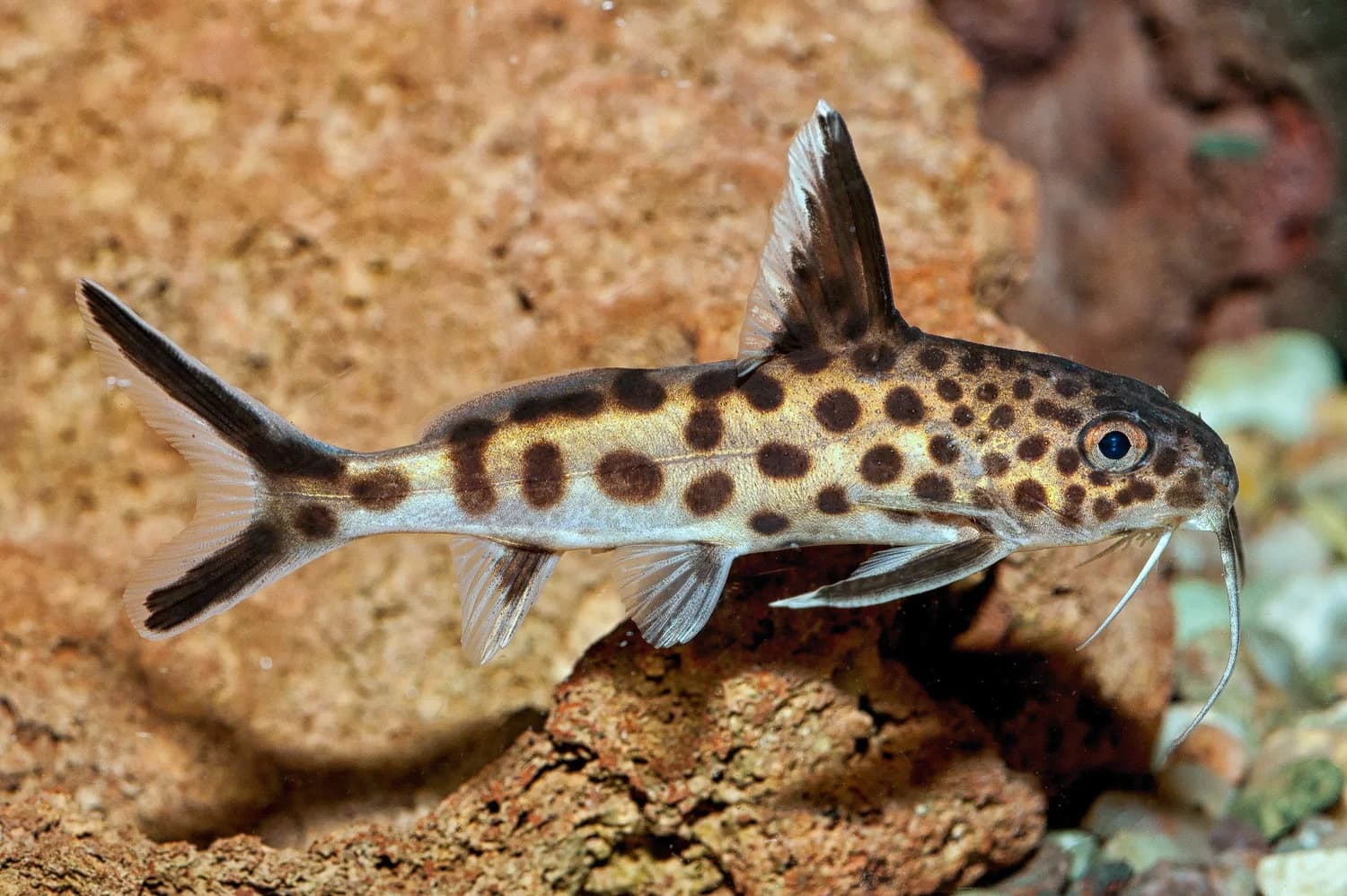
Synodontis multipunctatus, the cuckoo catfish, is one of the most biologically remarkable freshwater fish in the hobby. They are brood parasites of mouthbrooding cichlids: they spawn during the cichlid's own spawning event, causing the cichlid mother to unknowingly incubate and brood the catfish eggs and fry, which hatch earlier and often eat the cichlid's own fry. This extraordinary reproductive strategy gives the species its "cuckoo" common name.
Native to Lake Tanganyika in East Africa, cuckoo catfish inhabit the rocky benthic zone of the lake in large groups. They are medium-sized, attractive catfish with a pattern of dark spots on a tan to grey body.
Synodontis multipunctatus are interesting community fish for cichlid keepers. They are hardy, social, and their unique biology makes them conversation pieces. They should ideally be kept with Tanganyikan mouthbrooding cichlids to observe their natural behavior.
Basic Overview
Common Misconceptions
"They are brood parasites of all cichlids." Cuckoo catfish specifically target mouthbrooding cichlids for brood parasitism. Substrate-spawning cichlids are not effective hosts. The parasitism requires the cichlid to be a mouthbrooder, ideally from Lake Tanganyika.
"They can be kept alone." Synodontis multipunctatus are social and do better in groups of 3 or more. Solo specimens are less active and more secretive than group-kept fish.
"They are strictly nocturnal." While they are more active at night, cuckoo catfish in groups are often visible and active during daylight hours, particularly around feeding time.
"They will harm the cichlid mother." The brood parasitism is behavioral, not physically harmful to the host female. She incubates the catfish eggs unknowingly and the catfish fry may eat her own fry, but the female herself is unharmed.
Recommended Setup
- 55+ gallon tank
- Tanganyikan cichlid setup: rocky decor, hard alkaline water
- Caves and hiding spots for the catfish
- Good filtration
- Strong oxygenation
- Crushed coral substrate to maintain alkaline pH
Diet
Synodontis multipunctatus are omnivores that accept most sinking foods:
- Sinking pellets or wafers as a staple
- Frozen bloodworms
- Frozen brine shrimp
- Blanched vegetables
- Algae wafers
Feed once daily in the evening. Cuckoo catfish are reliable, non-fussy eaters that accept virtually all sinking foods. A varied diet maintains the best health.
Personality
Cuckoo catfish are active, social fish with the appealing combination of interesting biology and approachable care. In a group of 3-4 in a Tanganyikan cichlid setup, they add activity to the lower tank zones and their bold spotting pattern is attractive.
Their brood parasitism behavior, when observable, is extraordinary: the synchronization required to spawn at exactly the right moment during a cichlid's own spawning event, slipping eggs into the cichlid's mouth alongside her own, is a feat of behavioral sophistication that fascinates biologists and aquarists alike.
Outside breeding events, they spend time resting in caves and exploring the rocky substrate in typical Synodontis fashion.
Water Parameters
Synodontis multipunctatus come from the hard, alkaline, highly oxygenated Lake Tanganyika:
- pH: 7.5-9.0
- Hardness (gH): 10-20 dGH
- Temperature: 75-82 degrees F
- Ammonia and Nitrite: 0 ppm
- Nitrate: below 20 ppm
Here are some top tips to deal with unwanted parameters:
- Hard, alkaline water reflecting Lake Tanganyika conditions is important for long-term health.
- Crushed coral substrate provides passive pH buffering.
- High oxygenation through surface agitation is important.
- Weekly 25-30% water changes maintain good conditions.