Synodontis Eupterus Catfish Care Guide
A Complete Care Guide for Synodontis eupterus
Introduction
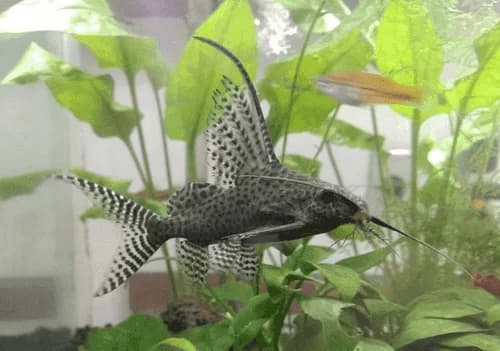
Synodontis eupterus, the featherfin catfish (or featherfin squeaker), is a medium-large African catfish named for the spectacularly elongated dorsal fin with thread-like extensions that are most prominent in adults. Their grey-brown body with dark spots and the dramatic feathered dorsal fin creates one of the most distinctive silhouettes of any freshwater catfish.
Native to the Niger, Volta, and Nile river systems in West and East Africa, S. eupterus inhabits slow to moderately flowing rivers with muddy to sandy substrates. They are adaptable, hardy fish.
Synodontis eupterus care is easy to moderate. Their hardiness, adaptability to a range of conditions, and dramatic dorsal fin make them popular and accessible large catfish. Their primarily nocturnal nature and active social behavior within groups add behavioral interest.
Basic Overview
Common Misconceptions
"The elongated dorsal fin filaments are fin damage." The thread-like extensions on the dorsal fin of adult S. eupterus are entirely natural secondary characteristics that develop with maturity. They are not split or damaged fins.
"They are safe with very small fish." Large adult S. eupterus may consume very small fish that fit in their mouth. Tank mates should be of appropriate size.
"Hard water is fine." S. eupterus from the Niger and Volta systems are adaptable but show better health and more impressive dorsal fin development in soft to moderately hard water rather than very hard conditions.
Recommended Setup
- 75+ gallon tank
- Large caves and hiding spots
- Sand or fine gravel substrate
- Moderate flow
- Good filtration
- Moderate to dim lighting
Diet
Synodontis eupterus are omnivores that accept most sinking foods:
- Sinking pellets (primary)
- Frozen bloodworms
- Frozen brine shrimp
- Blanched vegetables
- Algae wafers
Feed once daily in the evening. They are reliable, non-fussy feeders. A varied diet maintains good health and the most impressive dorsal fin extension in adults.
Personality
Synodontis eupterus are bold, characterful catfish that develop genuine individual personalities over time. Their spectacular elongated dorsal fin, most impressive in mature adults, creates an unmistakable profile. Despite primarily nocturnal tendencies, well-established fish often emerge during the day, particularly at feeding time.
Their adaptability to a range of large tank setups -- from African cichlid tanks to large planted South American setups -- makes them one of the most versatile large catfish for experienced community keepers.
Their longevity (10-15 years or more) means they become long-term companion fish with whom the keeper develops a genuine relationship over many years.
Water Parameters
Synodontis eupterus come from the rivers of West and East Africa and are highly adaptable:
- pH: 6.5-7.5
- Hardness (gH): 5-15 dGH
- Temperature: 72-82 degrees F
- Ammonia and Nitrite: 0 ppm
- Nitrate: below 20 ppm
Here are some top tips to deal with unwanted parameters:
- They are among the most water-chemistry-adaptable of all Synodontis species.
- Good filtration and regular water changes maintain the conditions needed for healthy fin development.
- Weekly 25-30% water changes.
- Standard tropical community tank conditions are appropriate.