Porthole Catfish Care Guide
A Complete Care Guide for Dianema longibarbis
Introduction
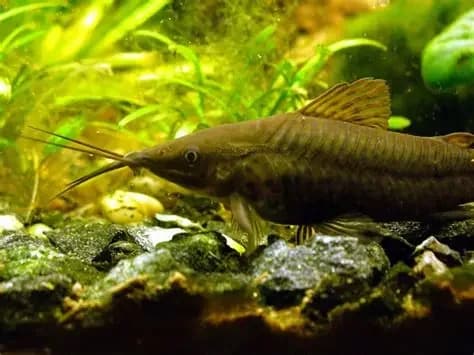
Dianema longibarbis, the porthole catfish, is a peaceful, elongated South American catfish named for the row of large dark spots along the lateral line that resemble portholes on a ship. Their slender, silver-grey body with bold dark lateral spots and long, delicate barbels create an elegant, understated appearance. They are active, social fish that do well in groups.
Native to the Amazon River and its tributaries in Peru, Brazil, and Colombia, porthole catfish inhabit slow to moderately flowing rivers with soft, slightly acidic water. They are often found in groups near the substrate and in mid-water, foraging actively.
Porthole catfish care is easy. Their peaceful temperament, adaptability to standard community conditions, and social nature make them excellent community catfish. They are more active and visible during the day than many catfish, adding movement to the tank throughout daylight hours.
Basic Overview
Common Misconceptions
"They are strictly nocturnal." Porthole catfish are more active during daylight hours than many catfish species, particularly in groups. They swim actively in mid-water and near the substrate throughout the day, making them more visible than typical nocturnal catfish.
"They can be kept alone." Porthole catfish are social fish that show more natural, active behavior in groups of 4-6. Solo fish are more reclusive.
"They are difficult to distinguish from other Dianema." The porthole spots along the lateral line and long barbels are characteristic. D. urostriata (the flagtail porthole catfish) has additional striping on the caudal fin as the primary distinguishing feature.
Recommended Setup
- 30+ gallon tank for a group of 4-6
- Soft substrate
- Planted setup or open community tank
- Good filtration
- Moderate flow
- Hiding spots (driftwood, caves)
- Peaceful community tank mates
Diet
Porthole catfish are omnivores that accept most sinking community foods:
- Sinking pellets as primary food
- Frozen bloodworms
- Frozen brine shrimp
- Blanched vegetables: zucchini, peas
- Sinking algae wafers
Feed once daily in the evening. They are non-fussy, reliable feeders that accept most sinking foods. A varied diet maintains the best health.
Personality
Porthole catfish in a group are more active and social than their appearance suggests. They swim actively through the water column in loose formations, explore the substrate together, and often rest in close proximity. Their mid-water activity level is higher than most catfish.
Their elegant porthole spots against silver-grey body and long delicate barbels give them a refined, distinguished appearance. In a planted community tank with soft substrate and gentle lighting, they are attractive and visible inhabitants.
Their compatibility with virtually all peaceful community fish -- from small tetras to corydoras to dwarf cichlids -- makes them easy to incorporate into mixed community setups.
Water Parameters
Porthole catfish come from the warm, soft Amazonian river systems:
- pH: 6.0-7.5
- Hardness (gH): 2-12 dGH
- Temperature: 72-79 degrees F
- Ammonia and Nitrite: 0 ppm
- Nitrate: below 20 ppm
Here are some top tips to deal with unwanted parameters:
- Soft, slightly acidic water is preferred but they are adaptable.
- Standard community tank parameters are generally adequate.
- Weekly 25% water changes maintain good conditions.
- Avoid copper-based medications.