Pea Puffer Care Guide
Big personality in a tiny package
Introduction
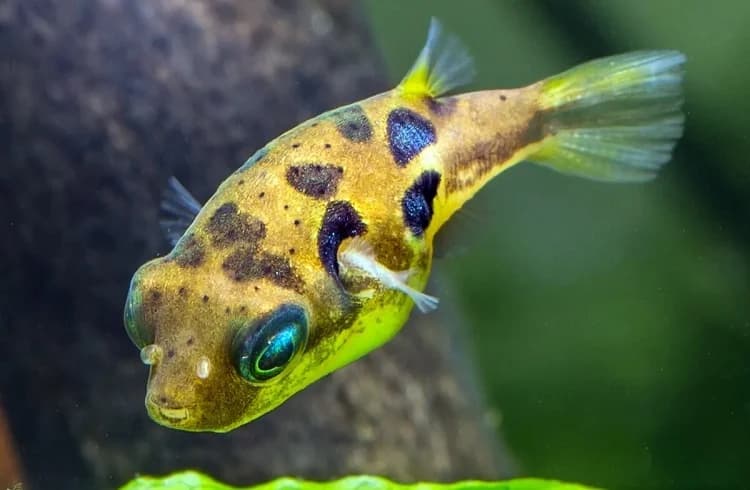
Carinotetraodon travancoricus, the pea puffer (also called dwarf puffer or Malabar puffer), is the smallest pufferfish in the world. Reaching only 1–1.4 inches at full size, these tiny fish pack an extraordinary amount of personality into their miniature bodies.
Pea puffers are native to the Western Ghats region of Kerala, India, where they inhabit slow-moving, heavily planted freshwater rivers and backwaters. They are purely freshwater fish, unlike many puffer species that require brackish or marine conditions.
They are intelligent, curious, and entertaining to watch. Every pea puffer has a distinct personality, and experienced keepers often describe them as the "puppy dogs" of the aquarium hobby. Their care is moderately challenging, mostly due to their dietary requirements and potential for aggression.
Basic Overview
Common Misconceptions
"Pea puffers are community fish." They can be nippy and aggressive, particularly toward slow-moving fish with long fins. A species-only tank or a carefully chosen, fast-moving community is safest. They will harass and bite tankmates given the opportunity.
"They can eat regular flake or pellet food." Pea puffers are carnivores that prefer live or frozen meaty foods. Most will refuse dried pellets and flakes entirely, especially at first. Their beak-like teeth require hard-shelled prey to prevent dental overgrowth.
"One pea puffer in a bowl is fine." A filtered, cycled, planted tank of at least 5 gallons is required. Pea puffers produce significant waste for their size and are sensitive to poor water quality.
"Males and females can always be kept together." Males can be aggressive toward females and other males. A ratio of at least one female per male, with plenty of plant cover for the female to hide in, is recommended.
Recommended Setup
- 5 gallons minimum for one puffer; 10 gallons for a group of 3 (1 male, 2 females)
- Heavily planted tank; pea puffers feel most secure with dense vegetation
- Fine sand or smooth gravel substrate
- Gentle filtration; sponge filters work well and provide no suction risk
- Floating plants reduce surface light and make them more comfortable
- Hiding spots among plants and driftwood; females especially need cover
- Soft, slightly acidic to neutral water
Diet
Pea puffers are obligate carnivores with strong preferences for live and frozen prey. Their beak-like fused teeth grow continuously and must be worn down by hard-shelled foods:
- Snails (bladder snails, ramshorn snails; their favorite and essential for dental health)
- Frozen bloodworms (a staple; most puffers accept these readily)
- Frozen brine shrimp and daphnia
- Frozen or live blackworms
- Micro crabs and small aquatic insects if available
Feed once or twice daily. Maintain a small snail culture alongside the puffer tank to ensure a steady supply of live snails. Snails are not just a treat but a dental necessity; without hard-shelled food, teeth overgrowth can prevent feeding and require veterinary trimming.
Personality
Pea puffers are endlessly fascinating to observe. They use their independently rotating eyes to track movement and study everything in their environment with apparent curiosity. They will look directly at you through the glass, a somewhat unnerving and delightful experience.
They are bold and fearless despite their tiny size, often approaching much larger fish with apparent confidence. Males will display to each other with spread fins and color intensification. A healthy male in breeding condition develops a dark line on his belly and vivid markings.
Each pea puffer has a genuinely distinct personality. Some are outgoing and greet every feeding with enthusiasm; others are cautious and methodical. Getting to know your individual puffers is one of the genuine pleasures of keeping them.
Tank Mates
Pea puffers are safest in a species-only setup, particularly for beginners. If you wish to add tank mates, choose fast-moving, short-finned species that can easily escape nipping: otocinclus catfish, small danios, and certain rasboras have been kept successfully with pea puffers by experienced keepers.
Avoid any slow-moving fish, any fish with long fins (bettas, guppies, angelfish), and other puffer species. Also avoid snails as decoration if you want them to survive; the puffers will immediately hunt and eat any snails in the tank.
The safest approach is to keep pea puffers with other pea puffers, in a well-planted tank with enough space and cover to reduce territorial conflicts.
Water Parameters
Pea puffers come from slow-moving, slightly soft, tropical freshwater in southern India:
- pH: 7.0–8.0 (slightly alkaline suits them well)
- Hardness (gH): 5–25 dGH (adaptable)
- Temperature: 74–82°F
- Ammonia and Nitrite: 0 ppm
- Nitrate: below 20 ppm
Here are some top tips to deal with unwanted parameters:
- Weekly water changes of 25–30% are important. Pea puffers are sensitive to nitrate accumulation and will show stress through pale coloration and lethargy.
- A well-planted tank helps buffer water quality between changes. Plants absorb nitrates and provide important enrichment for the puffers.
- Pea puffers are more tolerant of water hardness than many soft-water species. Standard tap water in most areas suits them fine without modification.
- Test water weekly during the first few months to establish your baseline and catch any water quality issues early.