Honeycomb Woodcat Care Guide
A Complete Care Guide for Tatia intermedia
Introduction
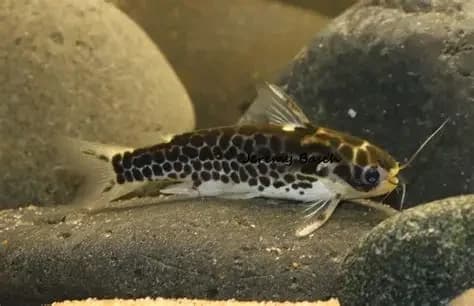
Tatia intermedia, the honeycomb woodcat (also called the honeycomb driftwood catfish), is a small South American catfish in the Auchenipteridae family, known as driftwood or woodcat catfish. Their body is patterned with an attractive network of dark brown lines and spots on a lighter background, creating the honeycomb-like reticulated pattern that gives them their common name. They are nocturnal, peaceful, and spend their days hidden inside driftwood or tight cave structures.
Native to the Amazon and Orinoco river basins in South America, Tatia catfish inhabit slow to moderately moving rivers and streams with abundant submerged wood. They are found sheltering inside hollow logs and tight crevices during daylight hours.
Honeycomb woodcat care is easy. Their modest size (3-4 inches), peaceful temperament, and minimal care requirements make them suitable for planted community tanks. Their most important needs are tight hiding spots (often inside hollow driftwood or caves they can barely fit into) and a nighttime feeding routine.
Basic Overview
Common Misconceptions
"They are visible during the day." Honeycomb woodcats spend virtually all daylight hours completely hidden inside hollow wood or tight caves. Rarely seeing them during the day is entirely normal and expected.
"They compete for food normally." As nocturnal, non-competitive fish, they will not emerge to feed with other fish during the day. Target feeding after lights out with food placed near their hiding spot is required.
"Any hiding spot is adequate." Tatia catfish prefer to squeeze into extremely tight spaces -- gaps and hollow wood they can barely fit inside. Caves that are too large do not provide the security they prefer. Tight PVC pipes or hollow driftwood with small openings are ideal.
"They are entirely solitary." While not highly social, Tatia intermedia does better in small groups of 3-4 and will share hiding spots with group members.
Recommended Setup
- 20+ gallon tank
- Hollow driftwood or tight PVC pipe caves
- Soft substrate
- Gentle flow
- Low to moderate lighting
- Peaceful community tank mates
- Good filtration
Diet
Honeycomb woodcats are omnivores that eat most sinking foods:
- Frozen bloodworms (placed near hiding spot after lights out)
- Small sinking pellets
- Frozen brine shrimp
- Live blackworms
Feed after lights-out, placing small amounts of food directly at the entrance to their hiding spot. A dim red flashlight allows observation of their nocturnal feeding activity. They eat small amounts relative to their size.
Personality
Honeycomb woodcats are the archetypal "mystery fish" of a planted community tank. Visitors rarely see them; only the keeper who knows where to look -- and checks after dark -- experiences their genuine personality. Nocturnal observations reveal active, inquisitive fish that explore the substrate, hunt for food, and interact with group members.
Their honeycomb-patterned body is beautiful when visible: the reticulated network of brown lines on a lighter background has a handcraft quality. In groups of 3-4, they often share hiding spaces and emerge together at night.
For the aquarist who appreciates having a visible tank during the day and a completely different hidden community that becomes active at night, Tatia catfish are ideal inhabitants.
Water Parameters
Honeycomb woodcats come from the warm, soft rivers and streams of South America:
- pH: 6.0-7.5
- Hardness (gH): 2-12 dGH
- Temperature: 72-79 degrees F
- Ammonia and Nitrite: 0 ppm
- Nitrate: below 20 ppm
Here are some top tips to deal with unwanted parameters:
- Standard soft to moderately hard water parameters are appropriate.
- Gentle flow and stable conditions.
- Weekly 20-25% water changes maintain good conditions.
- Avoid copper-based medications.