Gold Pristella Tetra Care Guide
A Complete Care Guide for Pristella maxillaris (Gold Variant)
Introduction
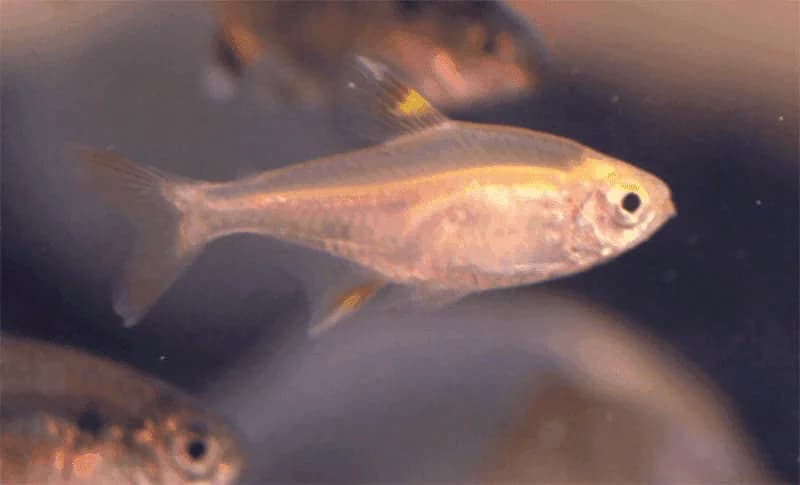
Pristella maxillaris, the pristella tetra (or X-ray tetra), is a small, attractive South American tetra with a semi-transparent body through which the spine is faintly visible. The gold variant replaces the standard silvery body with a warm golden-yellow iridescence, while retaining the characteristic black, white, and yellow dorsal and anal fin patterning. The gold form is considered more striking than the standard type by many aquarists.
Native to coastal river systems in Venezuela, Guyana, and northern Brazil, pristella tetras inhabit both freshwater and slightly brackish environments. They are adaptable, tolerating a wider range of water conditions than many South American tetras.
Gold pristella tetra care is easy and suitable for beginners. Their tolerance of a range of water parameters, peaceful temperament, and attractive fin patterning make them excellent community schooling fish for planted tanks.
Basic Overview
Common Misconceptions
"The gold color is artificial." The gold pristella tetra is a naturally occurring color form that has been selectively maintained through captive breeding. It is not dyed or injected -- the warm golden body color is genetic.
"They need specific soft, acidic water like most South American tetras." Pristella tetras are among the most water-chemistry-adaptable South American tetras. They tolerate neutral to slightly alkaline, moderately hard water and can even handle slight salinity -- making them less demanding than neon or cardinal tetras.
"Their fin pattern is less vivid than their photo." Under good lighting in a planted tank, the contrasting black and white dorsal and anal fin pattern of the gold pristella is distinctly visible and attractive -- especially in a school where many fish display the pattern simultaneously.
Recommended Setup
- 20+ gallon planted tank for a school of 10
- Any standard community tank parameters
- Moderate flow
- Good filtration
- Dark substrate to enhance gold color contrast
Diet
Gold pristella tetras are omnivores that accept most standard community foods:
- High-quality small flake or micro pellets
- Frozen baby brine shrimp
- Frozen daphnia
- Frozen micro worms
Feed twice daily in small amounts. Gold pristella tetras are non-fussy, straightforward feeders. A varied diet maintains the best health and the most vivid golden color.
Personality
Gold pristella tetras are active, sociable schooling fish that swim in loose formations through the mid-water. Their golden bodies with distinctive fin patterning create a warm, pleasing display in any planted community tank.
Their exceptional adaptability to water conditions makes them among the most reliable and resilient of all small tetras. They are an excellent choice for newer aquarists who want a striking schooling fish without the strict water chemistry demands of neon or cardinal tetras.
A school of 12-15 gold pristella tetras in a planted 30-gallon community tank provides constant visible activity, vivid collective color, and natural schooling behavior that makes a tank feel complete.
Water Parameters
Gold pristella tetras are among the most water-chemistry-tolerant South American tetras:
- pH: 6.0-8.0 (very adaptable)
- Hardness (gH): 2-20 dGH (very adaptable)
- Temperature: 74-82 degrees F
- Ammonia and Nitrite: 0 ppm
- Nitrate: below 20 ppm
Here are some top tips to deal with unwanted parameters:
- Standard municipal tap water in virtually any region is appropriate for this species.
- Their coastal origin gives them tolerance for slight salinity, making them compatible with mild brackish fish.
- Weekly 25% water changes maintain good conditions.
- Adaptability is their defining care characteristic -- focus on stable maintenance over specific parameter targets.