Butterfly Pleco Care Guide
A Complete Care Guide for Dekeyseria picta
Introduction
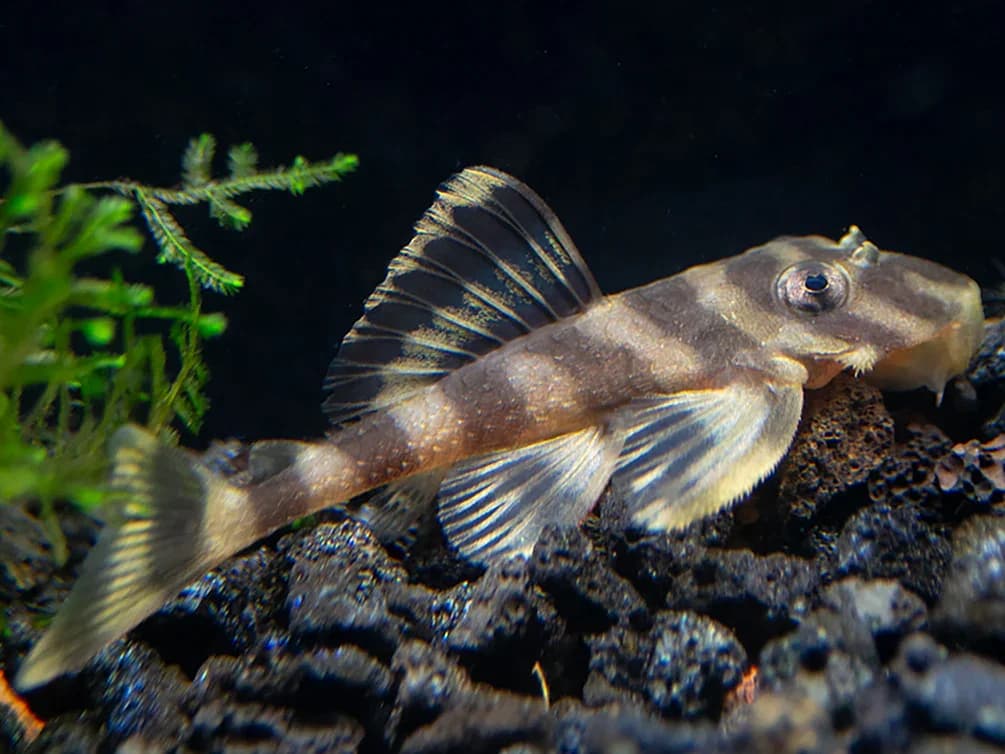
Dekeyseria picta, the butterfly pleco, is a strikingly patterned small pleco from the Amazon basin. Their body is covered with an intricate network of dark brown lines on a cream to tan background, creating a mosaic pattern that is highly variable between individuals. This "stained glass" or butterfly wing-like pattern gives the species its evocative common name.
Native to the Rio Negro and related drainages in Brazil, butterfly plecos inhabit fast-flowing, rocky, highly oxygenated, soft, and acidic blackwater rivers. Their specific blackwater origin differentiates them meaningfully from most plecos in their water chemistry requirements.
Butterfly pleco care is intermediate. They require fast flow, high oxygen, warm temperatures, soft acidic water, and a cave for shelter. Their striking pattern and moderate size make them attractive display plecos for suitably prepared blackwater tanks.
Basic Overview
Common Misconceptions
"They can share standard community tank conditions." Butterfly plecos come from blackwater, soft, acidic Rio Negro tributaries. Hard, alkaline community tank water produces chronic stress. Soft, acidic, tannin-stained conditions are important for their long-term health.
"They are primarily algae eaters." Butterfly plecos feed on biofilm, algae, and wood surfaces. They require driftwood for grazing and behavioral enrichment. Algae wafers supplement but driftwood access is important.
"Multiple butterfly plecos can share a tank." Like most plecos, butterfly plecos are territorial with their own species. One per tank unless the setup is large with multiple separate territories.
"Standard tropical temperatures suit them." Butterfly plecos prefer warm temperatures (79-86 degrees F) reflecting their tropical Rio Negro origin. Standard 76 degrees F tropical temperature is cooler than ideal.
Recommended Setup
- 40+ gallon tank
- Strong current and high oxygenation
- Driftwood for grazing (essential)
- Smooth rocks and flat surfaces
- Cave (one per fish)
- Soft, acidic, tannin-stained water
- Warm temperatures: 79-86 degrees F
Diet
Butterfly plecos are primarily biofilm and algae grazers with some plant material in their diet:
- Driftwood (always available for continuous grazing)
- Algae wafers
- Spirulina-based foods
- Blanched zucchini and cucumber
- Sinking vegetable pellets
Feed daily in the evening. Driftwood must always be available as a grazing substrate. Butterfly plecos that are kept without wood show poorer condition and health over time. Blanched vegetables 3-4 times per week supplement their biofilm grazing.
Personality
Butterfly plecos are bold for plecos and spend time in visible positions on driftwood and rock surfaces, often during daylight hours. Their intricate, highly variable pattern makes each individual visually unique -- no two butterfly plecos have exactly the same mosaic.
Their defensive behavior is characteristic pleco: when threatened, they lock themselves against a surface with strong suction and become very difficult to move. In a mature tank with good flow and established driftwood, they become relaxed, visible inhabitants.
The visual effect of a butterfly pleco against dark driftwood in a tannin-stained blackwater setup is one of the most beautiful pleco displays available.
Water Parameters
Butterfly plecos come from the soft, acidic, warm blackwater rivers of the Rio Negro system:
- pH: 5.0-6.5 (soft, acidic -- important)
- Hardness (gH): 0-6 dGH (very soft)
- Temperature: 79-86 degrees F
- Ammonia and Nitrite: 0 ppm
- Nitrate: below 10 ppm
Here are some top tips to deal with unwanted parameters:
- Soft, acidic blackwater conditions are the most critical care requirement. In hard-water areas, mixing with RO water to achieve soft conditions is essential.
- Tannins from driftwood and Indian almond leaves naturally acidify soft water and replicate the Rio Negro environment.
- High oxygenation through strong surface movement is important.
- Avoid copper-based medications.