Blue Kamaka Rainbowfish Care Guide
A Complete Care Guide for Melanotaenia kamaka
Introduction
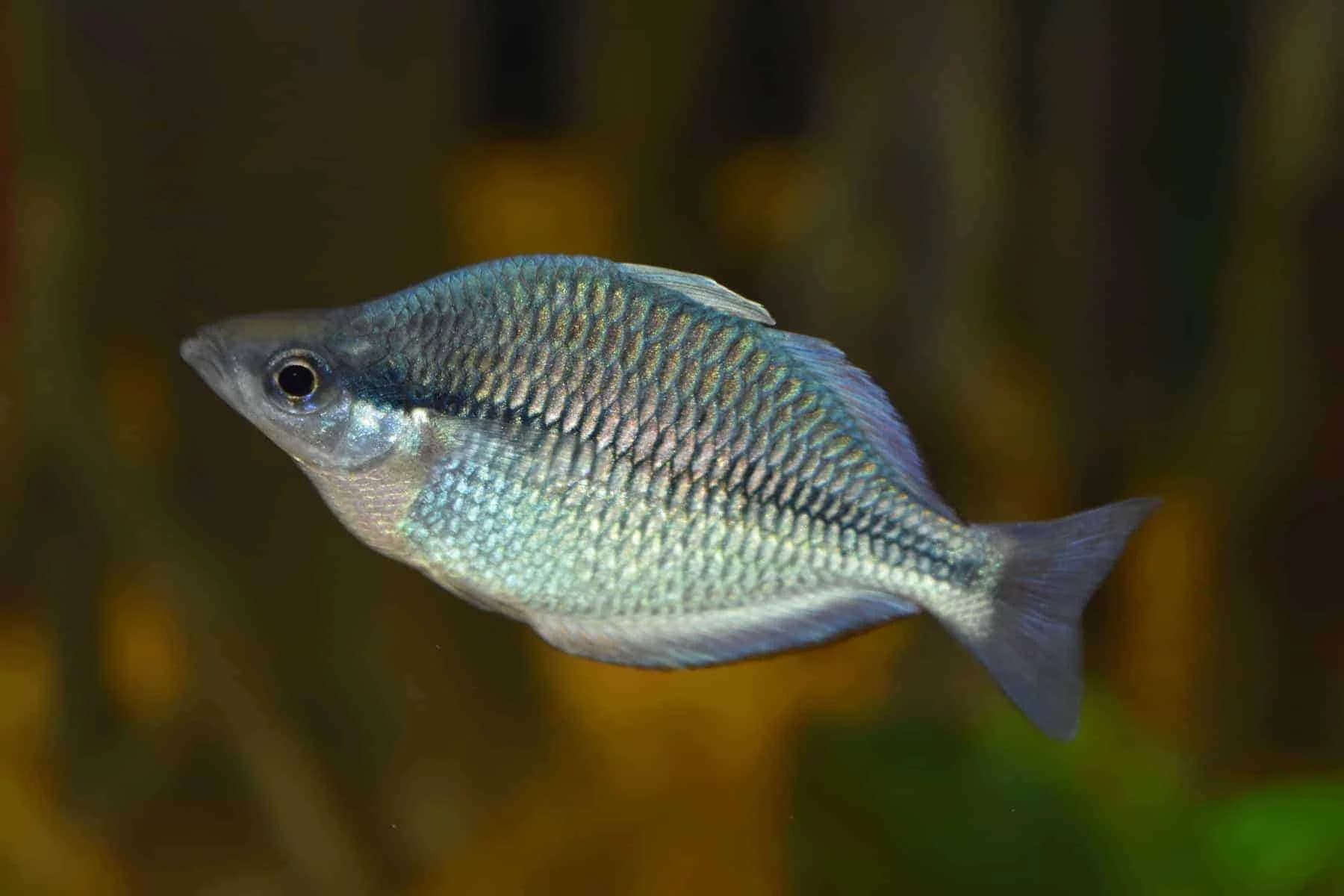
Melanotaenia kamaka, the blue Kamaka rainbowfish, is a vivid rainbowfish from Papua New Guinea prized for its intense blue coloration. Males display a brilliant blue body with a contrasting orange to red posterior, yellow fins, and characteristic rainbow-like iridescence that shifts with angle and lighting. They are one of the more colorful species in the diverse Melanotaenia genus.
Endemic to the Kamaka River drainage in Papua New Guinea, this species inhabits clear, fast-flowing rivers with moderate hardness and good oxygenation. Like most Melanotaenia rainbowfish, they are adaptable and hardy in captivity.
Blue Kamaka rainbowfish care is easy. They are active, peaceful, and compatible with a wide range of community fish. Their hardiness and striking coloration -- especially in mature males -- make them excellent additions to medium-sized planted or open community tanks.
Basic Overview
Common Misconceptions
"Male color is present from juvenile stage." Male blue Kamaka rainbowfish develop full coloration as they mature, typically at 6-12 months. Juveniles and young fish appear dull compared to mature males. Color intensifies significantly with age, good diet, and appropriate water chemistry.
"Soft, acidic water is ideal." Melanotaenia rainbowfish generally prefer moderately hard, slightly alkaline water. Soft, acidic conditions suppress full color development and reduce long-term vitality.
"A school of 4 is fine." Groups of 6 or more, with multiple males, produce the most active male display behavior and the most visually impressive school.
Recommended Setup
- 40+ gallon tank for a school of 6-8
- Open swimming space with planted edges
- Moderate to strong flow
- Moderately hard, slightly alkaline water
- Good filtration and oxygenation
- Multiple males in the group for active display
Diet
Blue Kamaka rainbowfish are omnivores that accept a wide range of foods:
- High-quality flake or small pellets
- Frozen bloodworms
- Frozen brine shrimp
- Frozen daphnia
- Blanched vegetables
Feed twice daily. Rainbowfish are enthusiastic surface and mid-water feeders. A varied diet with regular frozen protein foods maintains the most intense blue coloration in males.
Personality
Male blue Kamaka rainbowfish are constantly active display fish, competing with each other through parallel swimming and fin flaring that intensifies their vivid blue and orange colors. The visual effect of a group of mature males in full display is extraordinary.
Their peaceful temperament makes them compatible with a wide range of community fish of similar size. They do not nip fins and are not aggressive toward tank mates.
Rainbowfish in general are underappreciated in the hobby. The blue Kamaka, with its intense blue coloration and active display behavior, represents some of the best the genus has to offer.
Water Parameters
Blue Kamaka rainbowfish come from the clear rivers of Papua New Guinea:
- pH: 7.0-8.0
- Hardness (gH): 8-18 dGH
- Temperature: 74-82 degrees F
- Ammonia and Nitrite: 0 ppm
- Nitrate: below 20 ppm
Here are some top tips to deal with unwanted parameters:
- Moderately hard, slightly alkaline water produces the most vivid coloration.
- Good flow and surface agitation for oxygenation.
- Weekly 25-30% water changes maintain good conditions.
- If tap water is soft, adding crushed coral to the filter raises hardness and pH naturally.