Swordtail Care Guide
The Ultimate Care Guide for Swordtails
Introduction
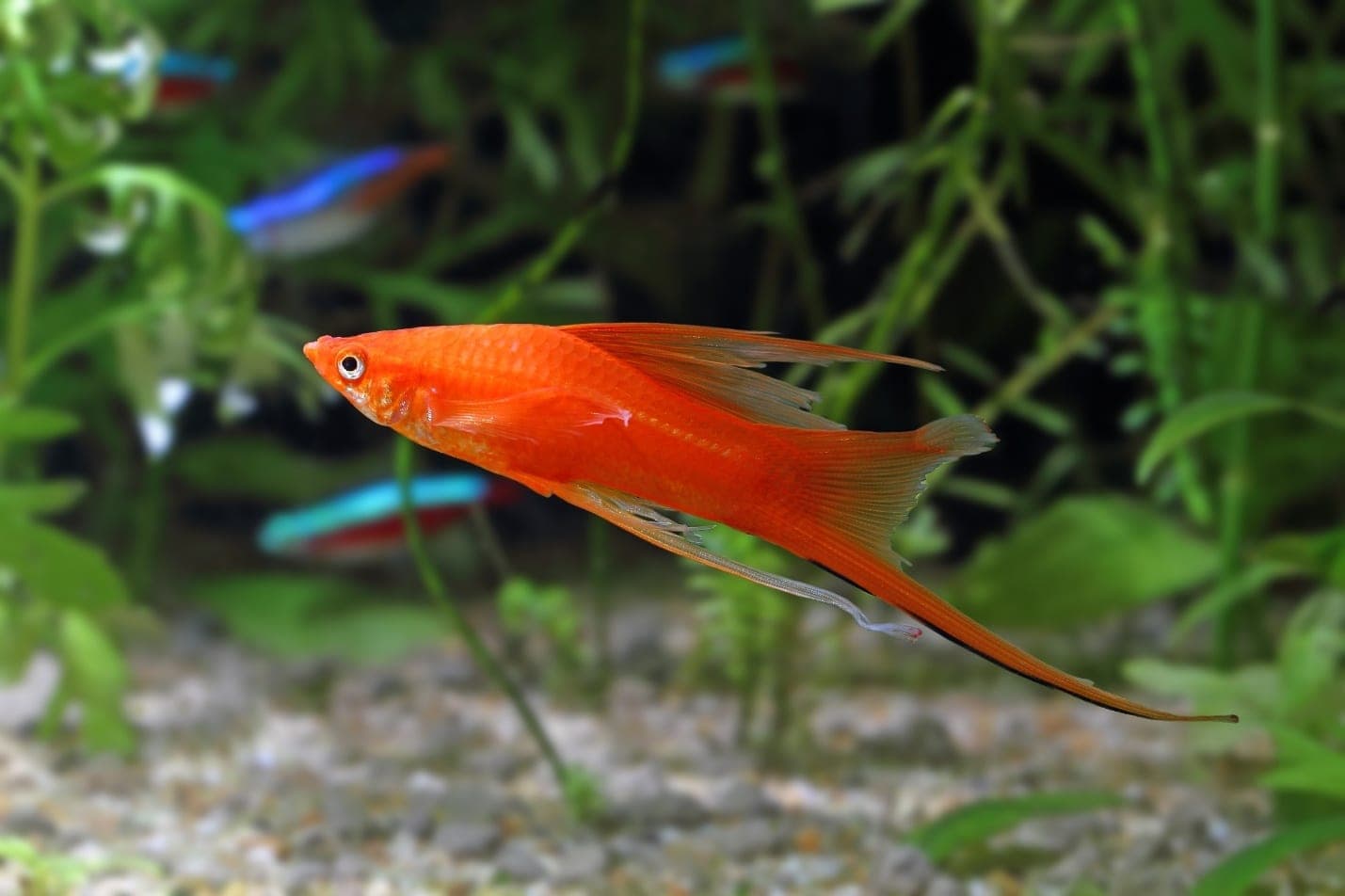
Xiphophorus helleri, commonly known as the swordtail, is a popular and personable livebearer named for the distinctive elongated lower tail fin of the male, which resembles a sword. They live roughly 3-5 years in captivity and prefer temperatures of 70-78 degrees Fahrenheit. Males commonly reach 4-5 inches including the sword extension, while females are typically 3-4 inches.
Swordtails are closely related to platies and can even interbreed with them, though this is generally not recommended. Like all livebearers, they give birth to live young rather than laying eggs and can breed readily in a home aquarium. They come in a wide variety of selectively bred color forms, from the classic red to pineapple, tuxedo, kohaku, and many more.
Their active nature, striking appearance, and ease of care make swordtails a popular and rewarding choice for community tanks. They are a bit larger and bolder than most livebearers, which gives them a presence that guppies and platies lack.
Basic Overview
Common Misconceptions
"Swordtails are the same as platies!" Swordtails and platies are closely related and can interbreed, but they are distinct species. Swordtails are noticeably larger and the males have the iconic sword extension that platies completely lack.
"The sword is used as a weapon in fights!" The sword is purely ornamental and plays a role in courtship displays. It is not used aggressively when males spar with each other.
"Swordtails have the same care needs as guppies!" Both are livebearers, but swordtails grow significantly larger and need more space. Males can also be more assertive toward each other than male guppies typically are.
"Female swordtails cannot change sex!" Female swordtails can spontaneously develop male characteristics, including the sword, especially when kept in all-female groups. It is a fascinating and well-documented phenomenon in this species.
Recommended Setup
- 20+ gallon tank, cycled, with a tight-fitting lid, heater, and filter
- Live plants for cover and fry hiding
- Plenty of open swimming space
- Moderate flow
- Fine gravel or sand substrate
- Aquarium siphon
Diet
Swordtails are omnivores and enthusiastic eaters that readily accept most foods. A varied diet keeps them healthy and brings out their best colors. They enjoy:
- High-quality flake food or pellets as a staple
- Blanched spinach, zucchini, or lettuce
- Frozen or live baby brine shrimp (treat)
- Frozen or live daphnia
- Algae wafers
Feed once or twice daily. Like all livebearers, swordtails are enthusiastic beggars that will always act hungry. Moderate feeding is key to avoiding bloat and poor water quality.
Personality
Swordtails are active, personable fish with a bolder temperament than most livebearers. Males display actively to females and to each other, showing off their swords in a slow, fanning display that is fun to watch. This can occasionally escalate to brief chasing, but serious injury is rare in a properly sized tank.
Females are energetic and exploratory, often the most active fish in the tank. In a well-sized setup with appropriate numbers, swordtails are lively and interesting fish with a lot of visual appeal.
One of the more interesting quirks of the species: female swordtails occasionally change sex and develop male characteristics including the sword. This is thought to occur in response to the absence of males in a group, and it is one of those genuinely fascinating things that makes fishkeeping so interesting.
Breeding
Swordtails are prolific livebearers that breed readily in any well-maintained tank with both sexes present. Females can store sperm for months, so even separating the sexes after mating will not immediately stop fry production.
Fry are born live and free-swimming but are small enough to be eaten by adults and other tank inhabitants. Dense planting, floating plants, or a separate breeding tank dramatically improves fry survival.
If breeding is not your goal, keeping only males or only females is the simplest solution. All-male swordtail tanks generally work well, especially with enough space and visual breaks to reduce male-on-male confrontations.
Water Parameters
Like most livebearers, swordtails prefer slightly alkaline, moderately hard water. They are adaptable but genuinely do best with harder water. Target:
- pH: 7.0-8.0
- gH: 150-250 PPM
- Temperature: 70-78 degrees Fahrenheit
Here are some top tips to deal with unwanted parameters:
- To increase hardness and raise pH, use crushed coral in the filter. This is especially useful in soft-water areas.
- Swordtails are active jumpers. A tight-fitting lid with no gaps is non-negotiable.
- Do weekly 20-30% water changes to keep nitrates in check.
- Remember, using random chemicals is not recommended, since they can cause more problems through sudden, drastic changes.