Shrimp Keeping 101
Neocaridina, Caridina, and Everything in Between
Introduction
Freshwater shrimp have gone from a niche curiosity to one of the most popular categories in the aquarium hobby over the past two decades. It is easy to see why. They are endlessly active, fascinating to observe as they graze and forage, remarkably effective at cleaning algae and detritus, and available in a stunning range of colors. A dedicated shrimp tank is one of the most rewarding setups a hobbyist can build.
The two main groups of freshwater hobby shrimp, Neocaridina and Caridina, differ meaningfully in their care requirements. Understanding the difference is the first step to keeping either successfully.
Quick Overview
Neocaridina: The Beginner-Friendly Choice
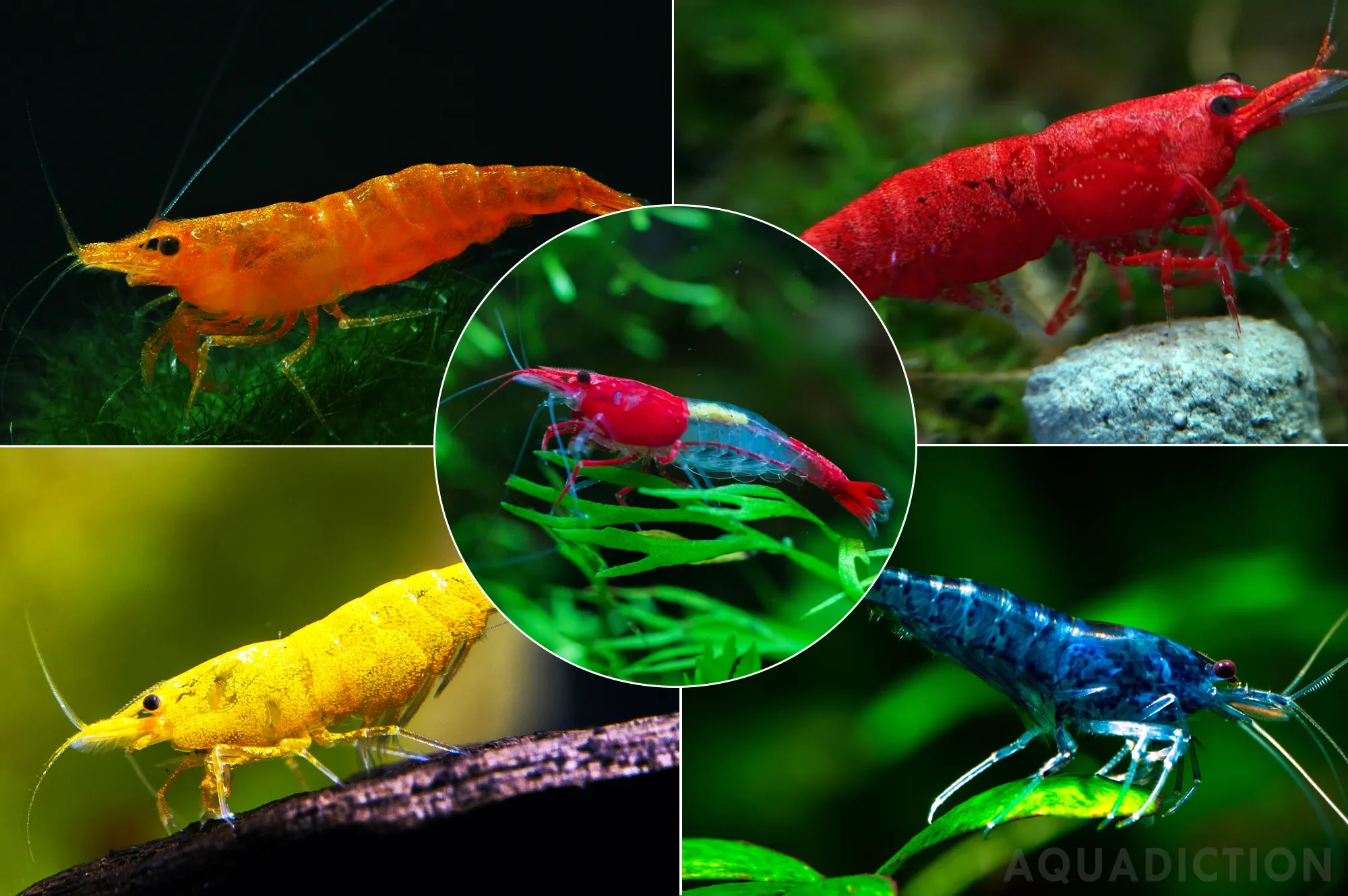
Neocaridina davidi is the species behind cherry shrimp, blue velvet shrimp, yellow neocaridina, orange neocaridina, and dozens of other color morphs. All of these are the same species in different color forms, selectively bred over generations. They are the most forgiving freshwater shrimp available and the right starting point for new shrimp keepers.
- Water parameters: pH 6.5-8.0, GH 6-12, KH 2-8, temperature 68-78°F. Adapts to a wide range of tap water conditions.
- Breeding: easy and prolific. A healthy colony doubles in size every six to eight weeks under good conditions. Females carry eggs visibly under the tail for three to four weeks before releasing fully formed miniature shrimp.
- Color grades: shrimp are sold in grades (lower grade to highest: regular, sakura, fire red, painted fire red) based on color coverage and intensity. Higher grades cost more and produce higher-grade offspring.
- Do not mix color morphs: all neocaridina interbreed, and offspring revert toward wild brown coloration within a few generations
Cherry shrimp are one of the best beginner invertebrates in the hobby. They are cheap to start with, breed reliably, control algae visibly, and transform a planted tank with their constant activity. A colony of 20 shrimp in a well-planted 10-gallon is endlessly entertaining.
Caridina: Beautiful but Demanding
Caridina shrimp include the famous Crystal Red and Crystal Black shrimp, the Blue Bolt, the Pinto, and a wide range of other highly selectively bred varieties known for their dramatic patterning. They are among the most visually striking invertebrates in the hobby and among the most parameter-sensitive.
- Water parameters: pH 5.8-6.8, GH 4-6, KH 0-2, TDS 100-150. They require very soft, acidic water and are intolerant of parameter swings.
- Substrate: active substrate (aquasoil) is strongly recommended as it naturally lowers and buffers pH into the correct range and maintains the soft water chemistry caridina require.
- Water source: reverse osmosis water remineralized with a caridina-specific mineral supplement is the standard approach, as most tap water is too hard and alkaline.
- Grades: Crystal Red Shrimp (CRS) and Crystal Black Shrimp (CBS) are graded from C (lowest, mostly colored) through S, SS, and SSS (highest, mostly white with intense color pattern).
Tank Setup for Shrimp
Shrimp tanks succeed or fail largely based on stability. Shrimp are small, and the ratio of their body mass to the water volume they live in means that parameter swings affect them faster and more severely than fish. A well-established, mature tank is always more successful than a freshly set up one.
- Cycle the tank fully before adding shrimp; shrimp are more sensitive to ammonia and nitrite than most fish
- Use a sponge filter or a filter with a sponge pre-filter over the intake; shrimp and especially baby shrimp are sucked into standard filter intakes easily
- Dense moss (java moss, Christmas moss, mini pellia) is the single most important addition; it provides grazing surface covered in biofilm, which is the primary food of shrimplets
- Avoid copper-heavy medications and unsafe copper exposure: many treatments and some tap water sources contain copper at levels harmless to fish but dangerous to shrimp
- Keep nitrate below 20 ppm; shrimp are more sensitive to nitrate accumulation than most fish
Feeding Shrimp
In a mature, planted tank with healthy biofilm and algae growth, shrimp require very little supplemental feeding. Overfeeding shrimp is far more common than underfeeding and is a leading cause of water quality problems in shrimp tanks.
- Feed small amounts two to three times per week, not daily
- Specialized shrimp foods (Shrimp King, Bacter AE, GlasGarten) provide protein, minerals, and biofilm bacteria that support healthy molting
- Blanched vegetables (zucchini, spinach, cucumber, kale) are relished and provide minerals; remove uneaten portions after a few hours
- Indian almond leaves and alder cones provide biofilm and trace compounds that benefit shrimp health
Molting: The Critical Phase
Shrimp grow by molting: shedding their exoskeleton and rapidly expanding before the new shell hardens. Molting is the most vulnerable time in a shrimp's life, and deaths around molting are common in tanks with inadequate mineral content or sudden parameter changes.
- Failed molts (where a shrimp cannot escape its old shell) are almost always caused by insufficient minerals, particularly calcium and magnesium. Ensure adequate GH.
- Leave molted shells in the tank; other shrimp consume them for the mineral content
- Do not disturb a shrimp that is molting or has just molted; their new shell is soft and they are extremely vulnerable
- Large water changes with different-parameter water can trigger mass molting events, which can be stressful if the mineral content of replacement water differs significantly