Mystery Snail Care Guide
The Ultimate Care Guide for Mystery Snails
Introduction
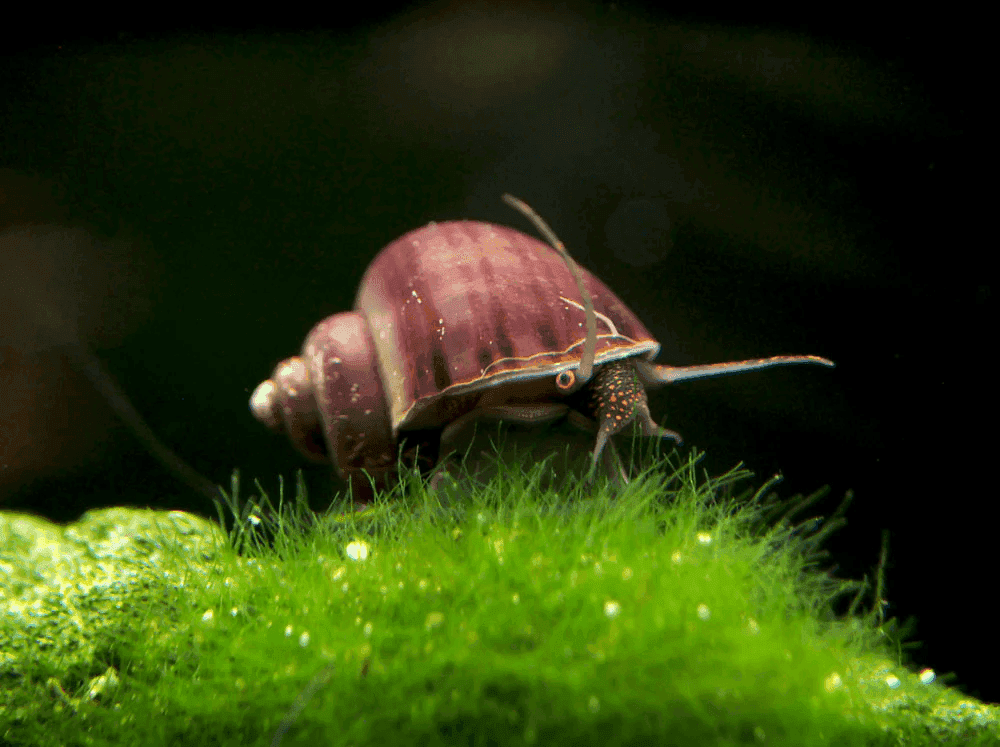
Pomacea diffusa, also known as the mystery snail, is a commonly sold freshwater snail in aquatic pet stores. They are popular because they are peaceful, active, and easy to watch as they explore glass, plants, decor, and leftover food around the tank.
Most mystery snails live roughly 1-2 years, though some can live longer in cooler, stable water. They usually reach about 2 inches, or 5 centimeters, and do best around 70-78 degrees Fahrenheit. They can tolerate a few degrees higher or lower, but sudden swings are harder on them than a steady tank.
Their shells need mineral-rich water, so a pH above 7, gH above 150 PPM, and kH around 80-120 PPM are important. They also need real food, not just algae. Vegetables, algae wafers, and calcium sources such as cuttlebone help support healthy growth, and their siphon lets them breathe air from the surface.
Basic Overview
Common Misconceptions
The mystery snail is a type of apple snail, but not the other way around! Some species of apple snails can get much bigger than mystery snails. For example, Pomacea maculata can get up to 6 inches long!
Mystery snails can eat algae and dead plant material, but it is nowhere close to what their actual diet should be. They need vegetables for nutrients, fiber, and minerals to keep them healthy.
"These are snails, so they are slow and don't need much space!" This argument does have some merit behind it, but the main reason they need space is their waste. Mystery snails excrete a lot of waste, so a bigger tank helps dilute that astonishing amount of waste.
"Mystery snails lay a lot of eggs, so if I keep them, I'll have way too many baby snails!" They do lay an absurd amount of eggs, commonly 50-100 in one batch, but they lay them above the waterline, so you can easily crush them and feed them back to your snail as a calcium source. Snails aren't exactly the best parents.
Recommended Setup
- 10+ gallon tank, cycled, with a lid, heater, and filter
- Live plants, rocks, and driftwood
- Sand substrate
- Calcium source, such as pure cuttlebone
- Peaceful tankmates, if any
- Aquarium siphon
Diet
Mystery snails thrive on a variety of vegetables for vitamins, fiber, and minerals. Common vegetables include kale, spinach, broccoli, zucchini, carrots, sweet potato, green beans, and peas. Peas can act as a laxative because of their high fiber content.
Vegetables must be blanched before feeding. In general, leafy greens should be blanched for 45 seconds, other vegetables for 75 seconds, and very hard vegetables for 180-300 seconds. The vegetable is usually ready when it is easy to nick with your fingernail.
Simple Snello Recipe
- 1/4 cup broccoli
- 1/4 cup zucchini
- 1/4 cup carrots
- 1/4 cup sweet potato
- 10-15 peas
- 1/4 cup green beans
- 5-10 spinach leaves
- 1 tsp spirulina
- 1 crushed clove of garlic
- 2-3 tsp fish flakes
Blend the ingredients in a food processor or blender. Finished snello should hold a mound and jiggle a little on the spoon without falling. If it is too watery, add hard vegetables such as peas and carrots. If it is too dry, add watery vegetables such as zucchini or cucumber.
Personality
Mystery snails have more personality than many people expect. Since they use a siphon to breathe air, they often crawl up the tank to reach the surface. Instead of crawling all the way back down, they may detach and fall to the bottom. This is often called parasnailing.
Like most snails, they may curl into their shell when touched and come out again when they feel safe. They are peaceful, and most tankmate problems usually come from other animals bothering the snail rather than the snail causing trouble.
Betta and Mystery Snail
Aquarists sometimes disagree on this pairing. Some bettas may nip antennae and harass the snail, while others ignore snails completely. The outcome depends heavily on the betta's personality.
Naturally aggressive bettas can harass mystery snails, while a passive betta may view the snail as a slightly moving rock. An occasional test bite may happen, but frequent biting is a warning sign. Baby mystery snails are riskier with bettas because they can look like small snacks.
Water Parameters
Water parameters are very important for snails because they need to maintain healthy shells. A kH of 80-120 PPM, gH of 150 PPM+, and a pH of 7-8 help support strong shell growth.
pH and kH go hand in hand, so you can increase both with a medium bag of crushed coral in your filter or a small amount of baking soda for a quick boost, though the latter is not recommended. To decrease them, try peat moss in your filter, or driftwood and Indian almond leaves in your tank.
To increase gH, use a snail-safe remineralizer or gH booster. Cuttlebone can also help provide calcium, but it dissolves slowly and is better used as a steady calcium source. To lower gH, try driftwood and Indian almond leaves, or mix RO, reverse osmosis, water partially into your water changes.
Remember, using random chemicals is not recommended, since they can cause more problems or harm your fish through sudden, drastic changes.
Shell Health
The shell is one of the most important parts of a mystery snail. If the shell is not in good shape, it can look rough and break more easily.
Signs of poor shell health include pitting, erosion, cracks, thinning, whitening, or other visible defects. Shell problems are usually caused by low pH, low kH, low gH, or a lack of available calcium in the diet or water. Keeping a chunk of cuttlebone in the tank is a simple way to provide a steady calcium source.