Harlequin Rasbora Care Guide
The Ultimate Care Guide for Harlequin Rasboras
Introduction
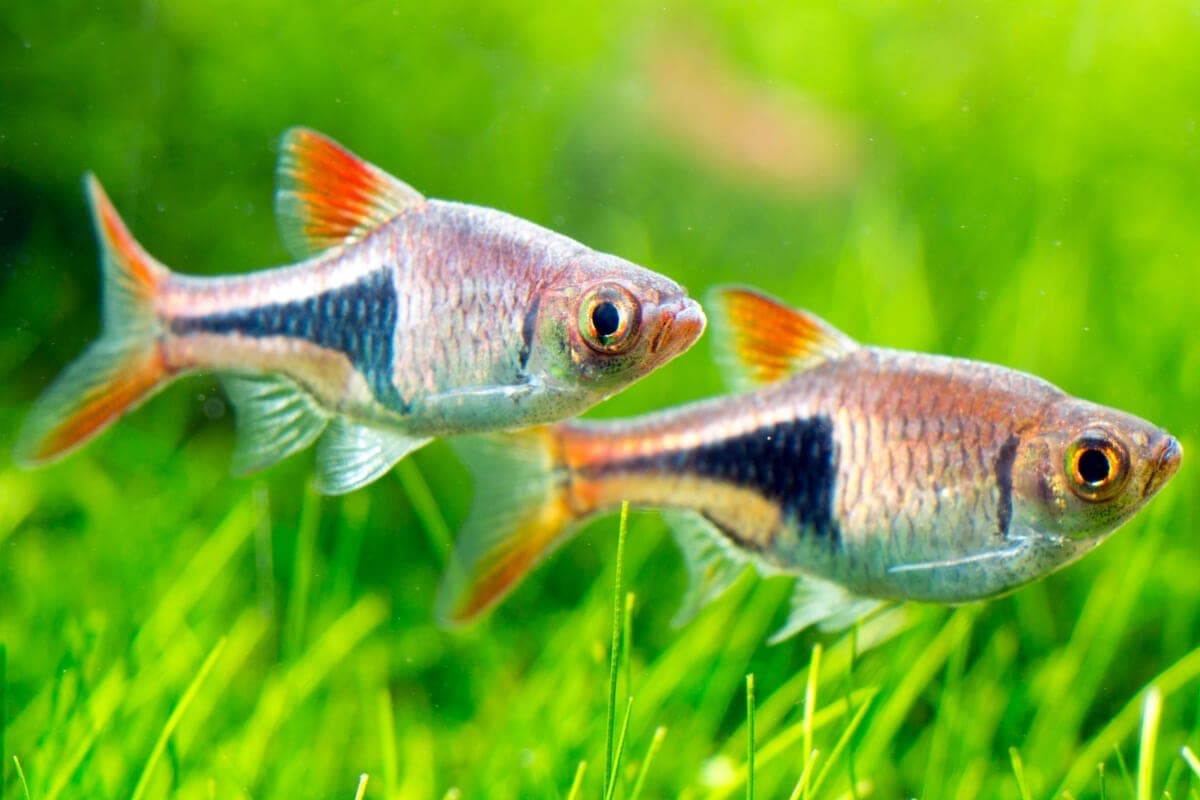
Trigonostigma heteromorpha, commonly known as the harlequin rasbora, is a beautiful and popular schooling fish that has been a staple of the freshwater hobby for decades. They live roughly 5-8 years in captivity and prefer temperatures of 72-81 degrees Fahrenheit. They commonly reach 2 inches in size, with their distinctive triangular black patch set against an orange-pink body making them immediately recognizable.
Harlequin rasboras are native to the peat-swamp forests of Southeast Asia, where they naturally live in soft, acidic, tannin-stained water. While they are adaptable enough to thrive in a range of conditions, they truly shine in a well-planted tank with soft, slightly acidic water.
Their peaceful temperament, striking appearance, and active schooling behavior make them a wonderful centerpiece species for planted community tanks.
Basic Overview
Common Misconceptions
"Harlequin rasboras need extreme blackwater conditions to survive!" While they come from blackwater habitats, harlequin rasboras are quite adaptable and do well in a range of water conditions. Blackwater parameters improve their color and comfort, but they are not strictly required.
"They're the same as lambchop rasboras!" Lambchop rasboras (Trigonostigma espei) look similar but have a thinner, differently shaped black marking. They are related species with slightly different appearances, though care is similar.
"One or two rasboras is enough!" Harlequin rasboras are schooling fish that become visibly stressed in small groups. A minimum of 6 is needed, and 10+ is where their natural schooling behavior and full color really shows.
"They need a very warm tank since they're from the tropics!" Harlequin rasboras prefer moderate temperatures of 72-81 degrees Fahrenheit. Very high temperatures can actually reduce their lifespan. A standard tropical heater set to 76-78 degrees is ideal.
Recommended Setup
- 10+ gallon tank, cycled, with a lid, heater, and gentle filter
- Live plants including broad-leafed varieties like java fern
- Open swimming area in the middle of the tank for schooling
- Dim lighting or floating plants (they come from shaded environments)
- Indian almond leaves or driftwood to naturally tint the water
- Fine substrate
- Aquarium siphon
Diet
Harlequin rasboras are omnivores that eat a variety of small foods. Their mouths are small so food size matters. They enjoy:
- High-quality micro pellets or finely crushed flake food
- Frozen or live baby brine shrimp
- Frozen or live daphnia
- Micro worms
- Frozen bloodworms in small pieces (treat)
Feed small amounts once or twice daily. They are mid-level feeders and will actively chase food through the water column, making feeding time an energetic little spectacle.
Personality
Harlequin rasboras are active, graceful schooling fish. In a large group, they move together through the tank in a loose, flowing formation that is genuinely beautiful. The flash of orange and black as the school turns in unison is one of the most visually rewarding things a planted tank can offer.
They are confident fish when kept in appropriate numbers, not particularly shy, but not boisterous either. They occupy primarily the middle level of the tank and pair beautifully with corydoras on the bottom and surface-dwelling fish above.
Unlike some schooling fish that only school tightly when frightened, harlequins tend to school loosely but cohesively even when relaxed, which makes watching them a constant pleasure.
Compatible Tankmates
Harlequin rasboras are peaceful and work well with most small, non-aggressive community fish. Good options include other small rasboras, small tetras, corydoras catfish, small loaches, honey gouramis, and peaceful livebearers.
They are generally safe with snails and larger shrimp. Very small shrimp or shrimplets may occasionally be picked at, so keep that in mind if you are trying to grow a breeding shrimp colony.
Avoid larger fish that might eat or intimidate them. Angelfish are a risky pairing as they may snack on rasboras, especially smaller individuals.
Water Parameters
Harlequin rasboras prefer soft, slightly acidic water that mirrors their Southeast Asian blackwater origin. They are sensitive to sudden parameter changes, so consistency matters. Target:
- pH: 6.0-7.5 (softer, more acidic preferred)
- gH: 50-150 PPM
- Temperature: 72-81 degrees Fahrenheit
Here are some top tips to deal with unwanted parameters:
- Indian almond leaves and driftwood naturally lower pH and release tannins that rasboras appreciate. The slight amber tint they create is completely harmless and mimics their natural environment.
- To lower pH more significantly, add a small bag of peat moss to your filter.
- Do weekly 20-25% water changes to maintain water quality.
- Remember, using random chemicals is not recommended, since they can cause more problems through sudden, drastic changes.