Fishless Cycling
How to Start Your Aquarium the Right Way
Introduction
One of the most common mistakes new fishkeepers make is adding fish to a brand-new tank right away. Without a healthy colony of beneficial bacteria established in your filter, ammonia produced by fish waste has nowhere to go, and levels can spike to lethal concentrations within days. Fishless cycling is the solution: you build up that bacterial colony before a single fish enters the tank, so your aquarium is safe and stable from day one.
It takes patience (usually three to six weeks), but it is absolutely worth it. Fish-in cycling, the old-school alternative, puts your fish through needless stress and is increasingly seen as an avoidable cruelty. This guide walks you through the entire process step by step.
Quick Overview
What Is the Nitrogen Cycle?
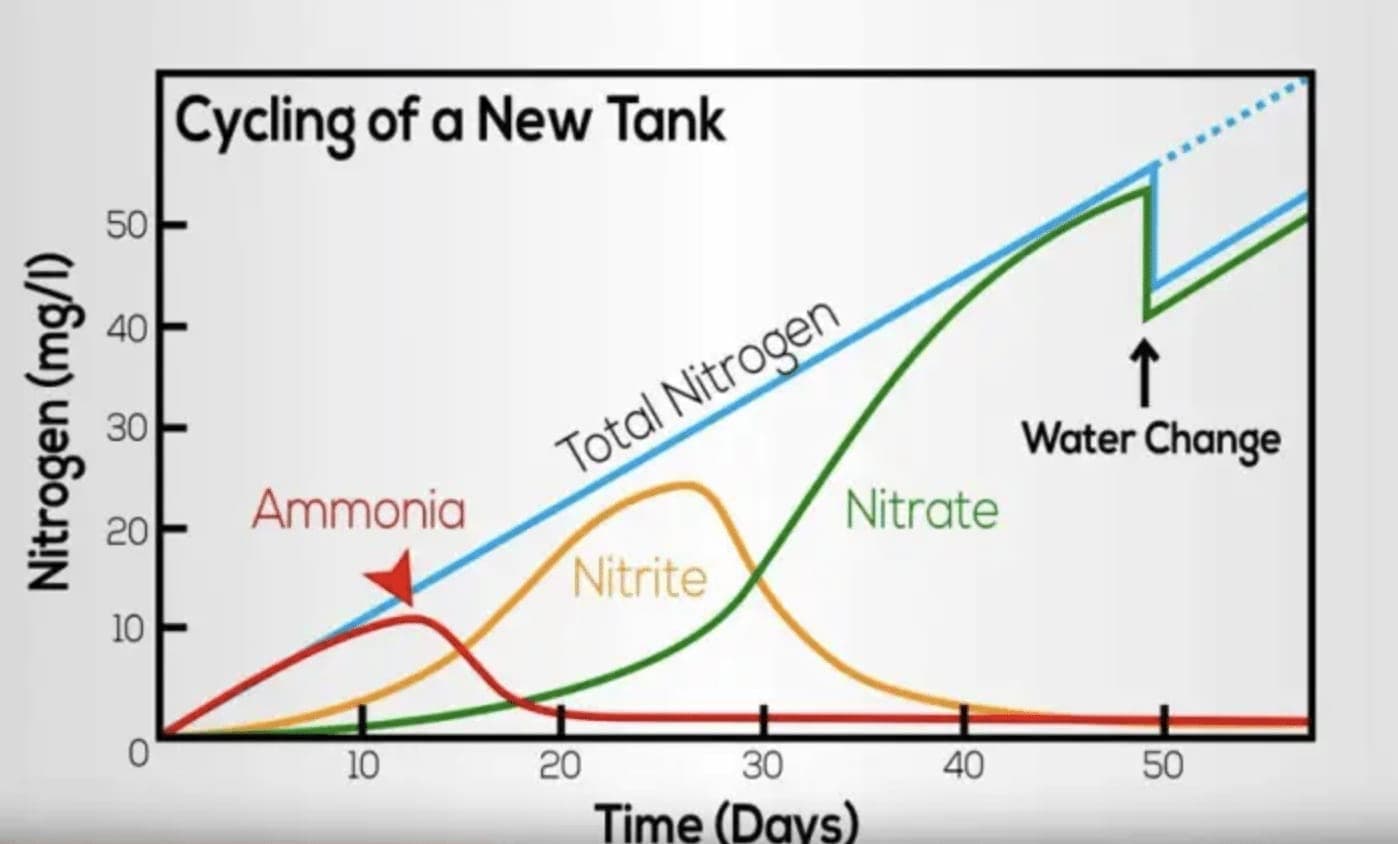
The nitrogen cycle is the biological process that makes a fish tank safe to live in. Fish produce ammonia (NH₃) as a waste product, primarily through their gills. Left unchecked, ammonia is highly toxic. Fortunately, two groups of bacteria convert it into progressively less harmful compounds:
Nitrosomonas bacteria convert ammonia into nitrite (NO₂). Nitrite is still toxic, but it is a step in the right direction.
Nitrospira bacteria convert nitrite into nitrate (NO₃). Nitrate is relatively harmless at low levels and is removed through regular water changes.
A "cycled" tank simply means both bacterial colonies are large enough to process the waste your fish produce faster than it accumulates. This balance is called an established biological filter.
What You Will Need
- An aquarium, filter, heater, and thermometer already set up and running
- Pure ammonia (unscented, no surfactants) or an ammonia source such as fish food or pure ammonium chloride
- A liquid test kit that measures ammonia, nitrite, nitrate, and pH (strips are not accurate enough)
- A bottle of beneficial bacteria starter such as Seachem Stability or Fritz Zyme 7 (optional, but it can help)
- Dechlorinator/water conditioner for water changes
- Patience, at least three weeks, often four to six
Step-by-Step: The Ammonia Method
Step 1 - Set Up Your Tank
Fill the tank, add dechlorinator, set the heater to the temperature your future fish will need (most tropical fish prefer 76-80°F), and run the filter. Do not add fish. If you have a bacterial starter product, add it now according to the label.
Step 2 - Add an Ammonia Source
Add enough pure ammonia to bring your tank to 2 ppm (parts per million). For most tanks, this is just a few drops per gallon. Test after adding and adjust. If you are using fish food instead, add a small pinch; it will decompose and release ammonia over a few days.
Step 3 - Test Daily
Test your water every day or every other day and record the results. For the first week or two you will likely see only rising ammonia and no movement elsewhere. This is normal. The bacteria are establishing themselves and multiplying.
Step 4 - Maintain 2 ppm Ammonia
Whenever ammonia drops below 1 ppm, top it back up to 2 ppm. This ensures the bacteria always have food and continue growing. Letting ammonia crash to zero can starve the colony before it is mature.
Step 5 - Nitrite Appears
Within one to two weeks you should start seeing nitrite on your test kit. This is excellent news: it means Nitrosomonas bacteria are working. Nitrite will rise, sometimes to very high levels. Keep dosing ammonia and testing daily.
Step 6 - Nitrate Appears, Then the Finish Line
Nitrate showing up signals that Nitrospira bacteria have joined the party. As the cycle matures, you will notice ammonia and nitrite begin dropping back toward zero faster and faster. Your tank is fully cycled when:
- Ammonia reads 0 ppm within 24 hours of adding a 2 ppm dose
- Nitrite reads 0 ppm within 24 hours
- Nitrate is detectable (confirming the full cycle is running)
- Do a large water change (50%) to bring nitrate down before adding fish, and then add your first inhabitants slowly over several weeks to avoid overwhelming the filter.
How to Speed It Up
- Borrow media from an established tank. A small piece of used filter sponge or a handful of gravel from a friend's tank contains millions of bacteria and can cut your cycle to one to two weeks.
- Use a bacterial supplement. Products like Seachem Stability, Fritz Zyme, and Dr. Tim's One and Only are not magic (ignore claims of "instant cycling"), but they do provide a meaningful head start.
- Keep the temperature up. Bacteria grow faster at warmer temperatures. Running your heater at 80-82°F during the cycle can shorten it noticeably.
- Add plants. Live plants absorb ammonia directly and introduce beneficial microorganisms, helping stabilize the tank faster.
Common Mistakes to Avoid
Adding fish before testing for 0 ppm ammonia and 0 ppm nitrite
- Using tap water without dechlorinator (chlorine and chloramine kill beneficial bacteria)
- Letting ammonia crash to zero before the cycle is finished
- Cleaning filter media under tap water at any point during or after cycling
- Overstocking immediately after the cycle completes. Add fish gradually.
Maintaining the Cycle Long-Term
Once cycled, your tank will remain stable as long as you do not crash the bacterial colony. Routine water changes of 25-30% weekly keep nitrate low without disrupting bacteria. Rinse filter media only in old tank water during water changes, and replace only one section of media at a time if you need to swap it out.
After a vacation, illness in the tank, or any event requiring heavy medication, retest your parameters and treat it like a soft reset: dose ammonia, test, and confirm bacteria are still processing normally before assuming everything is fine.